
Starlink is expanding its physical infrastructure in Spain in response to the growth of its customer base and the arrival of a new generation of satellites with much greater capacity.
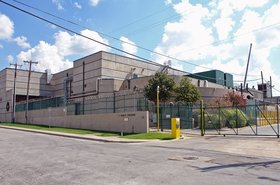
The company has brought three new ground stations online in Ametlla del Vallès (Barcelona), Villares de Saz (Cuenca), and Alcobendas (Madrid). With these additions, the Spanish network now has seven operational stations.

This move is significant because a LEO constellation does not operate in isolation in space. Satellites require ground gateways connected to transport networks to deliver user traffic to the Internet and other services. In other words, the growth in orbital capacity also necessitates an expansion of the ground infrastructure.
V3 multiplies the constellation’s capacity
The expansion comes as Starlink prepares to deploy its V3 satellites. According to specifications published by the company, each V3 satellite is designed to provide up to 1Tbps of download capacity and 160Gbps of upload capacity - approximately ten and 22 times, respectively, the figures for V2. This changes the scale of the backhaul problem. Ground stations must be capable of handling and transmitting significantly higher volumes of traffic.
In Spain, Starlink has also requested additional frequencies for five stations - Villares de Saz, Santa Olalla, Ametlla del Vallès, Alcobendas, and Loeches -adding the E-band to the links that were already using the Ka-band.
The expansion of the infrastructure coincides with strong growth in the Spanish satellite market. The Comisión Nacional de los Mercados y la Competencia (CNMC), Spain's competition regulator, recorded 98,391 satellite Internet connections by the end of 2025, compared to just over 10,000 by the end of 2022. Although satellite still accounts for only 0.5 percent of fixed broadband, nearly 90 percent of connections offer speeds between 100 and 300Mbps.
The key takeaway for operators and digital infrastructure providers is that growth is no longer limited to residential consumers. The CNMC identifies business applications, IoT, maritime and aeronautical communications, government services, and emergency connectivity as areas for expansion. It also highlights convergence with 5G networks and the development of direct-to-device (D2D) connections.
Satellites are beginning to integrate with data centers
For the data center ecosystem, the most significant development is precisely this convergence between space-based and terrestrial infrastructure. Starlink has points of presence (PoPs) in data centers across various Latin American markets, including Buenos Aires, São Paulo, Brasília, Santiago de Chile, Querétaro, Bogotá, Lima, and Guatemala. These PoPs enable dedicated physical interconnections with the Starlink network.
This places data centers within the LEO connectivity architecture: traffic generated by a terminal does not have to travel exclusively via satellite; rather, it can terminate at a gateway and from there integrate with IP networks, carriers, clouds, and interconnection ecosystems.
For data center operators, this opens up an additional connectivity opportunity, but it also increases the importance of having fiber, route diversity, cross-connect capacity, and a presence in interconnection hubs.
This piece was translated from DCD's Spanish site and edited by a member of DCD staff.





Comments