
Elon Musk's space company SpaceX has filed to place two new satellite ground stations in the UK.
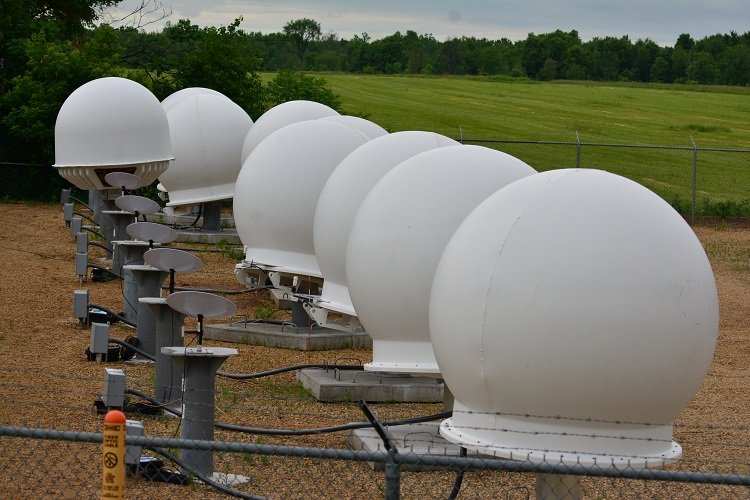
British telecoms regulator Ofcom has issued a request for comment regarding SpaceX Starlink’s request with them to construct two new Ka-band Earth stations in England, one in Mulberry Wharf in the Thamesmead area of London, and one in Harlow, Essex.
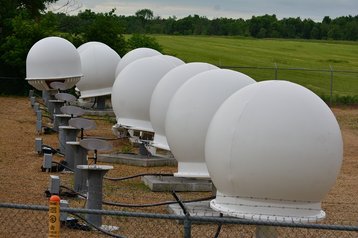
Application filings state the Harlow site will be on the former Harlow Car Boot Sale site on Horsecroft Road, while the Mulberry Wharf site will be along Fisher’s Way in Lower Belvedere, in the London Borough of Bexley. Both sites are within industrial areas.
The company is reportedly looking to establish these sites in early 2026. In the filing, SpaceX said its existing infrastructure has "quickly approached capacity," and the company has been "forced to restrict access for consumers in the UK."
“Our preliminary view is that we will grant these NGSO (non-geostationary orbit) gateway licenses to Starlink,” reads Ofcom’s call for comment regarding Starlink’s request. “We have considered the technical coexistence and competition impacts of these gateways on existing and future NGSO systems, as well as the impact on UK consumers and citizens.”
The regulator considered the proposed gateways to be similar to existing ones at Morn Hill, Woodwalton, and Fawley, none of which have raised concerns surrounding market coexistence and competition, though it notes that what sets this request apart is its centrality within the UK capital.
Starlink possesses a fourth gateway in Wherstead, operating in Ka-Band, like the three sites the regulator compared those proposed to.
The NGSO gateway license SpaceX is after holds the condition that it must become operational within 12 months of it being granted, as well as the prevention of any harmful interference that may be emanated by the gateway. Ofcom’s Space Spectrum Strategy, published in 2022, aspires to “enable as many NGSO systems as possible,” rendering Starlink’s application all but a formality.
Starlink currently holds coordination agreements with OneWeb, Kepler Communications, Inmarsat, and Space Norway (which acquired Telenor in 2024), and is progressing discussions around coordination with Mangata Edge, NSLComm, and Rivada Space Networks. Ofcom notes Starlink’s offering could coexist with Amazon Leo “even if colocated [which] constitutes a worst-case scenario." Starlink has committed to good faith coordination with its NGSO peers.
At present, Amazon Leo (formerly Project Kuiper) only possesses one at Bude in Cornwall. Only two of the seven NGSO gateways licensed by the regulator are British, in the Arqiva site at Chalfont, and the Goonhilly Earth Station, the nation’s first, built in 1962 as BT infrastructure before being defunded in 2008, and privatized in 2011.
Amazon Leo has had a streak of responses to calls for comment like this, submitting open letters comprising comprehensive objections to Starlink’s alleged monopoly of the market, and other inappropriate behaviors of the company. Last week, the company requested the FCC refuse SpaceX’s bombastic plans to launch up to a million satellites, declaring it “speculative and conceptual” as well as risking “real harm.”
In June of last year, the two companies sought approval from Ireland’s own regulator Comreg for a new gateways in Ireland, with Amazon coveting a site in East Cork, South Ireland, as Starlink pursued Killala, County Mayo.
"There's room for lots of winners there,” Amazon executive chairman Jess Bezos told press in January 2025, speaking of the rivalry that was then only beginning to heat up. “I predict Starlink will continue to be successful, and I predict Kuiper (now Amazon Leo) will be successful as well. … There's insatiable demand [for Internet].”




Comments