
Elon Musk’s SpaceX has secured a 100 percent property tax abatement for its planned TeraFab in Grimes County, Texas.
Despite opposition from local residents who fear the chip fab could put a strain on water and power resources and harm local wildlife, local news outlets reported that County commissioners voted 4-1 on June 4 to approve three proposals.
Reuters reported that one local resident said: “They sold out Grimes County,” upon leaving the hearing.
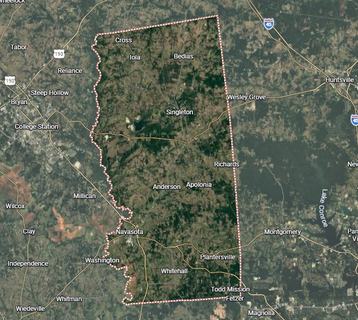
The proposals that were voted on centered around SpaceX’s infrastructure, job, and investment obligations, the issue of property tax payments, and the creation of a reinvestment zone that would make SpaceX eligible for further tax incentives.
As a result of the measures passing, in lieu of paying property taxes on the facility, SpaceX will instead make regular payments to the county – an initial lump sum of $20 million followed by $20m annually over a 35-year period.
Grimes County Commissioner David Tullos, the person to vote against the measures, noted that the June 4 meeting was the first time SpaceX had opted to send a representative since the project was announced. During the hearing, he questioned the company’s attorney about the size of the proposed reinvestment zone and what it planned to do with several parcels of land.
The attorney, Bucky Brannen, told meeting attendees that while the final size of the project was yet to be decided, “no one would be forced to sell their home.”
Writing on X, the social media platform he owns, Musk said: “Something that perhaps isn’t clear is that, if this location works out (other locations are still in the running), SpaceX will still be paying an annual amount that increases tax revenue for Grimes County by ~25 percent and will be by far the biggest source of revenue for the county.”
He added: “Taking into account taxes paid by SpaceX employees and contractors, Terafab will far exceed ALL revenue that Grimes County currently earns! The reason SpaceX asked for this, which is standard practice for massive capital investments, is because Terafab will have a large number of extremely expensive machines for making chips. Property tax on these crazy money machines would put us at a serious competitive disadvantage relative to other chip fabs in the world.”
The idea for the TeraFab was first floated by Musk at a Tesla annual shareholder meeting in November 2025. At the time, Musk said that if Tesla were to extrapolate the best-case scenario for chip production from its suppliers, it still wouldn’t be enough, which had led him to propose the Tesla ‘TeraFab’ – “it’s like giga but way bigger.”
He went on to confirm plans to build a semiconductor plant in Austin, Texas, in March 2026, with the site set to be adjacent to Tesla’s headquarters and run as a joint venture between the automaker and SpaceX. Musk said the facility will produce chips for space data centers, advanced vehicles, and humanoid robots.
The following month, Intel announced it had joined the TeraFab project, with Musk later claiming the fab would use the chipmaker’s 14A chip manufacturing process.
The original cost estimate for the project was $20 billion, but after SpaceX filed a property tax abatement application with the county in May, it was revealed that the initial phase of the project would cost $55bn, with the potential for the figure to reach $119bn once the fab is fully built.
Weeks later, SpaceX filed to go public, with its IPO targeting a valuation of $1.75 trillion, a figure which also led to Grimes County residents questioning why an expected multi-trillion-dollar company owned by the world’s richest man was in need of tax incentives.
"You cannot convince me that Elon needs assistance from Grimes County for this project. You have been offering the world's richest man a Black Friday deal on our resources and our way of life,” Reuters reported another resident saying.






Comments