
Rocket and satellite Internet company SpaceX is planning an initial public offering that could rase "significantly more" than $30 billion.
The IPO plans were first reported by Bloomberg, The Wall Street Journal, and The Information. Should the listing go ahead, it could be the largest in history.
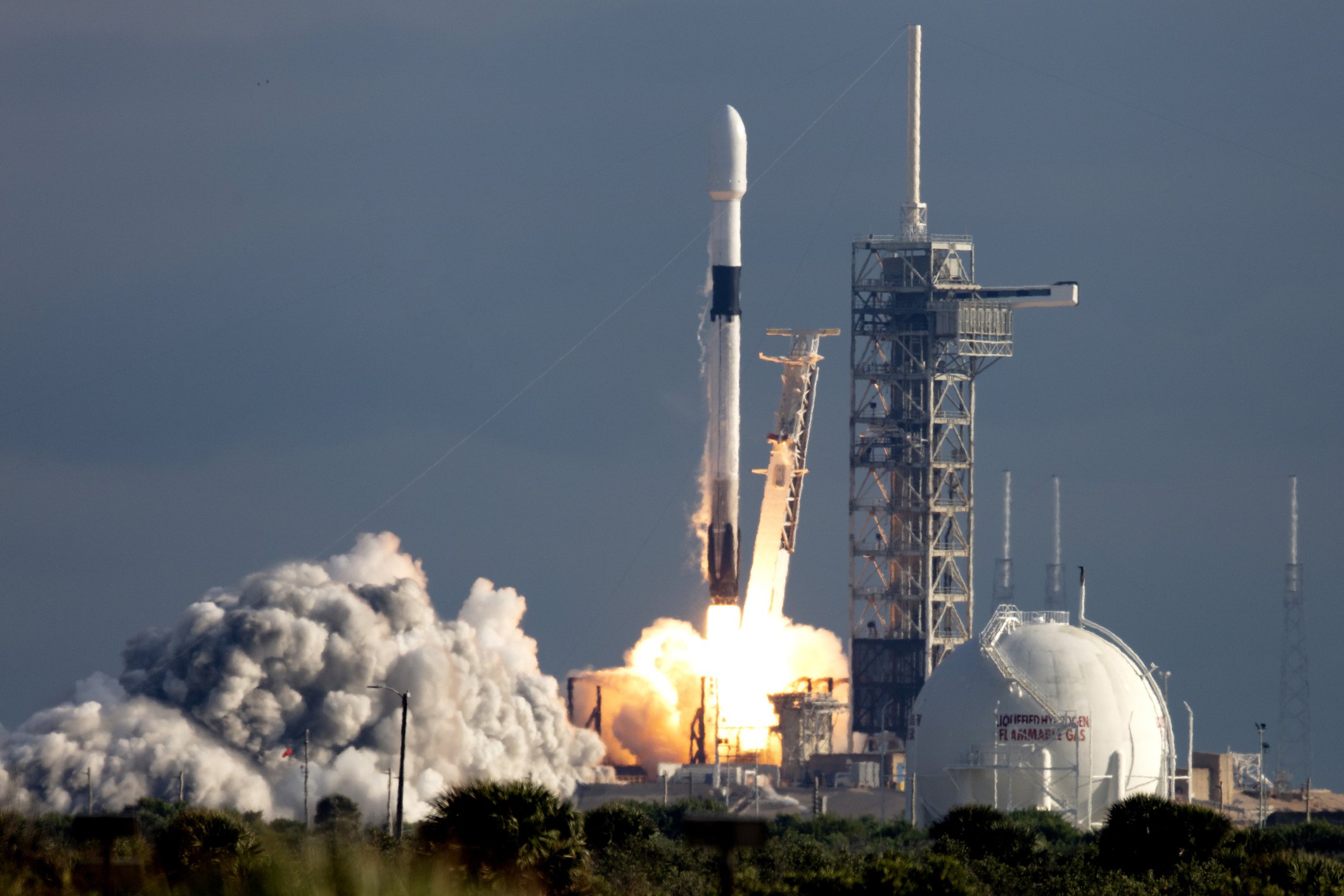
SpaceX is in the midst of a private sale that values the company at $800 billion, with analysts putting a public value at $1-2 trillion. Bloomberg reports that the company is targeting $1.5tn.
CEO and founder Elon Musk has repeatedly spoken about the benefit of keeping SpaceX private, arguing that going public would put his dreams of colonizing Mars at risk.
In a piece for ArsTechnica, Eric Berger argued that the change of heart could be due to Musk's recent decision to deploy data centers in space.
In October, Musk said that the company would be expanding Starlink satellites into data centers. This month, he added: “The level beyond that is constructing satellite factories on the Moon and using a mass driver (electromagnetic railgun) to accelerate AI satellites to lunar escape velocity without the need for rockets. That scales to >100TW/year of AI and enables non-trivial progress towards becoming a Kardashev II civilization.”
While SpaceX already makes around $22-24bn in annual revenue, a large influx of cash could accelerate space data center deployment plans. This would then potentially help Musk's other business xAI.
While Musk has yet to comment on the IPO itself, he reshared the ArsTechnica story and said "as usual, Eric is accurate."
A number of other companies are considering data centers in space, including Axiom Space, NTT, Ramon.Space, and Sophia Space, to name but a few.
Jeff Bezos, Amazon's founder and the owner of Blue Origin, in October said that there will be gigawatt data centers in space in 10+ years, while former Google CEO Eric Schmidt this year said that he acquired rocket company Relativity Space to put data centers in orbit.
Google in November announced 'Project Suncatcher,' a long-term plan to put terawatts of compute in space.



Comments