
SK Telecom will expand its existing facility in Ulsan, South Korea tenfold and build a data center in Vietnam.
At SK’s AI Summit on November 3, the telco announced that its Ulsan facility would be expanded to accommodate 1GW of capacity, which is more than ten times of the data center’s previous targeted capacity of 103MW.
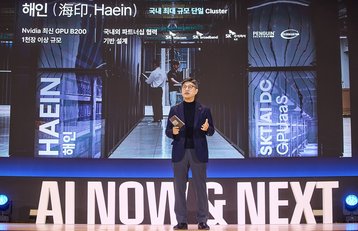
Plans for this expansion were laid out in a Memorandum of Understanding (MoU) that the telco previously signed with the Ulsan Metropolitan City.
The facility, located at a site formerly operated by the SK Group’s chemicals subsidiary, is the product of a partnership between the conglomerate and AWS.
The construction agreement for the facility was signed in June, and the project began construction in early September. Previous estimates indicated that 41MW worth of capacity would be available by November 2027 and that the entire facility would be operational by February 2029.
It is unclear how this timeline will be affected by the new expansion plans.
The additional investment required to fund such an expansion is also unclear. The previous figure confirmed by Korea’s Ministry of Science was 7 trillion won ($5.11 billion).
SK Telecom and SK Innovation, which is the conglomerate’s energy subsidiary, are also set to build an LNG-powered data center in Vietnam. Details about the facility’s location and capacity were not disclosed.
A few other South Korean conglomerates have inked plans to develop data centers in Vietnam. In late August, two data center MoUs were signed by organizations from both countries. The first was between Samsung and Vietnamese telco CMC, and the second between LG and the Vietnam Posts and Telecommunications Group. And in May, KT and Viettel signed a $94.6m technology partnership for the promotion of KT’s AI products in Vietnam, as well as a data center.
SK's CEO, Jung Jaihun, also added that the company would pursue global expansion into Malaysia and Singapore.
Jung was appointed CEO of SK Telecom just last week after outgoing leader Ryu Young-sang, who oversaw the company’s widely criticized response to a cyberattack in April, was reshuffled in a leadership change. Ryu is now the chairman of the SK Supex Council AI Committee, which oversees the conglomerate’s AI strategy.
These announcements came right off the heels of the telco’s third quarter earnings, which saw the telco report a decrease in revenue and operating income of 12.2 percent and 90.9 percent, respectively, amounting to a net loss of KRW 206.6bn ($143 million). The dismal results are largely attributable to the aforementioned cyberattack – it was reported in May that over 300,000 customers had switched providers as a result.
But the telco’s AI business, which encompasses its data center, AI cloud, and enterprise solutions, recorded 32.2 percent quarter-on-quarter growth.
These results are emblematic of the broader AI frenzy sweeping South Korea. HBM chipmaker SK Hynix has seen its stock rise 250 percent since the start of this year, and just last week, Korean fried chicken stocks shot up by 30 percent after images circulated of Nvidia, Samsung, and Hyundai executives partaking in the fast food.
This has fuelled a rapid data center buildout. Earlier this week, tech giant Naver announced that it would expand its facility in the central city of Sejong. Late October saw AWS adding an additional $5bn to its existing $4bn investment in the country’s data centers, as well as an announcement that Nvidia would provide more than 250,000 GPUs across hyperscale and government data centers.






Comments