
A new subsea cable connecting Japan to Singapore has gone live, nearly five years later than originally planned.
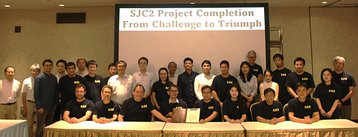
The SJC2 consortium and NEC Corporation last week announced they had completed construction and started operations for the Southeast Asia-Japan Cable 2 (SJC2).
SJC2's main trunk links Singapore, Hong Kong, and Japan, with additional branches linking to South Korea, mainland China, Taiwan, Vietnam, Cambodia, and Thailand.
Constructed by NEC, the cable spans a total length of approximately 10,500 kilometers and offers more than 126Tbps.
Plans for the cable were first announced back in 2018. The system was originally due to go live in Q4 2020 and offer 144Tbps.
The co-chairs of the SJC2 Consortium Management Committee, Meng Fai Yue, senior director at Singtel and Herbert Xiong, head of submarine cables infrastructure at China Mobile International, said: "As a critical part of global digital infrastructure, the SJC2 cable system will boost connectivity in the Asia-Pacific region, delivering unparalleled bandwidth capacity and ultra-low latency to power the next-generation of cloud computing, AI-driven services and real-time data exchange across Asia's leading economies."
SJC2 Consortium Members include: China Mobile International, Taiwan’s Chunghwa Telecom and its Donghwa Telecom subsidiary, Japan’s KDDI Corporation, PT Telekomunikasi Indonesia International, Singtel, SK Broadband, True Internet Corporation, and the Vietnam Posts and Telecommunications Group.
NEC corporate SVP and managing director of the submarine network division, Tomonori Uematsu, added: "In this project, NEC participated as a system integrator, providing everything from the manufacturing of submarine cables and repeaters to route design, installation, and testing. By establishing a highly reliable communications environment, NEC is contributing to the digitalization and technological innovation of countries throughout the region."
Singtel and NEC recently announced plans for a new subsea cable – Asia United Gateway East – that will connect Singapore and Japan. The cable consortium also includes Amazon and Microsoft, with the system due live in 2029.






Comments