
European and US cloud provider OVHcloud has reappointed its founder and chairman of the board, Octave Klaba, as CEO.
This ends the separation of the chairman and CEO roles, and also ends Benjamin Revcolevschi's term of office after just one year, effective October 20, 2025.
OVHcloud has also published its earnings for fiscal year 2025.
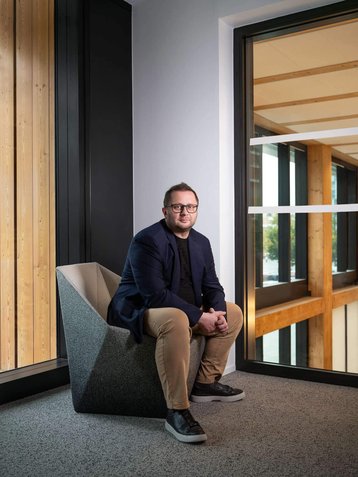
According to OVH, this will help the company with "strengthening the link between vision, strategy, and execution."
Newly-instated CEO Klaba said: "We are launching our new five-year strategic plan, during which our customers will be able to benefit from the last 10 years of massive investments, first in data centers and then in software. In the coming months, I will present our 2026-2030 strategic plan, “Step Ahead,” to guide our teams and support our customers, while generating value for our shareholders.”
Pierre Barrial, lead director and chairman of the remuneration and nominations Committee, added: "The Board of Directors is convinced that reuniting the roles of Chairman of the Board and Chief Executive Officer under Octave Klaba's leadership will strengthen the velocity and efficiency of OVHcloud's management.
"Octave Klaba will lead the Group with determination and agility, as he has done during OVHcloud's most decisive years, in a context that requires vision, rigorous execution, and innovation capacities. In a rapidly growing cloud market, his expertise, knowledge of the company, and understanding of customer and industry trends will enable OVHcloud to implement its strategic plan and build an operational roadmap for the coming years."
Klaba founded OVH in 1999 in France, aiming, at the time, to build Internet infrastructure that was high-performance and accessible. This shifted towards cloud computing in 2016, and following investment from KKR and TowerBrook, OVH became OVHcloud in 2020.
This is Klaba's third stint as CEO at the company. After leading from 1999 to 2015, he moved to COO and CTO, with Laurent Allard taking the helm. He was CEO again from 2017 to 2018 before moving to the role of chairman, with Michel Paulin taking over as head of the company.
Prior to Klaba retaking the CEO reins again, Benjamin Revcolevschi held the role. Revcolevschi had been appointed in October 2024, taking over from Paulin.
Revcolevschi said of the change in leadership that he was “proud to have contributed to building a group that is robust and more efficient."
"OVHcloud has delivered the expected performance and strengthened its commercial, operational, and institutional credibility in an unprecedented international context. I am leaving my position happy to have been part of this chapter in the group's history. I am convinced that OVHcloud has a solid organization and a committed team, ready to take on challenges with confidence. Octave Klaba is the ideal person to consolidate OVHcloud's position and lead the group towards its future goals. I wish him every success and would like to sincerely thank all our employees, who can be proud of what they accomplish every day.”
Beyond a strategy shift, no further reason has been provided for Revcolevschi's leaving, nor his future plans. DCD has reached out for more information.
OVHcloud releases FY2025 financial results
OVHcloud has posted its earnings for fiscal year 2025, with revenue surpassing the €1bn ($1.16bn) mark.
The full year brought in €1.084 billion ($1.26bn), up 9.2 percent Year over Year (YoY) from €993.1 million ($1.153bn). Adjusted EBITDA was €437.8m ($508.43m), or 40.4 percent of revenue, and up 14.8 percent YoY.
OVHcloud said it now has almost 1,200 customers with an Annual Recurring Revenue of €100,000 ($116,130).
Broken down into product segments, private cloud brought in revenues of €671.6m ($779.95m), public cloud €219.2m ($254.56m), and web cloud €193.8m ($225.07m), up 7.7 percent, 19.9 percent, and 3.8 percent, respectively.
CEO Klaba said of the results: "In 2025, OVHcloud broke through the symbolic €1 billion revenue mark. We achieved our objectives for the year. I would like to thank Benjamin Revcolevschi for his commitment during this final year of the 2021-2025 strategic plan. Over the past five years, among other things, we have successfully built up the Corporate segment, where we now generate over €200 million ($232.27m) in revenue.
"We have developed and rolled out 40 Public Cloud products, which now bring in revenue of over €100 million ($116m). We have also successfully established a strong presence in the United States, generating more than €100 million in revenue. These results are testament to the unwavering commitment of our teams, who I would like to congratulate and thank, and the support of our financial partners, who have placed their trust in us since our IPO in 2021."
Klaba added that the "geopolitical context and the surge in the cloud and AI markets" mean the company must increase its "rate of development." He said the company would be presenting its 2026-2030 strategic plan in a few months.
Capex similarly rose, up from €343.1m ($398.45m) in 2024 to €361.4m ($419.71m) in 2025 - around 33.3 percent of the company's revenue.
This comprised €128.9m ($149.7m) for recurring capex, and €232.5m ($270m) in growth capex. The company noted: "OVHcloud continued to improve the capital intensity of its infrastructure capex during FY2025 and significantly optimized the management of its components inventory, increasing the availability of assembled servers."
For FY2026, the company is expecting capex to be between 30 and 32 percent of revenue, with revenue itself to grow between five and seven percent - less than analyst predictions of around 10 percent. At the upper end of both of these predictions, this would mean a revenue of $1.348bn, and capex of around $431.4m.
During the earnings call, OVH noted it will continue to expand globally, citing demand in countries including Canada, Singapore, and India, which lie outside its traditional markets.
Throughout 2025, OVHcloud has launched several "local zones," including in Norway, Portugal, Ireland, Austria, and two in the US.
This month saw OVHcloud reveal new server racks and cooling systems for its data centers, which it claims have reduced power needs by up to 50 percent and water usage by 30 percent.






Comments