
Nebius has added an on-premises partner offering to its cloud platform.
The company will now enable partners to deploy Nebius' full-stack cloud platform within their own data centers, thus expanding Nebius' compute footprint.
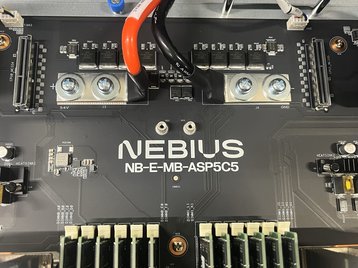
The business model sees partners financing and owning the infrastructure and hardware and operating the data centers. Nebius, meanwhile, provides the systems architecture, deploys and maintains the hardware and software and services, and takes the capacity to market.
According to Nebius, this enables partners to have a fast route to serving the AI cloud market, and partners can start generating a return as soon as it is live. For Nebius, this also expands the capacity it can offer its customers, with partner data centers joining the Nebius capacity pool, adding incremental capacity to that coming online from Nebius’s owned data centers and colocation sites.
Arkady Volozh, founder and CEO of Nebius, said: “Our new asset-light model gives infrastructure partners a flexible way to benefit from the explosive growth of AI. Our software allows partners to reach a much wider customer base with much better margins than conventional wholesale bare-metal contracts. We're inviting data center investors, regional partners and others with capacity or capital to contribute to join us in serving this demand – combining their assets and local strengths with Nebius's technology, platform, operational expertise and customer demand.”
The company said it is pursuing a variety of economic arrangements under the partnership model, including revenue-sharing agreements, licensing fees and commissions, as well as committed capacity arrangements, and some initial arrangements under the model have already been made.
The offering follows the ilk of those provided by the hyperscalers, for example, Oracle Alloy, in which partners deploy Oracle hardware to create their own Oracle cloud environment. Other hyperscalers have on-prem offerings, including the Google Distributed Cloud, Microsoft's Azure Local, and Amazon Web Services' (AWS) has AWS Outposts, but these are typically for a customer's own use rather than to serve as a reseller.






Comments