
A city in Ohio is attempting to block Amazon's plan to build a large-scale on-site power system for one of its Columbus data center campuses, citing concerns about air quality, public safety, and the state's override of local authority.
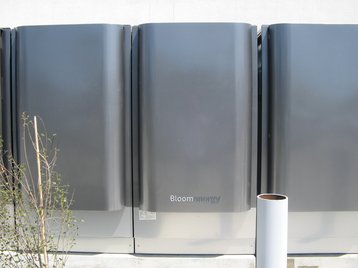
First reported by Signal, the city of Hilliard, in Franklin County, has opposed the project, which would see the hyperscaler install 228 natural gas-fed fuel cell units on a six-acre site to supply 73MW of power to Amazon’s 142-acre data center campus.
American Electric Power (AEP) Ohio is developing the project. Amazon is also seeking a permit to operate 158 diesel backup generators at the site.
The fuel cells would be supplied by Bloom Energy, which signed a 1GW deal with AEP Ohio in November 2024. Amazon received approval from the Public Utilities Commission of Ohio (PUCO) to deploy Bloom's Solid Oxide Fuel Cells (SOFCs) in June of last year.
City officials initially attempted to block the project through rezoning but were overruled by state authorities, who retain control over power siting decisions. Hilliard is now appealing the Ohio Environmental Protection Agency’s (EPA) air permit before the Environmental Review Appeals Commission, arguing the agency failed to notify the city prior to approval.
“I was unaware that putting in a data center meant putting in a mini gas power plant and all these other things with it,” said Annette Singh, a local activist supporting the city’s legal effort. “That has a huge effect on air quality and [the] safety of anyone living near it. I’m just trying to publicize what is happening in my neighborhood so people are aware of what could happen in their neighborhood.”
City officials have also raised concerns about increased emissions due to the plant. According to the city, the permit allows up to 1.45 million pounds of carbon dioxide per day, comparable to the output of 66,000 cars.
“The City of Hilliard is disappointed to not have the opportunity to formally review the project as we would with almost all other new development projects in Hilliard,” said acting city manager Dan Ralley. “These are the types of issues that should be addressed at the local level. It’s regrettable that state lawmakers have overridden local oversight, particularly since this technology is unfamiliar and new not just to our City, but also the entire State.”
Residents have also objected to Amazon’s request to operate its diesel generators, noting the proximity of a public park, nearby homes, and a school. Singh said the permit does not clearly limit how often the generators can run.
“It’s like, you’re using my community, and then you’re going to use so many more communities,” she said.
AEP said the fuel cells are a “safe, clean solution” that produce 30 percent to 45 percent fewer carbon dioxide emissions than conventional power plants and have undergone extensive regulatory review.
“We understand that new energy infrastructure projects can raise questions and concerns, and we take those concerns seriously,” an AEP spokesperson said. “The project has undergone extensive regulatory review to ensure it meets all applicable safety, environmental, and operational standards. Our focus remains on delivering reliable energy solutions that comply with the law while minimizing impacts on surrounding communities.”
Amazon said the fuel cells will be used temporarily while broader grid upgrades are completed.
“We care about the communities in which we operate, and ongoing conversations with residents and partners help ensure solutions benefit the region,” said spokeswoman Kylee Yonas. “Our work with utilities focuses on ensuring reliable electricity while bringing carbon-free energy sources like solar and wind online. In Hilliard, the local utility, AEP, will temporarily use fuel cells to power part of our data center operations while larger Ohio power infrastructure upgrades are completed.”
This is not the first time that an Amazon data center has been blocked from deploying onsite fuel cells to power a data center.
In June 2024, Amazon canceled a contract with Bloom Energy to provide gas-powered fuel cells to its data center operations in Oregon.
In 2023, the two companies signed an agreement that would have seen Bloom provide fuel cells with a capacity of 24MW to three of Amazon's data center sites. At the time, Amazon was promoting the technology as a low-carbon alternative to using energy from the grid.
However, Morrow County gets most of its electricity via hydropower, and the state regulator, the Oregon Department of Environmental Quality, said that using fuel cells would lead to facilities emitting the equivalent of 250,000 tons of carbon dioxide annually. Ultimately, Amazon withdrew from the plan to use fuel cells.







Comments