
China has launched a set of nine new satellites from the Dongfeng Commercial Space Innovation Test Zone at the Jiuqyan Satellite Launch Center, one of which is the “Supercomputing-1”, or S-AIDC-1 satellite, developed by Chinese AI compute developer S-AIDC, also known as Chaozhisuan Technology Co., Ltd.
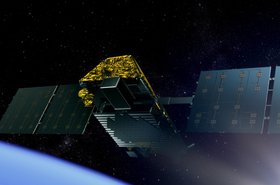
The Supercomputing-1 satellite, launched on September 20, is intended to analyze images captured in orbit in order to determine which are ideal for downlink, featuring laser intersatellite links (ISLs) according to Chinese financial news group Yicai Global, which is a common EO application stretching back years and a far cry from what might be described as super computing.
Both CAS Space and the Chinese government quote an “hours-to-minutes” drop in processing time, but didn’t offer any specific details. Multiple reports also specify the satellite’s “target recognition capabilities", though do not elaborate on what specifies a target.
Founded in Beijing in 2024, but now headquartered in Guangzhou, S-AIDC was set up by Liu Mingtao. In May, the company announced a Series A funding round worth “several hundred million yuan”, which would resemble several tens of millions of dollars, co-led by Yuanhe Pahua and Fanyu Capital and featuring existing investor Fenghe Capital, alongside new investor Changshi Ventures.
In June, Mingtao said that overseas companies in some core space industries such as in-space manufacturing should be open and collaborative with the Chinese Academy of Sciences and its commercial ecosystem, but that computing power, space-based networks, and other crucial services, must remain in the exclusive control of the Chinese state.
S-AIDC could not be reached for comment.
The nine satellites were launched via Guangzhou-based CAS Space’s Kinetica 1 Y18 rocket, also known as Lijian-1 Y18, its 17th launch. CAS Space is an arm of the Chinese Academy of Sciences, which aims to enable research projects from the academy including space flight. This year, the Chinese Academy of Sciences exhibited at World Space Business Week in Paris as a sponsor for the second year running.
In June, the Chinese government launched the Space Computing Industry Innovation Center, which aims to integrate rocket and satellite manufacturers with semiconductor fabs and AI companies to create a space computing network. CAS Space has declared the company will enable AI, biomedicine, and other emerging industries with its space solutions.
“For a number of reasons, we should expect a steady development of on-orbit computing in China,” Dr. Brendan Mulvaney, director of the China Aerospace Studies Institute of the US Air Force previously told DCD. “Well-established [Chinese] companies like Galaxy Space also seem quite bullish about space computing. In short, it's a very hot topic in China today.”
Earlier this year, Orbital Chenguang Technology Co. obtained a ¥57 billion (US$8.7bn) line of credit from a consortium of state-owned banks, though the full terms of this agreement were not disclosed.



Comments