
Carbice, a thermal management solutions developer, has connected with Swiss micrGEO satellite firm Swissto12 on solutions to heat dissipation from cosmic temperature extremes.
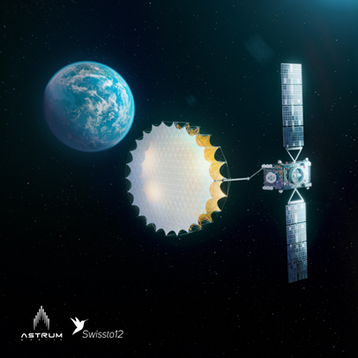
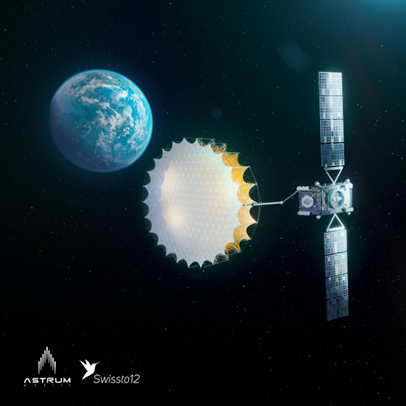
The company’s Space Pad heat dissipation solution uses compact, integrated microelectronics to increase thermal load, and will be used to reduce costs in Swissto12's HummingSat satellite's distinctly low form-factor design.
"Our Space Pad will provide manufacturability flexibility, enabling ease of integration and assembly needed to scale next-generation satellite programs like HummingSat efficiently and reliably," said Rafael Spears, general manager, global aerospace and defense at Carbice.
Satellites in space must endure extreme temperature fluctuations, ranging from 120°C in direct sunlight to -160°C in the shade (248°F to -256°F). These fluctuations cause thermal interfaces to expand and contract, leading to degradation in thermal performance. Founded in 2011, Carbice claims to offer a predictable, reliable cooling solution for thermal systems management in the harsh environment of space.
"Strong collaborations are key to success in the challenging space environment. We look forward to this journey together," added Paolo Mori, space procurement specialist at SWISSto12.
The evolution of MicroGEO
The news is part of a wider narrative of investments into the innovation of a newer generation of small geostationary satellites, which can better compete with a rapidly maturing market through manufacturing cost advantages and dedicated service packages to regionalised customers.
Small GEO satellite constellations can offer low-cost connectivity to customers with the lowest cost ground infrastructure,” Mike Kaliski, chief technical officer at Swissto12, previously told DCD. “The future will be built on integrated networks that combine the best services based on a delivery through the combination of LEO, MEO, and GEO assets.”
The satellite industry has always been cost-sensitive, particularly as LEO is proving to be a more economical orbit. Geostationary orbits have become no less essential to modern satellite communications, and so solid price advantages may prove a strong enough argument to maintain the appeal of such satellites, which would ensure demand for the kinds of micronized components that Carbice is investing in.
This year, Swissto12 reported strong performance in 2024, increasing revenue above 40 percent and ramping up its production capacity and workforce, bringing its HummingSat to satellite operators including Intelsat, Viasat/Inmarsat, Astrum, and the European Space Agency.
A spin-out from the Swiss Federal Institute of Technology in Lausanne (EPFL), Swissto12 claims its HummingSat can be up to ten times cheaper than other GEO satellites. The machines measure around 1.5 cubic meters (52.9 cubic feet), loosely half the size of a small car, with 1,000kg (2,204 pounds) of launch mass and able to support 200kg (440.9 pounds) of payload capacity, supplied with 2kW of power with a predicted operational life of 15 years.
Comparable microGEO solutions include Boeing’s 702X and ESA’s SGEO missions with Hispasat 36W-1, as well as Astranis' satellite offerings.



Comments