
Star Catcher Industries, Inc. has raised funds to develop an orbital energy grid to power other satellites.
The company has announced an oversubscribed Series A, raising $65 million, bringing the company’s total capital raised to $88m to build a space-based solar power (SBSP) operation to power satellites and spacecraft with optical power beaming “with no retrofit or custom receiver required."
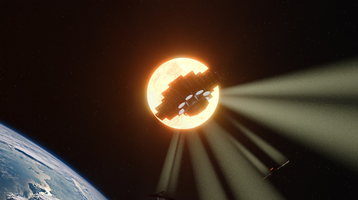
"This investment underscores the conviction that orbital infrastructure is now as fundamental as terrestrial infrastructure," said Andrew Rush, co-founder and CEO of Star Catcher, in a statement. "Every major application driving the space economy — connectivity, computing, security, sensing — is power-limited today. Star Catcher is lifting that ceiling — making it possible to build in orbit at the scale the next century of life on Earth will demand."
Founded in July 2024 in Jacksonville, Florida, with a $12.25m seed funding round, the company claims the world record for optical power beaming through an on-orbit subsystem demonstration after a November 2025 demonstration sending 1.1kW through space via laser. Star Catcher now hopes to build the first orbital energy grid, stating in 2025 its plans for commercial deployment in 2027, a deadline the Series-A announcement does not repeat, instead stating its intention to launch an optical power beaming demonstration later this year.
The California Institute of Tech (Caltech) demonstrated wireless power transfer via microwave array in 2023 with its Space Solar Power Demonstrator (SSPD-1), beaming power both in orbit and down to Earth, though not very much of it.
The round was led by B Capital, co-led by Shield Capital and Cerberus Ventures, the venture arm of Cerberus Capital Management, with participation from GreatPoint Ventures, Helena, Oceans Ventures, and MVP Ventures. Cerberus’ General John W. “Jay” Raymond (Ret.), the first chief of space operations of the United States Space Force, joins the Star Catcher board beside global head of energy at B Capital, Jeff Johnson, and SHIELD Principal David Rothzeid.
"Energy and infrastructure resilience are core national and economic priorities on Earth, as in orbit," said General Raymond, senior managing director at Cerberus, in a statement. "Persistent surveillance, resilient communications, and unhindered maneuverability are all constrained today by power. An on-demand power grid can change that, expanding critical capabilities across commercial and national security missions."
The company has signed seven power purchase agreements and secured multiple government contracts, which make up a commercial pipeline it estimates to represent more than $3 billion in projected annual recurring revenue.
Power shortages in space?
While terrestrial operations struggle with all manner of power constraints, satellites and spacecraft – near ubiquitously equipped with solar arrays feeding batteries – historically haven’t. Star Catcher’s mission statement aspires to “eliminate power as a constraint on spacecraft design”.
The majority of SBSP projects are based on beaming power to Earth, as with the startups Overview Energy, Reflect Orbital, Volta Space, or Space Solar.
In January 2025, senior rocket scientist Long Lehao of the Chinese Academy of Engineering delivered a lecture at the Chinese Academy of Sciences describing plans for a massive SBSP project, ZhuRi, resembling “another Three Gorges Dam above the Earth”, the planet’s largest power station by installed capacity.
The limitations of maneuverability, General Raymond posits, are more pertinent, though generally limited by propellant. Space mobility without propulsion, through technologies such as electrodynamic tethers or solar sails, is in its infancy. These are just a couple of theoretical space technologies long deemed impractical by their demand for power, another being directed energy weapons.





Comments