
BT Group has announced plans to increase its £3 billion ($4bn) cost savings target by an additional £700 million ($939m), extending the period by one year to the full year 2030.
The changes are part of BT's ongoing transformation plans under chief executive Allison Kirkby.

Further cuts were announced as the British telco giant reported its full-year 2026 financial results for the period ending March 31, 2026.
BT reported a dip in revenue of three percent year-on-year (YoY) to £19.6bn ($26.3bn), with the company's international unit dropping 15 percent, as the company continues to refocus its international business. The telco also blamed the drop in revenue on declining handset trading and declines in adjusted UK service revenue.
"FY26 was another year of strong delivery against BT’s strategy," said Kirkby. "We are building the UK’s digital backbone even faster and further, connecting the country like no one else and accelerating our transformation - and we know there is much more we can do, as we create a better BT for all of us."
So far, BT said it has been able to achieve cost savings of £1.5bn ($2bn) during the first two years of its program, including £580m ($778m) gross annualized cost savings achieved during FY26 at a cost to achieve of £336m ($450m).
The telco also noted that it has been able to deliver reductions in energy usage in its networks by six percent, cut labor resources by seven percent, and reduce Openreach repairs by 18 percent.
The planned cuts mean that further job cuts at BT will continue.
Former chief executive Philip Jansen said in 2023 that the telco will cut 55,000 jobs by the end of the decade. At the time, BT had an estimated 120,000 employees, including contractors, and anticipated that by 2030 this number would drop to between 75,000 and 90,000. The total headcount of 'direct employees' sits at around 77,000.
However, as noted by the outgoing BT CFO Simon Lowth on the company's earnings call, it's more likely that this number will drop to the lower end of that target, to between 75,000 and 80,000 employees, including subcontractors.
"We now expect our FY 2030 total labor resource, including subcontractors, to fall to the lower end of our previously announced 75,000-90,000 range, so 75,000-80,000. We expect restructuring costs to achieve just over £200 million ($268m) in each of the next two years, dropping to around £100 million ($134m) in FY 2029 and FY 2030," said Lowth.
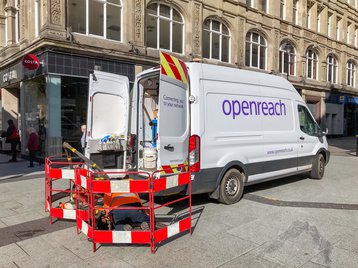
Openreach rollout passes 23 million
During the earnings report, BT confirmed that its Openreach full fiber build-out has now surpassed 23 million premises, with the company on course to reach its 25 million target by the end of this year.
The company's fiber build-out hit record numbers last year, noted the company, adding 4.8 million premises for the year, while adding 2.2 million Openreach FTTP customers.
In total, BT now has 8.8 million Openreach FTTP customers.
"We have now passed 23 million premises, around 2/3 of the UK, and we remain on track to reach the 25 million target by the end of the calendar year. This is the fastest fiber build in Europe, with nine million premises passed in the last two years alone," said Kirkby.
However, increased competition in the broadband space, saw Openreach lose 825,000 customers last year to 19.27 million. BT expects to lose a further 800,000 this year.
As for mobile, BT's mobile consumer unit EE increased its 5G base by 10 percent last year to 14.5 million customers. The company added 104,000 postpaid mobile customers in the full year.



Comments