
A new approach to designing AI based on biologically inspired architecture could cut the number of data centers needed to run systems like ChatGPT, researchers at Johns Hopkins University believe.
In a paper published in Nature Machine Intelligence, the team from the university’s cognitive science department challenges conventional approaches to building AI by prioritizing architectural design over the type of deep learning and training that takes months, costs billions of dollars, and requires thousands of megawatts of energy.
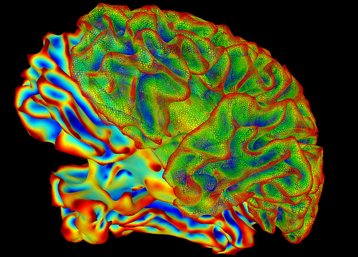
Building large language models such as OpenAI’s GPT-5, which powers ChatGPT and the company’s other services, requires colossal amounts of compute power, which is used to process data and train the model so that it can give accurate responses. The rapid growth in popularity of such systems has driven the AI boom, with large data centers being constructed at a rapid pace in markets around the world.
But the Johns Hopkins scientists think there is another way.
“The way that the AI field is moving right now is to throw a bunch of data at the models and build compute resources the size of small cities. That requires spending hundreds of billions of dollars. Meanwhile, humans learn to see using very little data,” said lead author Mick Bonner, assistant professor of cognitive science at Johns Hopkins University. “Evolution may have converged on this design for a good reason. Our work suggests that architectural designs that are more brain-like put the AI systems in a very advantageous starting point.”
Bonner and his team, which included researchers from Johns Hopkins and the Quebec AI Institute, focused on three classes of network designs that AI developers commonly use as blueprints for building their AI systems: transformers, fully connected networks, and convolutional networks.
The scientists repeatedly modified the three blueprints, or the AI architectures, to build dozens of unique artificial neural networks. Then, they exposed these new and untrained AI networks to images of objects, people, and animals and compared the models’ responses to the brain activity of humans and primates exposed to the same images.
When transformers and fully connected networks were modified by giving them many more artificial neurons, they showed little change. Tweaking the architectures of convolutional neural networks in a similar way, however, allowed the researchers to generate activity patterns in the AI that better simulated patterns in the human brain.
The untrained convolutional neural networks rivaled conventional AI systems, which generally are exposed to millions or billions of images during training, the researchers said, suggesting that the architecture plays a more important role than researchers previously realized.
“If training on massive data is really the crucial factor, then there should be no way of getting to brain-like AI systems through architectural modifications alone,” Bonner said. “This means that by starting with the right blueprint, and perhaps incorporating other insights from biology, we may be able to dramatically accelerate learning in AI systems.”
Next, the researchers are working on developing simple learning algorithms modeled after biology that could inform a new deep learning framework.
Various companies are striving to build more efficient AI models that require less processing power to train and run. Earlier this year, Chinese AI lab DeepSeek sent shockwaves around the world when it released an open-source AI model delivering similar performance to other leading models at what was said to be a fraction of the training cost. Some of its claims have since been disputed.




Comments