
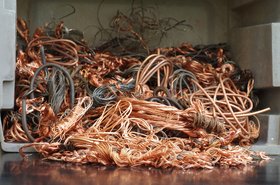
AT&T claims it was the victim of more than 10,000 “copper theft incidents” last year, hits that were cumulatively valued to the tune of $82 million, numbers that play into a broader industry push to replace legacy copper-based networks with fiber infrastructure.
Rahdeese Alcutt, lead investigator for AT&T Global Security, noted in a blog post that the carrier experienced a weekly average of 200 “incidents reported nationwide at the end of 2025.” A vast majority of those happened in California, where “we experienced more than 7,300 copper theft incidents in 2025, with losses exceeding $54 million.”
The big fightback
Regular attacks against telecoms infrastructure have got network operators fed up
“When copper theft occurs, it affects connectivity, transportation, lighting, and service availability,” Alcutt wrote. “When these systems are hit, it’s not just ‘network reliability’ at stake. It’s a commute that breaks down and a neighborhood left in the dark.”
Copper theft has been a significant issue in California, including a high-profile case where thieves reportedly struck a cable vault in Southern California last year, which took down service for thousands of residents in the area. California Governor Gavin Newsom shortly thereafter signed a bill to crack down on copper wire theft, with the bill requiring junk dealers and recyclers to collect detailed records on sellers, and makes scrap metal from “essential infrastructure” illegal to possess without documentation.
“Many of these instances of copper theft do not appear to be one-off, opportunistic acts,” Alcutt wrote. “We are seeing clear evidence of organized crime, such as the use of heavy machinery and coordinated thefts on the same lines at the same time.”
Alcutt’s note includes a plea to contact law enforcement “If you see suspicious activity around utility or telecom equipment,” as well as provides the 1-800 number for AT&T Global Security.
Cutting copper
AT&T’s treatise comes just days after the Federal Communications Commission (FCC) voted to rip-up rules it claims will help operators speed up network infrastructure deployment efforts, including easing rules around replacing copper-based infrastructure.
Those altered rules include filing requirements around network change disclosure mandates and applications for when older technology is phased out. While operators would still be required to obtain an authorization were they to phase out copper, the changes mean firms would not need to alert the agency if they were to make other changes to their network.
“For too long, outdated rules and regulations have forced providers to maintain aging copper infrastructure and to keep consumers on broken, antiquated networks,” FCC chairman Brendan Carr noted in a statement. “One provider alone reports that they have been spending about $6 billion a year maintaining copper lines for a dwindling number of consumers. That changes today.”
AT&T had previously stated it planned to retire its copper network by 2029, plans that were tied to recent fiber expansion objectives and bolstered by the carrier’s recent purchase of spectrum assets from EchoStar. The former comes as rivals have started to push more aggressively into the fiber space, while the latter is helping AT&T expand the reach of its 5G-based fixed-wireless access (FWA) service that the carrier is using as a stop-gap in migrating customers from copper-based broadband to fiber-based broadband services.
Jenifer Robertson, EVP and GM for AT&T’s Mass Markets business, previously told DCD that around three percent of the carrier's customers are using copper.
"So we have worked through quite a bit of backlog, where customers have been on copper legacy products, migrate them to fiber,” Robertson said. “And at this point, as soon as we build fiber in the neighborhood, we're able to get customers off of that copper, move them over, and as soon as we can build it, we get them off the network.”






Comments