
AT&T is providing connectivity to support NASA's Artemis II Moon mission.
The US carrier will support connectivity and on-site support for near-Earth and deep-space communications. This will keep mission control and the four astronauts connected as NASA’s Orion spacecraft travels nearly 250,000 miles into space and around the Moon.
Artemis II launched on Wednesday evening, with astronauts currently orbiting Earth.
The mission marks the first time humans have left Low Earth Orbit since 1972, and will see humans travel further into Deep Space than ever before. The astronauts will not, however, land on the Moon – a feat saved for future Artemis missions.
Instead, over the 10-day Artemis II mission, the astronauts will travel around the Moon and take photos of potential landing or base sites on the South Pole. NASA plans to spend $20bn on a Moon base over the next seven years, its new chief, Jared Isaacman, claimed last month.
According to AT&T, the carrier has been working with NASA to "understand its network needs" and connect NASA sites around the world, including major space centers and ground stations.
AT&T notes that it will have teams in Dallas, Chantilly, and multiple international locations to monitor the network.
The telco said it has made technical upgrades to bolster mission-critical reliability and aligned communications support across several locations, which include NASA’s Goddard Space Flight Center and NASA’s Kennedy Space Center, where AT&T staff were on site.
“We knew NASA would be juggling countless priorities to support Artemis II, which is why we embedded with their team to anticipate their communications needs and support them every step of the way,” said Wes Anderson, president of public sector, AT&T.
AT&T's role with NASA comes as FirstNet prepares to launch beta satellite services later this year with AST SpaceMobile’s BlueBird satellites.

How this feature got to the Moon
And what it means for the future of digital infrastructure, humanity, and what we will leave behind
FirstNet operates the network for first responders in the US, which is built by AT&T.
With thousands at the launch site, FirstNet will support NASA public safety. The first responder network is working with NASA Protective Services and Emergency Management Operations to help ensure they could reliably communicate with their teams across the massive Kennedy Space Center.
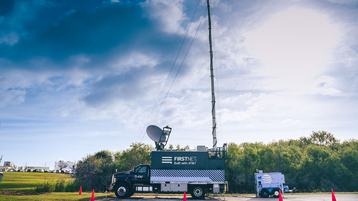
For the Artemis II launch, FirstNet deployed its fleet of network assets, including its SatCOLT (Satellite Cell on Light Truck) and CRD (Compact Rapid Deployable).
FirstNet is also tapping into AT&T's commercial fleet via its LCT (LEO Cell Trailer), which will deliver high-speed, temporary cell service, and mitigate congestion.
FirstNet said that it bolstered indoor connectivity at the Kennedy Space Center Visitor Complex with a Cell Booster Pro, while AT&T Network Disaster Recovery (NDR) has stationed its new NDR Connect and Care Trailer at NASA Kennedy’s Press Site to provide device charging to attendees.



Comments