
Networking firm Arista is developing liquid-cooled switches and racks
As reported by NetworkWorld and Converge Digest, the company outlined its plans at the recent Hot Interconnects conference and its recent analyst day.

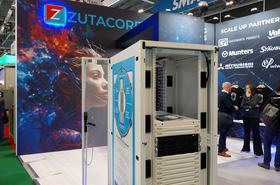
The company is reportedly developing an ORv3W-based data center server rack that supports approximately 120kW of power and can run up to 32 AI fabric switches along with fiber patch panels, management switches, and power shelves. The rack supports tight liquid fittings specifically for high-density switch cooling systems.
“A lot of our development is focused in this direction,” Arista co-founder Andreas Bechtolsheim said during the analyst day. “In addition, we are designing fully liquid-cooled switch racks that offer up to 32 of these fabric switches with patch panels, and management switches, and power shelves. And again, this is all optimized for the liquid-cooled data center to enable high-density switch configurations.”
Removing fans in liquid-cooled switches can reportedly save 5–10 percent of power, reduce vibration, and improve reliability.
“In conclusion, AI data centers need liquid-cooled switches,” Bechtolsheim said at Hot Interconnects. “This reduces power consumption and failure rates, while enabling scale-out networking.”
While companies have previously trialed using liquid cooling for network switches, most network systems and rooms remain air-cooled. Network switch densities are still well below the TDP where liquid cooling would be mandatory, often requiring less cooling than CPUs or GPUs.
Nvidia’s CS8500 Mellanox Quantum networking system is cooled either via liquid-to-air AHX or liquid-to-liquid CDU.
“Liquid cooling could potentially save another 10 percent for network infrastructure at the system level by eliminating active fans required for traditional air cooling,” Arista has previously said in a white paper, suggesting potential savings in large-scale AI clusters.
A hypothetical example cluster in the paper with more than 16,390 servers and more than 130,000 AI accelerator chips would require around 5,120 switches – totaling around 214 48U racks. The system would consume almost 9MW of power just for networking, so could see around 900kW of power saved by using liquid-cooled switches.






Comments