

For the first time in a long time, the release of the Top500 list was exciting. While computing nerds all over the world will habitually pore over every inch of the bi-annual benchmark results, it’s fair to say that the list has lost its magic owing to geopolitical wrangling.
China had opted not to submit machines out of an unofficial protest against tighter US export controls for semiconductors. But this latest list was something of a revelation: China was back, and back with a vengeance.
Out of seemingly nowhere, LineShine (or Lingsheng) shot to the top of the list, bringing an end to El Capitan’s near two-year reign as the world’s most powerful supercomputer.
The last time a Chinese supercomputer made its debut and subsequently topped the list was in 2017, when Sunway TaihuLight knocked fellow Chinese supercomputer Tianhe-2 (also known as Heavenriver-2 or Milky Way 2) off its perch.
To put the scale of China’s return into perspective, TaihuLight achieved a benchmark score of 93 petaflops when it took first place on the Top500. LineShine came in with 2.198 exaflops of performance – roughly 23-times the computing power of its ancestor.
It’s safe to say then that computing power has come a long way in almost a decade. But it’s also pertinent to note that LineShine did literally come out of nowhere. When the Top500 list dropped in late June, there was very little on the system out there.
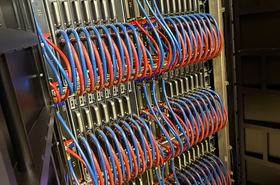
HPE’s Slingshot tops supercomputer interconnects, but China steals the show
China crashed the TOP500 list with a mystery interconnect powering a 2.2 exaflop CPU-only monster
An obscure research paper published in April shed a bit of light on it, revealing LineShine is a central processing unit (CPU)-only supercomputer. The last such system to top the list? Fujitsu’s Fugaku back in 2020. But where that system had eight million cores, LineShine has more than 13 million cores spread across some 40,000 semi-custom processors. Little was known about those LX2 chips, with it believed they were co-designed by China's National Supercomputing Center and Huawei. If the point of US export restrictions was meant to stop China from getting its hands on high-end semiconductors, LineShine is evidence that the Chinese have what it takes to build their own.
China’s withdrawal ultimately made the Top500 less exciting and less reflective of the actual levels of innovation in the industry. It was widely accepted that China possessed a considerable ability to produce competitive exascale systems. It’s believed there’s a lot more than just LineShine at the exascale in China, and it’s safe to say that many more may join the Top500 ranks very soon.
With China seemingly returning to the realm of Linpack benchmarking, it has all the hallmarks of making the Top500 a genuine force majeure.
Think of all the geopolitical wrangling that could stem from this list and those beyond; it’s a calculated message from Beijing to Washington, a display of defiance against trade restrictions and tariffs.
Chinese tech leaders, for the longest time, have been touting plans to build out domestic alternatives to Nvidia and Taiwan Semiconductor Manufacturing Co. (TSMC).
Reports in March suggest Chinese chipmakers are aiming for 80 percent semiconductor self-sufficiency by 2030 as part of a five-year plan to bolster the nation’s own semiconductor market. That includes a rather ambitious proposal to create its own version of ASML, the only company in the world that produces the extreme ultraviolet lithography (EUV) machines the entire industry relies on.
It’s easy to scoff; many already have, but cast your mind back to last January and the debacle DeepSeek caused. And suddenly, it doesn’t seem so outside the realm of possibility.
If anything, China’s resurgence is a good thing for the world of supercomputers: more geopolitical rivalry has the potential to motivate more spending. Heck, the same week the list dropped, President Donald Trump signed an executive order intended to push the US to the top of the quantum computing field.
And on a hardware level, LineShine’s limelight moment gave credence to the CPU. After years in the spotlight, the graphics processing unit (GPU) is now finding itself playing second fiddle, at least in the sense of intrigue, given the rise of agentic AI and a processor’s ability to better handle the complex orchestration required for such workloads.
Of course, when Nvidia's Vera Rubin finally drops, and the next level of annual rhythms fully reveal themselves sometime real soon, heads will inevitably turn. But for now, LineShine proves alternative architectures can achieve world-class speeds. And with a Fugaku 2 (or as it is more formally known, FugakuNEXT) set to use Arm-based Broadcom-designed CPUs just on the horizon, silicon diversity, alongside geopolitical jostling, looks to be on the rise.
The dick-measuring contest hyperscalers were too cool for
Enterprises and hyperscalers have tended to shy away from taking part in the Top500. They’re not going to want the mammoth clusters they’ve just had to justify to investors why it’s essential to spend tens of millions of dollars on, only for it to finish, say, fifth. There’s the odd outlier, of course; Microsoft’s Eagle system, for example, sits in seventh place on the latest list.
But China’s return could have one further impact: image-conscious CEOs want their supercomputers to rule the world.
The sheer amount of capital being chucked into gigawatt-scale infrastructure projects is yielding some truly mammoth clusters. But a 2025 paper showcases this in detail, suggesting that former world No. 1 El Capitan only achieved 22 percent of the computational performance of xAI’s Colossus supercomputer. It reads: “Colossus had an estimated hardware cost of $7 billion. Meanwhile, the most expensive government projects, Frontier and El Capitan, cost only $600 million each.”
The reasoning behind the dwarf in spending is obvious, what with major tech companies requiring dozens of systems just to serve millions of users around the world, whereas governments tend to build only a small number of systems for research purposes.
So while everyone was applauding El Capitan, it wasn't really No. 1 in any meaningful sense.
Are you telling me Elon Musk wouldn’t dream of rubbing it in Mark Zuckerberg’s face that he has the most powerful supercomputer on the planet? Their long-awaited cage fight looks to be permanently on hiatus, so why not duke it out using Linpack testing?
Now, if you ask any enterprise buyer in the compute space for their views on the relevance of Linpack benchmarking, they’ll likely view it as a baseline ballpark indicator of theoretical peak performance rather than a measure of real-world ROI.
In the industry’s most important segment, AI, buyers likely care more about whole-system results and would look for domain-specific benchmarks to uncover more actionable insights. Now, Linpack tests linear algebra, the underlying fundamentals on which AI systems are built, but MLPerf is far more optimal in this scenario. Plain and simple.
That's not a knock on Linpack so much as an admission of what it was always built to do. Jack Dongarra, part of the team behind the benchmark and now a professor of computer science at the University of Tennessee, said as much himself, telling Al Jazeera that upon LineShine’s capture of the Top500 crown, the ranking assesses “one benchmark” and shouldn't be mistaken for a complete measure of technological leadership.
It doesn’t come any clearer than from one of Linpack's own creators. The Top500 was only really meant to anoint the powerful one at solving a fairly narrow class of linear algebra problems, not the most inherently useful supercomputer.
Which is precisely why the list endures. A weak technical benchmark can still be a brilliant story, and LINPACK's entire value, 30-odd years on, has nothing to do with relevance and everything to do with narrative simplicity. One number, one winner, one flag firmly planted in the ground.
Enterprises don't need that kind of theater; they have shareholders to convince each quarter, not bragging rights at conferences. But theater is exactly what China's return has just supplied. And as soon as “world's most powerful supercomputer” becomes a real, contested, geopolitically-loaded metric again rather than a coronation for whichever aging American system happened to still be unchallenged, the cost of sitting it out starts to look that little bit different.




Comments