
Apple has expanded its renewable energy portfolio in Australia.
The company announced an agreement with European Energy to offtake power from an 80MW solar farm in Lancaster, Victoria, being developed in partnership with the renewable energy developer.
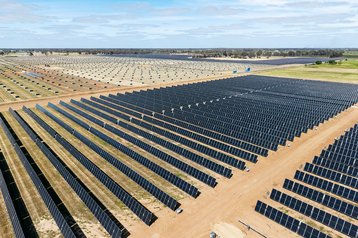
The project is expected to start generating electricity sometime next year, and according to Apple, it will support its goal of adding more than one million megawatt-hours of new renewable electricity to Australia’s National Electricity Market before the end of the decade.
“By 2030, we want our users to know that all the energy it takes to charge their iPhone or power their Mac is matched with clean electricity,” said Lisa Jackson, Apple’s vice president of Environment, Policy and Social Initiatives. “We’re proud to support Australia’s transition to a cleaner grid and drive positive impacts for communities and nature.”
The expansion is part of its broader Apple 2030 strategy, which aims to achieve carbon neutrality across its supply chain, operations, and product lifecycle by the end of the decade.
The company says it has already reduced its total emissions by more than 60 percent since 2015 and is targeting a 75 percent reduction before offsetting remaining emissions through verified carbon removal projects.
Last month, the company reported a significant expansion of its renewable energy portfolio across Europe, adding more than 650MW of new capacity. The latest projects included several large-scale solar and wind projects across Greece, Italy, Latvia, Poland, and Romania. According to the company, the projects will generate more than one million MWh of power for Apple users by 2030.
Carbon removal in New Zealand
Alongside the solar development, Apple has also announced an investment in a reforestation project in New Zealand via its Restore Fund. The investment will see Apple partner with Climate Asset Management to support the protection and restoration of 8,600 hectares of forestland across the country, managed under Forest Stewardship Council standards.
According to Apple, the project will combine the sustainable management of redwood plantations with the conservation of 3,000 hectares of native forest, aiming to boost biodiversity and carbon sequestration.
In addition, Apple's Restore Fund is also backing a regenerative agriculture project in Queensland, Australia. The project will see 1,700 hectares of former sugarcane farmland being transformed into a macadamia orchard with more than 800,000 trees. The project, located south of Bundaberg, includes a 100-hectare restoration zone, developed with the Indigenous conservation group W.Y.L.D., to create a biodiversity corridor linking two national parks.
Apple's Restore Fund was launched in 2021 and is designed to scale investment in high-quality, nature-based carbon removal projects worldwide.




Comments