
Vietnam’s Ministry of Science and Technology has announced Amazon has pledged to invest $570 million in connectivity infrastructure by 2030 to deploy Kuiper services in the country.

The news follows a meeting in Hanoi between Vietnam's deputy minister, Phạm Đức Long, and Gonzalo de Dios, head of global licensing and Project Kuiper at Amazon.
The investment will fuel up to six ground stations in the country, and set up satellite terminal manufacturing in the Northern province of Bac Ninh via local partnerships.
Details on the ground station locations haven't been shared.
The funding will be facilitated by new entity, Ho Chi Minh City-based Amazon Kuiper Vietnam Co., Ltd., which has submitted its own application for low Earth orbit satellite services.
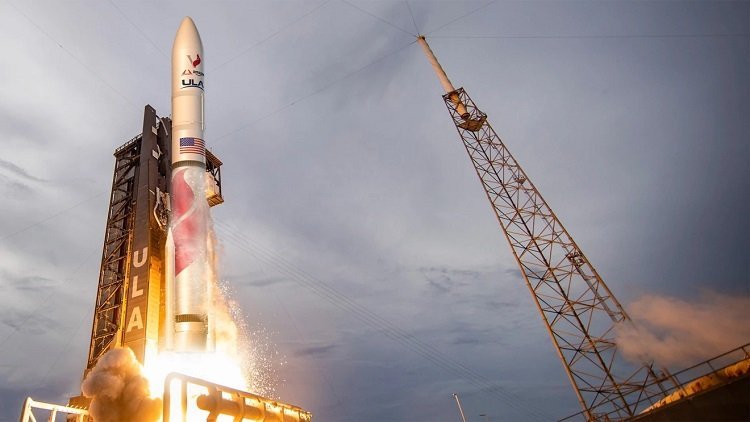
Kuiper began launching earlier this year, beginning with 27 satellites in April 2025, the first of a constellation set to comprise 3,236 satellites. Each satellite will weigh around 600kg (1,322 pounds), with a solar array spanning eight meters, and a production cost of up to $2m apiece. The fleet is intended to deliver 117 terabits per second when fully deployed.
Barclays estimates that Kuiper’s revenue would represent $61 billion by 2030, made up of $26bn in consumer segments and $25bn in business and enterprise, such as data centers, but including aviation and maritime markets.
Kuiper’s pilot program application in Vietnam seeks approval for a five-year rollout targeting consumer, business, and government subscribers.
Starlink is reportedly doing the same, using a similar five-year campaign. At the launch of a Vietnamese data center last week, Nguyen Van Khoa, the CEO of Vietnamese IT service company FPT Corporation, stated Starlink had selected two local partners to assist with the construction of new proprietary ground stations, with FPT picked as the first.
Given its rapid industrialization, sympathetic regulatory environment, ambitious public spending, and proximity to the world’s second greatest economy in China, Southeast Asia has long been on the lips of satellite operators as a significant growth area for connectivity services like satellite broadband constellations.
As Vietnam continues to liberalize its market and absorb manufacturing demand fleeing China, it appears to have represented a reliable bet for investment by both satellite giants.






Comments