
Amazon and Meta have partnered with a consortium of other organizations to found the Sustainable Concrete Buyers Alliance (SCoBA).
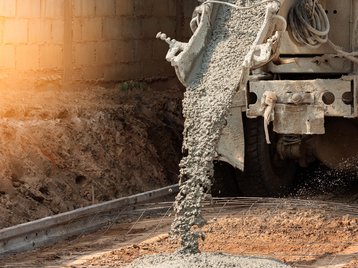
The collective purchasing group will aggregate corporate demand for low-carbon concrete, driving greater investment in clean technologies and operations. RMI and the Center for Green Market Activation will lead the SCoBA.
It will utilize a "book and claim" system, which it claims will allow participating companies to financially support sustainable concrete production, regardless of physical delivery location.
The book and claim system serves as a chain of custody model, enabling companies to invest directly in impactful interventions within the materials sector, thereby addressing their supply chain emissions without having to purchase those physical products directly.
Under the system, environmental attributes are sold separately from the product itself, in a manner similar to an Environmental Attributes Purchase Agreement tied to a renewable energy project.
“The cement and concrete sector’s decarbonization challenge is also one of its greatest economic opportunities,” said Jon Creyts, CEO at RMI. “By aggregating demand from major buyers and establishing rigorous standards, we’re creating the market conditions for breakthrough low-carbon cement innovations to scale. RMI is proud to work with GMA and leading organizations to launch SCoBA and enable concrete producers to invest confidently in clean and resilient materials.”
SCoBA will aim to connect its members with leading sustainable cement manufacturers via a competitive procurement process for low-carbon cement and concrete certificates. The program is expected to begin later this year.
The first Request for Information (RFI) is now open for applications.
The RFI will seek information from suppliers regarding the current availability of low-carbon cement and concrete, including their performance characteristics, prospective use cases, and operational approaches for environmental attribute certificates. Additionally, it will inquire about any opportunities or challenges related to participating in a book and claim system.
“SCoBA represents a significant advancement in how the industry approaches sustainable construction materials,” said Chris Atkins, director, Worldwide Operations Sustainability at Amazon. “Its innovative procurement process and book and claim framework provide the tools needed to support lower-carbon concrete production at scale. Such efforts are critical in driving the broader market toward the materials needed for a net-zero future.”
Alongside Meta and Amazon, real estate logistics firm Prologis is also a founding member.
Concrete is a crucial material in the construction of data centers, however, it is also a major global emitter, currently accounting for around eight percent of global carbon emissions. While low-carbon options do exist, they currently lack the scale to supply the entire sector.
Several data center firms have already partnered with sustainable concrete manufacturers for the supply to use in data center construction. In August, Amazon partnered with Brimstone, a low-carbon cement company, to reserve volumes of its cement from Brimstone’s production plant in Oakland, California.
In May, Microsoft inked a deal with low-carbon cement firm Sublime Cement for 623,000 tons of its low-carbon cement product. Stack is also testing Sublime's cement at a Virginia data center campus.
RMI is a US-based energy and sustainability non-profit organization. In addition to the SCoBA, the non-profit also runs the Sustainable Steel Buyers Platform (SSBP), which counts Meta, Google, Amazon, and Microsoft as members.





Comments