
Arizona electrical utility Salt River Project (SRP) and Google-backed long-duration storage company Energy Dome have announced plans to deploy a 19MW, ten-hour CO2-based long-duration energy storage system (LDES) at SRP's Coronado Generating Station in St. Johns, Arizona.
Google will co-fund a portion of the project.
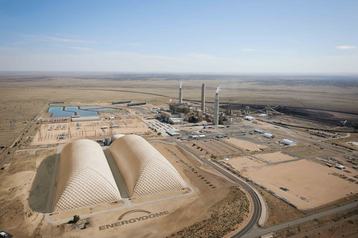
The system will operate under a 20-year tolling agreement, in which Energy Dome will own and operate the facility, and SRP will dispatch its output. The system is expected to be operational sometime in 2029. EPRI, the independent energy research institute, will monitor performance data from the project.
"As energy demand continues to grow, SRP is evaluating new energy storage technologies that could support SRP's effort to diversify its battery energy storage portfolio as we work to meet the Valley's growing energy needs with affordable, reliable, and sustainable power," said Chico Hunter, SRP manager of innovation and development.
The project is part of a broader partnership between Google, SRP, and Energy Dome that seeks to support the development and deployment of non-lithium-ion long-duration energy storage technologies. It was selected through an SRP request-for-proposals for storage pilots issued in 2024.
Google selected Energy Dome as its first LDES partner last year. The deal signed last July saw Google directly invest in the firm.
"At Google, we are committed to catalyzing next-generation energy technologies to bolster grid resilience and introduce vital new capacity to the system," said Lucia Tian, director of advanced energy technologies at Google. "This second project and important milestone in our collaboration with SRP builds on our long-term partnership with Energy Dome, and will help deliver dependable, cost-effective, and sustainable energy for Arizona's ratepayers."
The Milan-based LDES firm has developed a novel CO2 battery that utilizes CO2 stored in a unique dome-shaped container. The system is deployed when renewable energy is abundant on the grid and uses the power to compress CO2 gas into a liquid. When the grid requires more power, the liquid CO2 expands back into a hot gas under pressure, which spins a turbine that can feed energy back into the grid for periods ranging from eight to 24 hours.
The company has developed a 20MW/200MWh battery, which it claims has a lifetime of more than 30 years. According to Energy Dome, the technology does not rely on any critical minerals, only using water, steel, and CO2. It has a deployment time of under two years, with every component used in the system standard, which improves economies of scale
Google isn't the only hyperscaler to back an LDES firm. In April, Meta followed suit, inking a deal with Noon Energy to reserve up to 1GW/100GWh of energy storage capacity.





Comments