
New Zealand mobile carriers 2degrees and One NZ have proposed a JV that will see the two companies combine their respective radio access networks (RAN).
The proposal will see the duo form a separate business where the entity will own, manage, and operate their radio access networks (RANCo) on behalf of the two carriers.
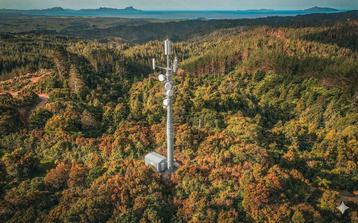
This will include the companies' RAN infrastructure, including the antennas and base stations installed on cell towers.
Both companies will still remain fully independent mobile network operators and continue to compete strongly across the New Zealand market, while each will retain ownership and control of the parts of its mobile network and business that enable competition and differentiation, including spectrum management rights, core networks, fiber backhaul, and satellite.
The plans aim to drive more efficient investment into expanding mobile coverage, increasing network capacity, accelerating the rollout of 5G and future technologies, and strengthening network resilience.
Network sharing is becoming more common for telecoms operators across the world, where carriers are looking to build more efficient, cost-effective networks, while limiting duplicate infrastructure.
For example, this week in Switzerland, Swiss telcos Salt and Sunrise signed a non-binding Memorandum of Understanding (MoU) as part of plans to assess the viability of sharing network infrastructure in rural and less densely populated parts of the country.
“New Zealand can be a challenging country in which to build mobile networks. Sharing the infrastructure where it makes sense means we can deliver even more of the things that matter to customers: better coverage, greater capacity, stronger resilience and faster access to new technology," said 2degrees CEO Mark Callander. “2degrees and One NZ will remain independent businesses, competing hard for customers on price, products, service and innovation.”
"This proposal would deliver real benefits for customers by enabling us to deliver better connectivity. This includes faster access to new technologies such as 6G and improving overall network resilience," added Nick Judd, CEO, One NZ. “It supports our sustainability goals by reducing duplication of equipment and lowering overall energy use over time."
The JV is expected to complete in the first half of next year, subject to customary conditions and regulatory approvals.







Comments