
Where do you see yourself in three to four years? With the pace of innovation moving at breakneck speed, it can be hard to visualize the future – the full potential of your resources or the challenges you might face along the way. Imagine if many of those obstacles could be detected and addressed automatically, in real time, before they impact performance. While you navigate strategy and growth, intelligent systems give you a wider perspective, ensuring operations run smoothly and efficiently.
Now, bring that same logic to the data center. Implementing liquid cooling is the first step toward higher compute capabilities, but the real advantage comes from real-time visibility. By continuously monitoring what’s happening behind the scenes, operators can optimize uptime, prevent failures, and ensure every layer of operations functions at peak efficiency.
Leading the way in liquid cooling innovation
In this evolving landscape, experience and proven solutions act as guides. Ken Duncan, lead application consultant for data centers across the Americas at Belimo, has spent more than 30 years in the controls industry. Throughout his career, he had long-recognized Belimo as a leader in HVAC, known for its strong customer support, user-friendly solutions, and high-quality product range. When he joined Belimo, he found himself at the forefront of a rapidly evolving data center market.
“When the data center industry started to come alive, many of us were closely keeping track of the shift from air-cooled to liquid-cooled environments. As this transition accelerated, several companies reached out to Belimo to support product testing and development in liquid cooling. That’s really how we became naturally involved in the sector,” says Duncan.
Belimo’s established reputation quickly attracted the attention of leading GPU and CPU developers seeking solutions to increasingly complex cooling challenges, where traditional technologies were proving inadequate for direct-to-chip cooling applications.
Belimo collaborates with key industry giants to advance liquid cooling technologies. Crucially, Belimo already had a product on the market that could be adapted for this purpose, enabling a significantly faster route to deployment. Belimo’s Energy Valve delivered the level of precision and control required – far surpassing the capabilities of conventional control valves, as Duncan explains:
“In the early stages, the focus was simply understanding what our Energy Valve could do. It was tested extensively in the laboratory, as liquid cooling is still relatively underdeveloped compared to established industrial processes like oil or gas. Fortunately we had engineers highly experienced in hydronics, and our R&D department was able to prioritize and adapt our products to fit better into the cooling market.”
The fluid way forward
Traditional air cooling can no longer meet the demands of modern AI-driven data centers. The sheer density of today’s compute hardware has pushed thermal loads beyond what air systems can realistically handle.
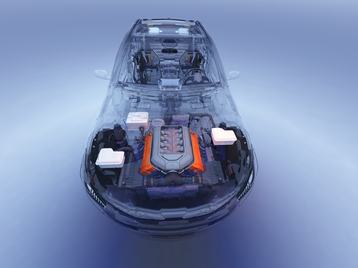
“One 120kW server rack – roughly the size of a large refrigerator – requires about 35 tons of cooling. That’s equivalent to the heat output of 14 Weber barbecues on high or the air conditioning load of seven homes. A good analogy would be a comparison between a VW Beetle that has 60 horsepower and a Ferrari with 1,000 horsepower. The VW Beetle has an air-cooled engine, while a Ferrari uses a liquid-cooled engine to reject the immense amount of heat generated. Trying to cool a Ferrari engine with air is not physically possible,” illustrates Duncan.
There is no practical alternative for removing such intense heat from such a compact footprint, which is why liquid cooling is rapidly becoming the industry standard.
Beyond fundamental thermal management, liquid cooling opens up new opportunities for energy optimization. Where current systems typically operate with fluid temperatures of around 80°F (or 27°C), requiring pre-cooling before circulation, innovations from companies like NVIDIA are pushing supply temperatures as high as 113°F (45°C). At these higher temperatures, the need for energy-intensive chilling is significantly reduced – or even eliminated – allowing heat to be rejected directly to the ambient environment.
This shift enables operators to redirect their allocated power away from cooling infrastructure and toward compute capacity. As Duncan puts it:
“We need to get smarter about how we cool our data centers so we don't use as much power on cooling, because ultimately, we want to generate tokens – we want to generate revenue as an AI factory.”
Despite its advantages, liquid cooling does introduce complexity. A typical liquid-cooled data center consists of its facility water system (FWS, the central chiller plant that generates cooling capacity) and technology cooling system (TCS, a tightly-controlled, closed-loop system that directly cools server racks). Bridging these systems is a cooling distribution unit, CDU, which serves a critical function as a heat exchanger between the facility and technology loops, preventing contamination between systems.
The TCS requires exceptionally clean water (filtered to around 20 microns) because the microchannels within server cold plates can be less than 100 microns wide – thinner than a human hair. Even minor contamination can cause blockages, much like a clogged radiator, leading to overheating.
Operationally, these systems are often managed by different stakeholders. Facility teams typically oversee the FWS, while server or rack owners manage the TCS. This division can lead to gaps in communication and visibility.
“When a data center overheats, it’s hard to tell where the issue originates. Is it a plant-side problem or something within the server cooling loop? Without integrated systems and shared data, root‑cause analysis and responsibility become extremely difficult,” Duncan explains.
As rack densities increase and cooling technologies evolve, this divide is widening. Rack owners are seeking greater control at the equipment level, while facility operators maintain authority over building infrastructure. Organizations such as ASHRAE are actively working to address these challenges, emphasizing the need for tighter integration and collaboration across systems.
Manual reporting of critical thermodynamics
Historically, liquid cooling within data centers has been approached as a hybrid of oil and gas practices and traditional HVAC engineering. As a result, many engineers defaulted to familiar HVAC communication protocols such as BACnet MS/TP or Modbus RTU – slow, serial networks that, while reliable, are not designed for the performance demands of modern data center environments.
That familiarity comes with a cost. These legacy systems limit visibility, responsiveness, and ultimately the efficiency of liquid cooling operations. Duncan explains the shift:
“We’re now talking about AI factories, not just data centers. They aren’t built to store data – they’re built to create tokens. If a traditional data center is a storage vault, an AI factory is more like a car manufacturing plant, producing continuous outputs.”
This shift raises the stakes for uptime and resilience. Any interruption – whether from cooling inefficiencies or system failures – translates directly into lost compute, lost tokens, and lost revenue.
To mitigate that risk, operators need real-time visibility into system performance and early warning signs of failure.
“Going back to the car analogy – if you own a Ferrari, you don’t wait for it to break down on the side of the road. As soon as a warning light appears, you take action,” he adds.
This represents a significant departure from traditional maintenance models, which relied on periodic manual checks or reactive interventions after a failure has already occurred, leaving you high and dry.
The principle is simple: if you can’t measure it, you can’t manage it. Modern data centers, or AI factories, require IP-based connectivity extending all the way to the rack level, enabling continuous monitoring of thermodynamic conditions. Even minor anomalies, such as debris obstructing a cold plate or a temperature fluctuation caused by a chiller outage, must be detected and addressed immediately.
There is also the critical question of optimization. Every watt consumed by inefficient cooling is a watt not available for compute – the core revenue-generating portion of an AI factory – making maximizing efficiency a direct impact on profitability.
Moreover, scale is a compounding challenge. In many facilities today, thousands of server racks are managed by small teams – sometimes as few as two engineers to 2,000 racks, as Duncan recalls. Without automated monitoring and intelligent systems, it becomes nearly impossible to detect and resolve the small issues that can quickly escalate into costly failures.
Real-time measurement and intelligent control
The monitoring and control backbone that governs how a liquid cooling system communicates with other mechanical systems in a data center is now mission-critical. Without it, operators lack the visibility and responsiveness required to manage these increasingly complex, high-density environments.
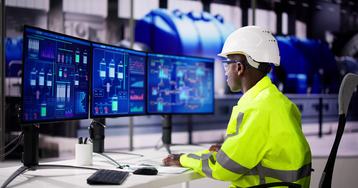


Real-time measurement offers data center operators a new vantage point to see the entire ecosystem in view. Operators can access a central workstation and immediately identify issues at the rack level, taking targeted action remotely. Emphasizing its impact, Duncan explains:
“At NVIDIA GTC, we saw how AI can proactively monitor systems and apply corrective measures without operator intervention. But if you don’t have intelligence at the direct-to-chip cooling level, you can’t leverage AI to optimize performance across the system.”
This level of intelligence depends on high-speed IP-based communication. By integrating Internet, Ethernet, or IP connectivity directly into rack-level components – such as control valves – data can be transmitted at high speed between devices and across the wider infrastructure. So, on top of enabling precise measurement of individual performance, operators can access insights into how each element interacts within the broader system.
Belimo, for example, is advancing zero-configuration capabilities that allow valves to auto-configure without manual setup. Predefined profiles, which are essentially digital templates of proven configurations, can be used to replicate optimal performance across multiple devices in an instant. This can significantly reduce commissioning time, eliminate human error, and ensure consistency at scale.
BMS integration
Traditional data centers have typically relied on two distinct control architectures: commercial direct digital control (DDC) systems, common in HVAC applications, and programmable logic controllers (PLCs), more often associated with industrial sectors such as oil and gas.
However, the prevalence of AI workloads is exposing the limitations of these conventional approaches.
“A traditional control system – whether PLC or DDC-based – is no match for an AI-based control architecture. The next frontier is using AI to actively support and enhance operator decision-making,” says Duncan.
In response, many data center operators are looking toward more flexible models, particularly through the use of application programming interfaces (APIs), which enable them to build customized interfaces tailored to their specific needs rather than relying solely on predefined building management systems (BMSs).
“They can manage and program systems from anywhere in the world, so they don't have to fly their technicians for on-site programming. By leveraging APIs and modern connectivity, they're automating startup, configuration, and ongoing optimization of equipment.”
Without the manpower to service thousands of valves simultaneously, automated and AI-based systems provide the relief and confidence to tend to the sheer quantity of racks that are so imperative to our digital society.
The bigger picture
Building owners today are increasingly focused on tracking, recording, and protecting themselves against potential claims from occupants. Service-level agreements (SLA) can be extremely costly, making accurate data capture essential.
In some cases, regulations may require detailed tracking or even billing based on usage. Intelligent systems that seamlessly integrate communication between components allow operators to monitor how much cooling is being consumed by each tenant or server rack, enabling fair and accurate billing. Looking ahead, Duncan stresses:
“If data centers aren't equipped with intelligent building management systems, they won’t be able to operate as efficiently as possible. Owners who ignore these technologies are making a short-term decision that will hurt them in the long run. In three to four years, their operational costs will be higher than competitors’, and when they try to lease space, their rates will be less competitive compared with more efficient facilities.”
Duncan’s overarching advice is to consult subject matter experts, not tomorrow. The pace of change in this market is rapid, and these experts have the insight to know what works and what doesn’t. With qualified engineers becoming increasingly scarce, the smart strategy is to automate as much of the building as possible, optimize energy efficiency, and maximize the revenue generated per kilowatt. Intelligent, integrated systems aren’t just an advantage – they’re essential for long-term success.
For more information, please visit belimo.com/datacenters.
More from Belimo
-

Sponsored The digital difference: Optimizing cooling with smart devices
Managing the heat output created by today’s ultra-high density workloads demands an intelligent cooling setup that can stay one step ahead
-

Sponsored The future of cooling: Scaling up sustainably with smart liquid solutions
As AI workloads grow more complex and environmental considerations push data centers toward more responsible operation, the need for smart, sustainable, and scalable cooling is fast becoming a core requirement
-

Sponsored Can’t take the heat?
As thermal demands soar, Belimo’s David Kandel shares how the company is helping the industry cool smarter, not just harder
Comments