
AI has inevitably changed the power profile for data centers. Instead of simply finding more megawatts to fuel innovation, higher rack densities, rapidly changing workloads, and pressure to bring new capacity online much faster are forcing developers to think differently about power generation.
This shift is making battery energy storage systems (BESS) a more important part of the conversation. While batteries have historically had a relatively straightforward role inside data centers, they are now being considered for load management, power quality, onsite generation, resilience, and energy islanding. For companies with deep expertise in DC electrical infrastructure, like Shoals Technologies Group (Shoals), that evolution creates a natural bridge between utility-scale solar, energy storage, and increasingly, data center applications. As these systems converge and new storage technologies and electrical architectures emerge, the ability to move and manage large amounts of DC power efficiently becomes increasingly important.
“BESS is expanding from a resiliency perspective, but is also being leveraged as a power-quality resource inside the system,” says Justin Siefkes, vice president of product and engineering at Shoals. “It’s used in new and unique ways, solving multiple problems around the electrical infrastructure.”
Siefkes joins Shoals product line manager Kishan Ponnadurai and account executive Mike Everson to discuss where BESS is headed, what technologies are beginning to emerge, and why the future of data center power could be built around an ecosystem rather than a single solution.
A technology-neutral approach to a fast-moving market
While there is no universal BESS architecture for data centers, operators are experimenting with where storage sits within the electrical architecture.
“When people think about battery energy storage, it’s usually about lithium-ion batteries, but batteries can be many different chemistries,” explains Ponnadurai. “Many emerging chemistries are specific to DC coupled outputs, which is interesting because AC coupled storage has historically been a very dominant architecture and still has the majority of the utility-scale market.”
This is exactly why Shoals is taking a technology-neutral approach. Rather than designing around a particular battery chemistry, the company’s efforts are focused on the electrical infrastructure that connects and consolidates a range of DC technologies. “Being technology-neutral, or chemistry-neutral, is important because it allows us to work with each of these architectures,” Ponnadurai adds. “They are all trying to do the same thing: consolidate DC generation.”
This technology-neutral approach also gives developers room to adapt. In a fast-moving market, battery technology specified at the start of a project may not be the one ultimately deployed. As projects increase in scale, Shoals has developed infrastructure for consolidating and moving increasingly large amounts of DC power. Data centers represent the next chapter in this journey.
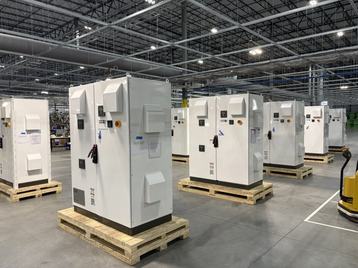
“There may be late changes that come in, and that might mean a different battery technology, but you still need to be able to deploy a reliable electrical one-line even if the technology on the battery side has changed,” Siefkes says.
Vanadium flow: Prioritizing duration
As battery technology continues to evolve, so does the need for flexible infrastructure. Shoals works across a range of storage technologies and architectures while closely tracking emerging BESS solutions, including vanadium flow and other next-generation chemistries.
“The idea is that you pump this fluid through the batteries, which converts into electrons that flow through wire and cable as positive and negative DC outputs,” Ponnadurai explains. “Those DC outputs are essentially fed into a low-voltage balance-of-system that is then connected to a data center.”
One of the benefits of this approach is its extremely long-duration energy storage system, with the ability to provide longer duration than an eight-hour lithium-ion battery. During a time when data center moratoriums are being put in place in various locations, Ponnadurai notes that having a long-duration battery supply becomes crucial to overriding them: “Moratoriums are preventing data centers from being built because they are grid-tied. If you are able to help a data center avoid being solely grid-tied, you enable faster deployment,” he adds. “However, while the technology is beneficial from a power-supply standpoint, the downside is its significant footprint.”
Iron-air batteries: A lesson on resilience
Although similar to vanadium flow batteries in their value proposition, iron-air batteries address needs from a different direction. They are designed for long-duration and resilience, which makes them an attractive solution when sustained energy supply is required more than short bursts of high power.
These batteries also highlight why comparing battery technologies on chemistry alone can be misleading, Shoals suggests. Within the data center, the priority is determining which problem a battery needs to solve.
“A technology intended to supply energy for many hours is performing a very different job from one designed to instantly respond to fast-moving AI loads,” Everson explains.
Second-life EV batteries: A modular approach to data centers
Repurposed batteries from electric vehicles (EVs) are another way to support AI data centers.
Once they are no longer suitable for vehicle use, these batteries can be redeployed as stationary storage, extending their useful life while providing modular blocks of DC energy.
This modularity is well suited to distributed data center architectures, allowing individual energy modules to support different areas of the site instead of relying on one centralized battery system. Everson explains: “The batteries are already proven. They are self-contained, they have their own fire suppression, their own monitoring systems, and they’ve been quality tested. They are ready to be deployed for a second life.”
Medium-voltage UPS: Putting batteries between the grid and the load
Not all of the innovation is happening inside the battery itself, as some developers also reconsider where storage belongs in the electrical one-line. One approach puts battery-backed UPS infrastructure at medium voltage, which exists to create a buffer between the grid and the data center load. This enables storage to play a more active role in grid management, instead of serving just as a bridge until a generator starts.
Historically, the battery was a quick buffer in the data center, with diesel generators or natural gas turbines being the main source.
Now, some medium-voltage UPS systems use batteries as the primary backup source. With a lithium-ion battery bank at their core, these systems allow batteries to be located outside the data center.
“This buffers any volatile AI or data center loads,” Ponnadurai explains. “It provides resiliency and a means to island the data center within the same infrastructure. However, you do have to go through significant voltage conversion.”
Shoals is confident this approach can effectively replace diesel generators, which have been used for decades in the data center industry. As Everson notes: “They can provide long-duration energy and back up the entire data center for a longer period than diesel generators can,” Everson says. “Traditionally, the UPS provided ride-through power to give the generators time to turn on; that goes away now.”
The technology comes as community concerns around residential power being affected by data center power usage continue to rise. Siefkes suggests how the UPS approach can help address these questions. “Because you have that buffer between the very volatile data center loads and the grid, you improve grid stability for the rest of the community while powering the data center,” Everson adds.
Given how these four technologies vary, Shoals foresees data centers using a mix of storage technologies, rather than one universal solution.
While each technology holds a share of the market, they have very distinct value propositions. Whereas the medium-voltage UPS system can island the data center and stabilize the grid, vanadium flow and iron-air batteries can provide a continuous supply of energy to a data center, focused more on solving power-quality and power-supply challenges.
“This is why we need to stay technology-neutral,” Siefkes says. “It will help speed deployment as we move forward.”
Why DC actually matters
DC is perhaps the common thread across many of the battery technologies currently under consideration. As the data center industry moves toward 800VDC architectures, higher-voltage batteries and technology that can accommodate increasing rack densities are attracting greater attention.
“We are fundamentally looking for DC out of the box,” Everson explains. “What matters is that the system delivers DC power so we can consolidate and simplify for the customer.”
The opportunity lies in reducing the number of times power has to be converted as it moves from its source towards the computing load. Having fewer conversion stages simplifies the architecture, with the goal of reducing the amount of equipment required and improving overall system efficiency. In this vein, Shoals has its Power Hub offering, designed specifically for critical power infrastructure to consolidate DC power from different battery technologies without tying electrical architecture to a single chemistry. This means a battery can be selected according to the job it needs to perform, and the Shoals Power Hub infrastructure brings all the DC outputs together.
Similarly, to advance its data center offerings, the company has also launched Shoals Air Link, a power distribution solution specifically for data center whitespace. It aims to bring Shoals Technologies closer to the IT load in its ambition to simplify the electrical path, making infrastructure more flexible.
“AC will likely always be part of the conversation, but in our hybrid architecture – where you can go from a DC source to a DC load limiting or removing power conversion in between – you can be really energy efficient,” Siefkes adds.
How speed to power can drive experimentation
Having greater infrastructure flexibility matters as data center development timelines intersect with longer timelines for traditional power infrastructure. Grid connections are taking even longer to secure now, at the same time as developers are faced with larger demands and faster speed to power requests.
“That’s one reason a lot of people are looking at solar to support data centers,” Siefkes says. “There are challenges like land availability, but the speed to deployment side is attractive.”
Meanwhile, rapid AI adoption is intensifying pressure to bring data centers online in as little as six months, even though equipment lead times can extend from 12 to 24 months.
“It’s causing people to be creative in how they build infrastructure, which is why we are seeing so many new architectures evolve at once,” Siefkes adds. “We are all trying to solve the same problem in different ways, but the solution that stands out will likely be the one that is fastest to market and fastest to install.”
This power evolution is also happening alongside rapidly rising power density inside the data center, as a result of an overwhelming appetite for digital transformation.
“As we try to solve that challenge and drive efficiency, a lot of different technologies and architectures are being explored,” Siefkes says. “Many of them involve shifting the electrical architecture to support higher power and more efficient distribution.”
Building customized products to support an energy ecosystem
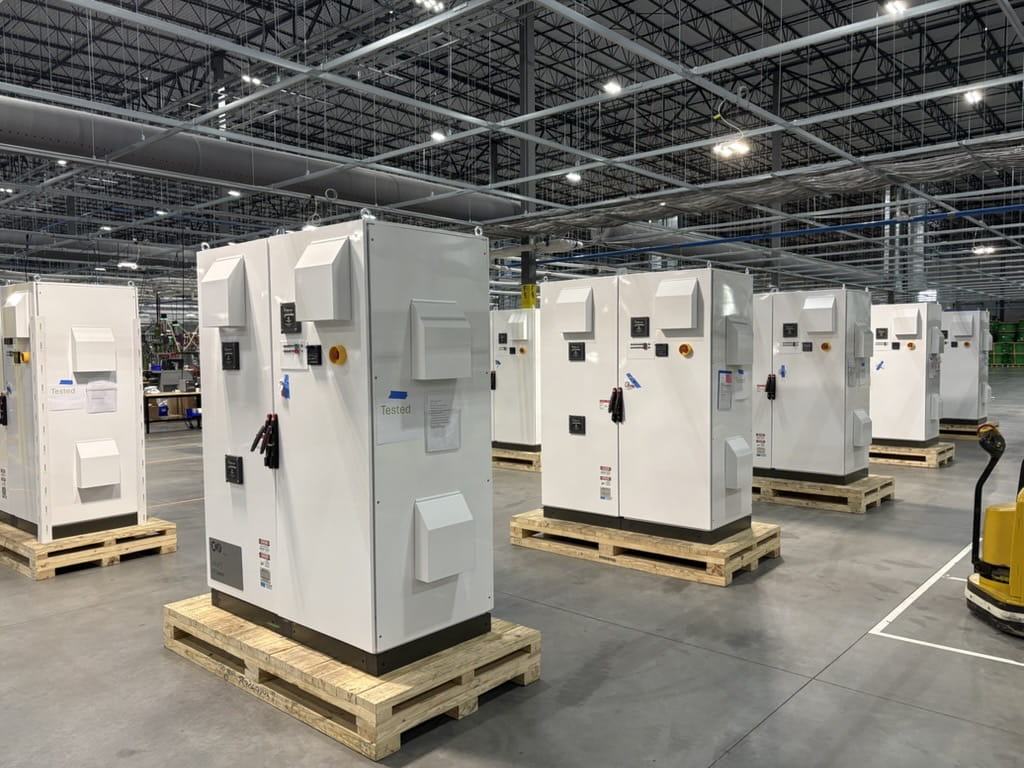
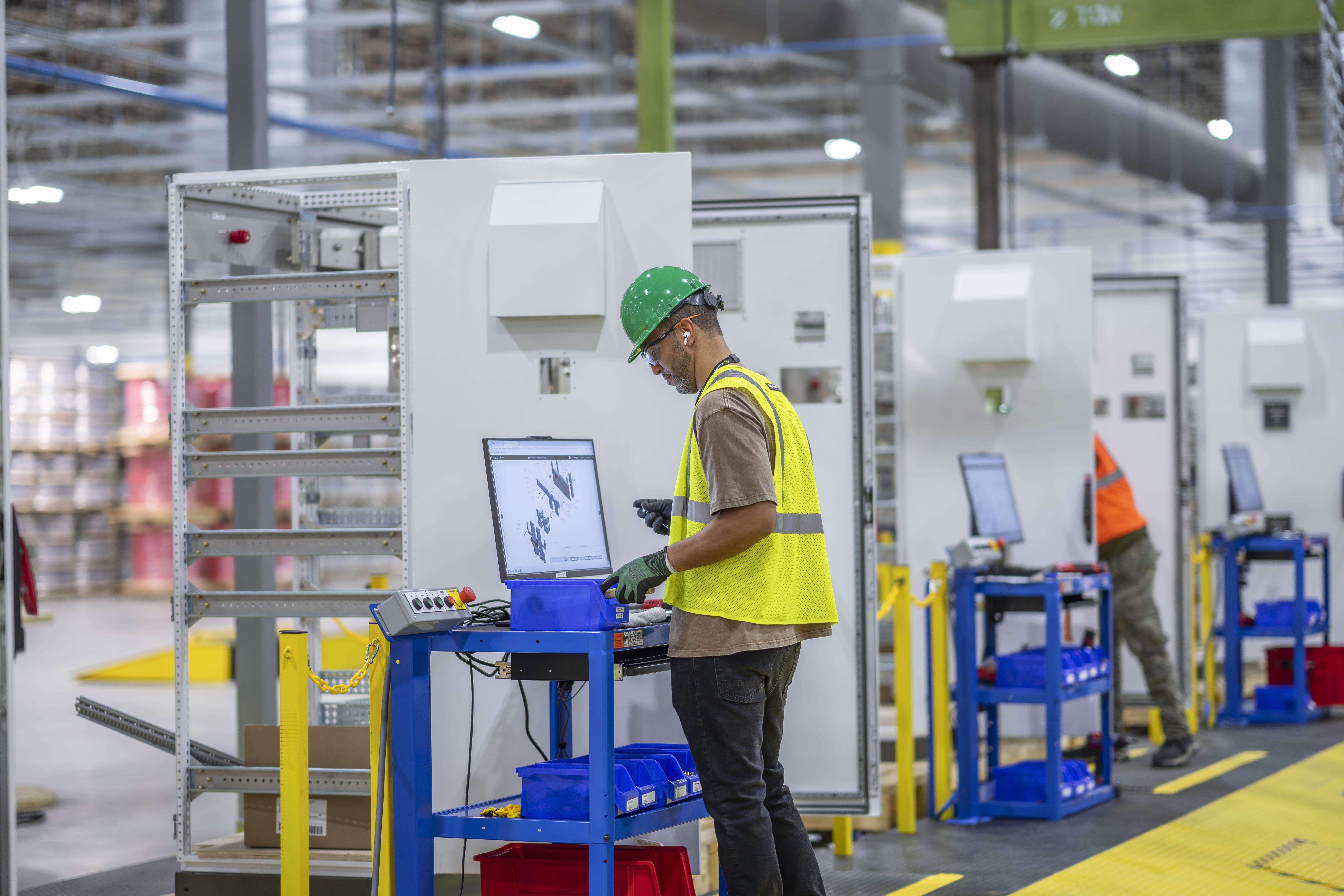
More than ever, developers and operators require partners capable of helping them move from innovative concepts in energy storage technology, to something that can be manufactured and deployed at a massive scale. This requires the industry to rethink more than engineering, but to consider their supply chains, production capacity, and the ability to customize solutions. To achieve this, Shoals works with customers to provide what Siefkes calls a “boutique experience” – co-developing a solution that truly fits their needs, quickly and collaboratively.
“To do this, we’ve invested in our own infrastructure, supply chain, and manufacturing footprint,” he says. “We’ve just brought a new facility online in Portland, Tennessee that gives us the capacity to scale production and support gigawatt‑scale data center deployments from a lead-time and throughput perspective.”
Shoals’ customization abilities sit alongside standardization. This could lead to companies making decisions faster, with the flexibility to accommodate different battery technologies as its platform evolves.
“Whatever the technology is, our products are largely universally applicable,” Everson says. “We have several product families we can offer, and we can customize them to support the specific application and technology.”
However, BESS is only one piece of the puzzle. As the data center industry is faced with generation, storage, electrical distribution, and IT loads becoming more interconnected, it is moving towards how multiple technologies can work together as one power system.
“That grid-to-chip story, creating a cohesive product portfolio that connects generation to the load, is what we are really excited about,” Siefkes shares. “It positions Shoals to support data centers and their rapidly growing demand.”
Ponnadurai adds: “As we look to the future and everything being built around us, we are now thinking in terms of building an ecosystem.”
Learn more about Shoals Technologies Group and its energy storage and data center solutions here.
Related stories
-

Sponsored BESS is becoming the bridge between AI data centers and the grid
Battery energy storage is becoming essential for AI data centers, helping bridge grid constraints, support resilience, and accelerate speed-to-power
-

Sponsored Shoals Technologies Group and ON.energy to deploy critical power systems for leading AI data center operator
ON’s medium-voltage AI UPS and Shoals’ BESS Recombiner promise to deliver a simpler, more scalable path to resilient backup power
-
Sponsored Managing complexity in the AI data center era
The conversation around AI infrastructure often centers on one question: Where will all the power come from?
Comments