
Sponsored The digital difference: Optimizing cooling with smart devices
Managing the heat output created by today’s ultra-high density workloads demands an intelligent cooling setup that can stay one step ahead
Managing the heat output created by today’s ultra-high density workloads demands an intelligent cooling setup that can stay one step ahead

Neglecting to develop a comprehensive weatherproofing strategy could land your facility in hot water. Steve Jones from Jones Weatherproofing explores why a bespoke solution should be a top priority

AI is changing data centers, transforming them from cost centers to AI factories that deliver ROI, with new approaches to how they are designed, built, cooled, and operated

Amid the challenges now synonymous with building AI infrastructure, stakeholders still expect data centers on demand. So, what are the best strategies for delivering next-gen facilities, fast?

Modular design, smart customization, and a fundamental mindset shift are reshaping how Edge facilities are designed, constructed, and scaled

The technology and infrastructure that underpin the data center are evolving rapidly. The need for comprehensive management systems that can adapt and scale at the same rate remains constant

Vertiv’s Paul Churchill explores the key challenges of supporting high-density workloads while preparing for future growth in new data center hubs across Asia

Oper8’s Andrew Kernebone explores the importance of education and mindset shifts for driving industry-wide innovation and scaling up strategically

How intelligent power distribution solves real customer challenges by delivering faster deployment, enhanced rack-level visibility, and robust security

Aravolta’s DCIM platform unifies data center infrastructure into a single-pane-of-glass view across all assets and streamlines and simplifies operations

At a time when the only constant is change, dependability is a top priority. That means prioritizing quality infrastructure and solid foundations to support ultra-high density AI workloads

Sourcing timely power is a priority for fueling the AI era. But it must also be reliable, scalable, and sustainable. That’s where fuel cell technology comes in

AI is driving exponential demand for computing power, and with that, an evolution in how data center infrastructure is designed, built, and operated

As AI drives unprecedented compute demand, Exyte is building the advanced data center infrastructure that's powering next-generation workloads safely, predictably, and at scale

Addressing unique customer requirements takes a global reach. Robert Bedard from Airedale by Modine shares how the company is providing expert end-to-end support around the world, at the local level

In the new age of data centers, DCIM (Data Center Infrastructure Management) systems must evolve to offer a proactive, real-time approach to infrastructure optimization

As AI workloads grow more complex and environmental considerations push data centers toward more responsible operation, the need for smart, sustainable, and scalable cooling is fast becoming a core requirement

Sourcing and managing enough power to support high-density, energy-hungry AI workloads is a top priority. Vertiv’s Kyle Keeper shares some core strategies for staying ahead of demand

As high-density workloads turn up the heat, Danielle Rossi from Trane shares why the company is taking a whole-system approach to cooling strategies, and driving cross-collaboration

And why it’s more than just a box-ticking exercise

How Supermicro employs a modular building block system to shape scalable, energy-efficient AI data centers
As generative AI increases data center demands, Maurizio Frizziero from Schneider Electric breaks down why cooling is no longer just a utility, but a strategic design decision
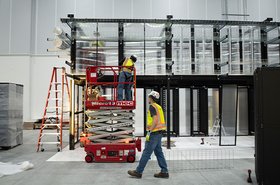
Speeding up time to market with adaptable, future-ready solutions is essential for the new age of high-density data centers. But what are the key tools to leading the race?

As power demand and densities skyrocket, adaptability is essential. Aligned Data Centers’ Michael Welch shares how modular design, flexible planning, and smart supply chains offer a future-proof path ahead