
In the rush to serve the hyperscale operators, the needs of local enterprises, especially in Europe, risk being forgotten.
The big colocation providers are scurrying to deliver massive campuses for the traditional cloud providers as well as the raft of new AI neoclouds. But a new wave of Euro-centric operators see opportunity in serving local customers in markets away from the traditional FLAP-D locales with smaller facilities.
Portus Data Centers is one such European colocation operator looking to build out a platform focused on serving the local needs of local users away from the traditional hyperscale markets.
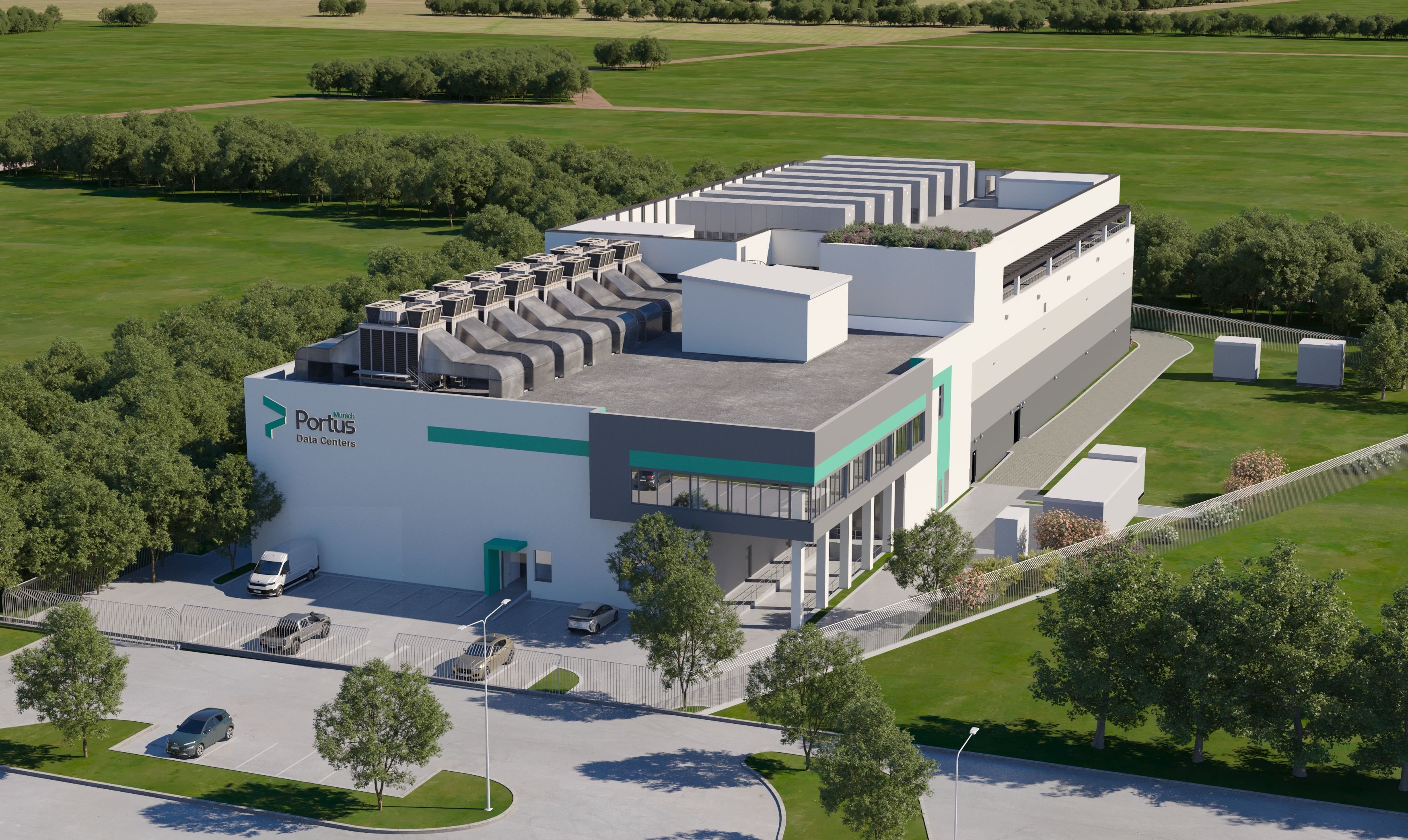
“Big is relative,” says Adriaan Oosthoek, chairman of Portus. “A 5.5MW data center in Munich for Digital Realty or whoever, it's completely subscale. For NTT, it is too small. But it's big enough for us.”

Issue 58 - The UK's copper switch off
How BT and Openreach are approaching the end of copper
A new local European operator
Portus was formed in December 2023 as a roll-up of investment firm Arcus Infrastructure Partners’ data center acquisitions.
December 2022 and January 2023 saw Arcus acquire Luxembourg operator European Data Hub (EDH) and Munich’s SDC SpaceNet DataCenter in Germany.
After the acquisition of Internet Port Hamburg (IPHH) the following December, the three regional facilities were grouped together under the new Portus name with Oosthoek as chairman. The three companies were acquired by Arcus’s European Infrastructure Fund 3 SCSp (AEIF3); terms weren’t shared for any of the deals, but they gave Portus 5.1MW of data center space.
“The premise here is a buy-and-build strategy in order to build a regional colocation platform,” Oosthoek tells us during our chat in March 2025. “The plan is to add one or two more diverse locations, probably in Germany, over the next 12-18 months.”
Oosthoek was previously SVP of operations, construction, and IT at Interxion until 2022. He has also held roles at Colt Technology Services, TeleCity, Redbus Interhouse, Teles, and Racal Datacom.
Oosthoek says that, as well as acquiring quality assets, the company has been keen to lean into the benefits of buying experienced local teams that know their facilities and customers inside out.
“There is 25 years of history in Hamburg, and about 15 years in Luxembourg. Portus is an interesting mix of new startup as well as a lot of history and people that have been with the company for many years.”
“Even in Germany, when you speak the language and the accent in Bavaria, that helps. We have a local guy as general manager in Munich for that reason. He knows the market, he knows the culture, he knows the people, he knows the infrastructure.”
Buy, build, expand
Portus is primarily targeting regional cities in Germany, and will most likely be avoiding Frankfurt, the country’s hyperscale heartland. While the company has a preference to buy established data centers, Portus isn’t afraid of greenfield development.
“We have a list of cities where we want to be, and we are exploring greenfields and acquisition opportunities,” Oosthoek says. “When we acquire assets, we use that as our hook into that market and then find expansion opportunities alongside the existing business.”
He notes greenfield developments would see Portus targeting facilities with 4-10MW of IT capacity.
“Greenfield is a little bit more difficult in a new market. But if there's no opportunities to acquire, then greenfield is the way to go. We’re working on both.”
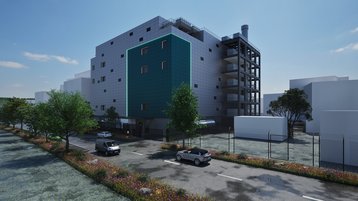
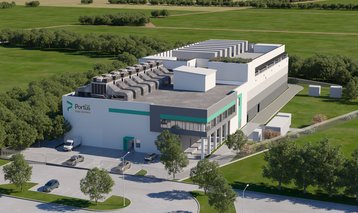
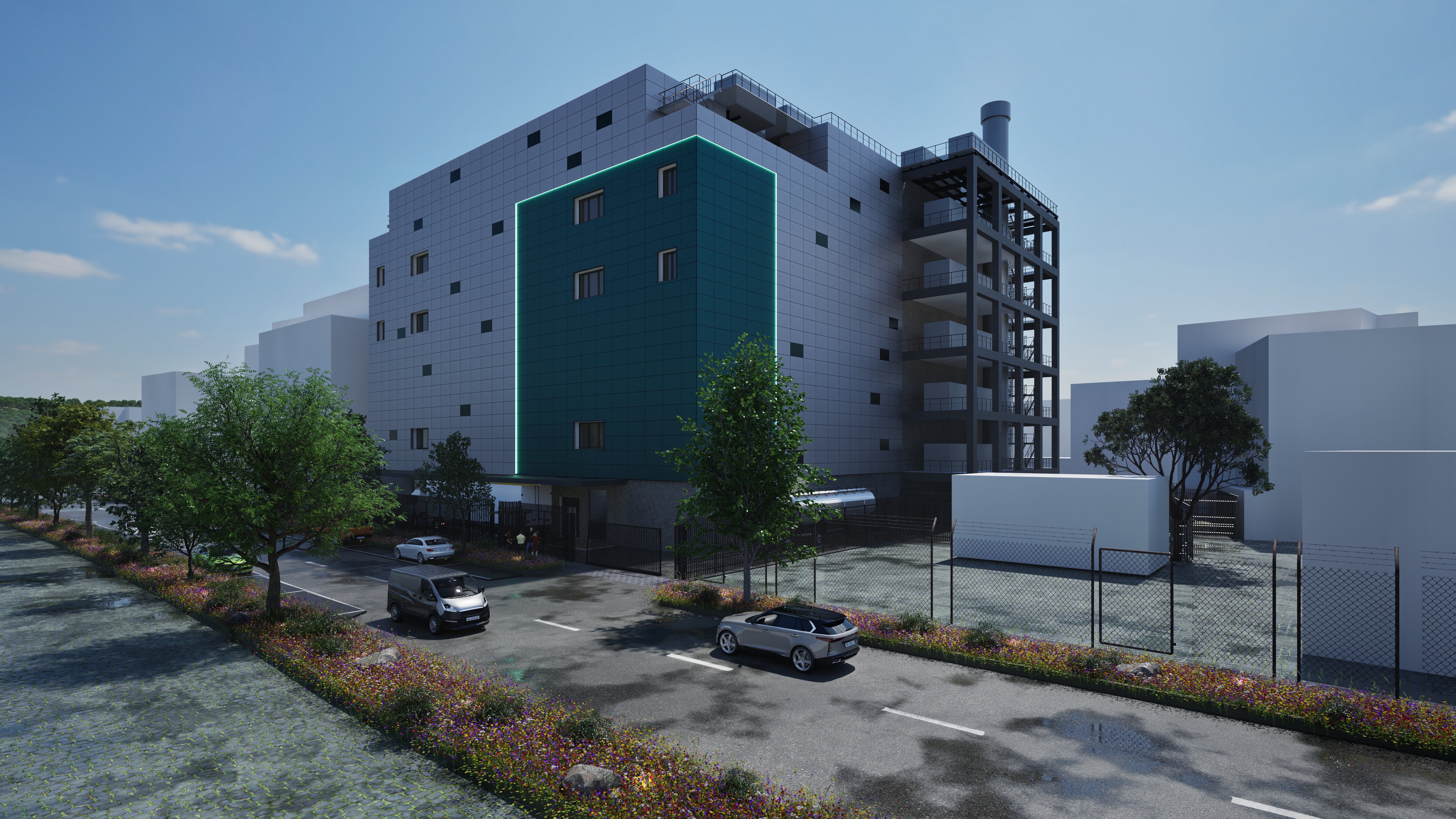
As well as expanding to new sites, Portus is building out the footprint it already has. The company has announced planned expansions at all three acquired sites, including the addition of 2.2MW in Luxembourg and 12.8MW across two buildings in Hamburg.
An underserved market
Portus is being set up on the premise that there’s a sizeable niche to serve companies that need colocation capacity in Tier 2 markets, but want something with more scale than a local provider with one location can provide.
“It's really clear that in Europe, the big guys are focusing on their big customers,” says Oosthoek. “The likes of Digital Realty, Equinix, Vantage, and all these guys are running 100 miles an hour just to serve a handful of big customers. It takes all of their energy, all of their capital, all of their mindshare. They really don't have any time left or money left to develop smaller locations.”
“Those guys are not investing currently in regional locations. And where they are present in regional locations, you even see some of these guys moving out, divesting smaller sites, because they want to focus their very large campuses to serve the large customers.”
One driver is sovereignty. European customers can often be wary of putting sensitive data in facilities owned or operated by US company, so having a European-owned local provider makes an attractive alternative. Portus already serves a number of European institutions out of its Luxembourg site.
“You see the big cloud providers delivering and developing sovereign cloud solutions,” says Oosthoek. “But there's a sentiment that customers simply don't trust the sovereignty of those solutions. They want to see things that are proven to the European or German, and we were working on a number of opportunities right now that are going in that direction.”
Beyond the demand for sovereign capacity, Oosthoek says he is still seeing local regional demand, especially around local governments, hybrid cloud deployments, or companies repatriating workloads back from the public cloud.
“If an enterprise in Munich repatriates workloads from the public cloud, which is probably sitting in Frankfurt, there is no reason for them to put it in a data center in Frankfurt,” he says. “There's more reason for them to put it in a data center near to them that's local in Munich. That's starting to appear more and more as real demand.”
On AI, Oosthoek says the company is seeing GPU deployments from smaller enterprises, often academic research, industrial robotics, of healthcare, but they tend to be around 15-20kW rack, which can be air cooled.
He expects lower-density inference workloads to be a major driver for regional AI deployments in the future.
“There's probably 15-20 companies out there deploying infrastructure all across the world, and more and more in regional locations,” he notes. “These are much more either AI inference-type workloads, which we're starting to see a little bit, CDN workloads, or more network-like workloads to serve local customers in the region.”
The company hasn’t looked to retrofit existing sites for liquid yet, but is designing its expansions and new-builds to cater for both liquid and air with densities up to 50-60kW per rack – even if it isn’t seeing requests for that yet.
“The name of the game in colocation is making sure you design such that you remain flexible,” Oosthoek says.
Going local internationally?
Founded in 2009, Arcus is an independent infrastructure fund manager with a focus on the European mid-market, with some €9.6 billion ($11.2bn) in assets under management. Beyond Portus, it has previously invested in tower companies TDF and Shere Group, fiber firms Swiss4Net, E-Fiber, and FixMap, and numerous other firms in the industrial and energy sectors.
The company isn’t the only investment firm looking to build out new ‘regional Edge’ operators targeting Tier 2 markets across Europe via a build and buy strategy, showing investors believe there is a real demand for local regional data center capacity. The likes of nLighten, Etix, NorthC, and Netherlands-based Switch Datacenters are among those targeting smaller European markets.
Portus is focused on serving Germany and adjacent countries. On going further afield, Oosthoek says Arcus is firmly focused on Europe and isn’t looking to expand Portus into Asia, Africa, or the Americas. He notes, however, that Arcus could set up new data center platforms for other parts of Europe that could work together with Portus, although there are no firm plans to do so yet.
The company is hoping that by serving local enterprises via a regional platform covering a few markets with in-market expertise, it can offer a niche that isn’t currently well-served.
“The competition is local players, and this is where we can excel,” Oosthoek says. “We're planning to build a bigger company with a number of locations. So with us they also got more ability to go elsewhere if they wanted to. Not just one or two sites, but maybe ending up with 15 or 20.”



Comments