
Earlier this year, a new tower infrastructure company caught the attention of the telecoms industry when South Florida-based Connected Infra Group was launched.
Backed by investment firm TPG Peppertree, the company is led by a familiar name in the form of Bernard Borghei, the co-founder of Vertical Bridge and former CEO of Symphony Towers Infrastructure.
Borghei is currently in the early stages of building out Connected Infra Group after his sudden departure from Palistar Capital-backed Symphony last year.

The company raised an initial $1 billion through Investment firm TPG Peppertree to help it get up and running. TPG, a private equity firm with $245bn in assets under management, acquired Peppertree Capital Management last year, rebranding it to TPG Peppertree.
Connected Infra is aiming to scale through M&A opportunities in a market that Borghei describes as "very active."
"I started looking to start my own venture and getting back into the pure tower play, not so much easement buying, or anything like that. I still believe in the infrastructure ownership of it," Borghei told DCD.
At Symphony, the company acquires ground leases and easement rights to telecom towers, which it leases out. Borghei's new venture will instead focus on scaling up the its tower portfolio.
“We're focusing on acquisitions in order to build up the cash flow and the asset account, but we certainly will start looking for the right opportunities to get into the new build programs, as well,” said Borghei.
He notes that Connected Infra Group will buy assets across the US, from Puerto Rico to Alaska. These assets will comprise both telecoms and broadcast, he adds.
“We want to win the deals that make sense for us to win, we're going to be patient and disciplined investors that we've always been. We have our investment thesis, we have the model. We're not going to be chasing deals,” said Borghei.
He declines to disclose how many towers the company is aiming to acquire over the first few years, or how many tower assets the company currently owns. Some of the biggest tower companies in the US, such as Crown Castle and American Tower, own more than 40,000 towers across the country.
“I don't have a limit. I know where I want to be at a minimum, but I don't have a limit as well as how big we should be. We're going to try to win as many deals as we can,” he adds, keen to point out that the most important thing is to manage each asset effectively.
For the time being, he adds, the focus will be to expand the company's tower footprint across the US, though he doesn't rule out international markets in the future.
AI driving the conversation, but not at the tower yet
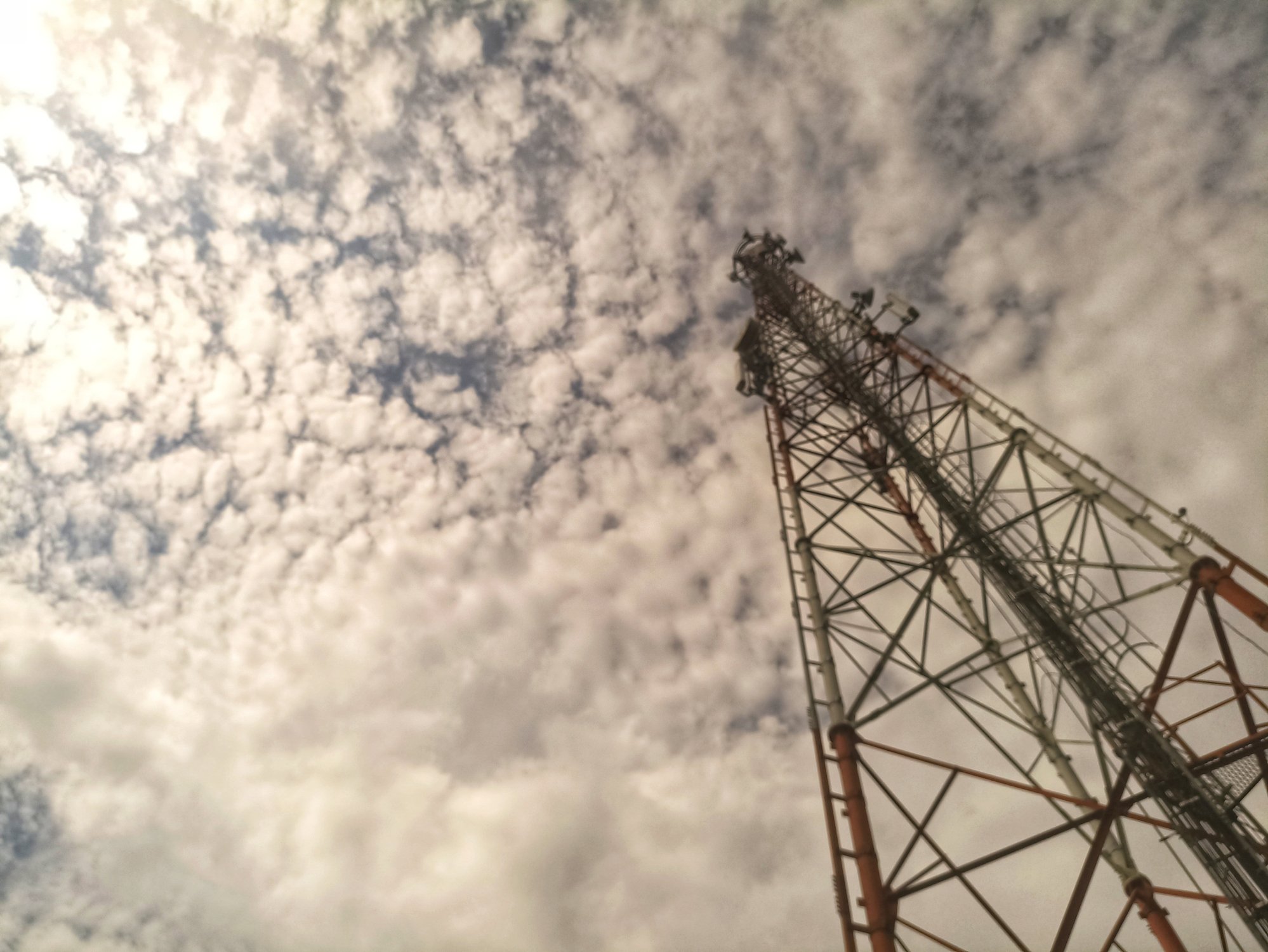
Tower infrastructure is set to play a big role in how the networks of the future are connected.
This is already the case with 5G, which is increasingly incorporating AI within its RAN, and is expected to accelerate with the arrival of 6G, which is almost certainly going to be AI-native.
Borghei said that the tower infrastructure sector is active, even without feeling the immediate impact of building for AI's emergence.
"There are about 8,200 new tower build permits active in the United States between the carriers and the tower companies, so it goes to show you that the tower side of the industry is still pretty active, and the impact of AI and the AI applications that are coming haven't really been felt much on the handsets yet," he explains.
The emergence of ChatGPT and other AI apps, along with 6G standardizations taking shape, will put more "stress on these wireless networks," notes Borghei, who highlights the need for more tower infrastructure.
Optimism around spectrum
During his tenure at Connected Infra Group so far, Borghei's been keeping a close eye on the spectrum situation unfolding.
There have been transactions involving the big three telcos and UScellular for example, or AT&T's $23 billion acquisition of spectrum from EchoStar's Dish. But there's also been some movement around auctions following the spectrum lapse back in 2023.
Last year the Federal Communications Commission (FCC) regained its ability to authorize spectrum auctions, after Congress allowed the FCC's authority to lapse in March 2023, the first time this happened.
This means that the FCC can once again hold auctions, which will likely see telcos snap up more spectrum to deploy across tower infrastructure. Last week, the FCC set out a plan to auction 160MHz of spectrum in the upper C-band by July 2027. Meanwhile, the AWS-3 spectrum auction last month raised $3.5bn.
Such activity is "positive" for the sector, states Borghei.
"Obviously, the FCC had to be reauthorized by the Senate and the House in order to be able to have a spectrum auction, so that moved quickly, and this current regime in the FCC is very pro infrastructure," said Borghei.
"That all creates activities, and those plans translate into search rings and tower locations. We're excited about it, and we know that there's more coming as well. All of this is positive news for the infrastructure side of things."






Comments