
It’s been another blockbuster year in the world of compute, storage, and networking, with 2025 bringing with it a flurry of news stories spanning everything from new chip fabs and quantum computing deployments to record-breaking financial results and bigger AI compute clusters than we’ve ever seen before.
However, while processors - and how we can make even more of them - have dominated the conversation this year, as we move into 2026, the industry is facing a storage and memory chip capacity crunch, with some technology already reportedly sold out for the next two years.
But, before we start to speculate on what the next 12 months might bring, here’s a look back at some of the standout stories from this year, in case you missed them the first time around.
The fab more
Arguably, one of the most significant semiconductor stories from 2025 is the resurgence of chip manufacturing in the US. The project was started by former President Joe Biden with the passing of the CHIPS and Science Act, and, since starting his second term in office, President Donald Trump has continued to foster these efforts, even if his methods might have been considered a little unorthodox – we’re still waiting for the chip tariffs on foreign firms he’s been threatening since January.
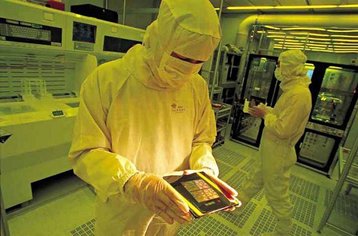
While a lot of investment deals were first announced under Biden and were boosted by financial incentives promised by the US government, the biggest pledge this year came from Apple – a company not in receipt of any CHIPS Act funding – with its $600 billion American Manufacturing Program. Apple’s decision may have been driven by pragmatism, rather than patriotism, given that Trump has threatened massive tariffs on goods made in China, where Apple currently assembles most of its iPhones.
Working with partners including Applied Materials, Amkor, Broadcom, Corning, Coherent, GlobalFoundries, GlobalWafers America, Samsung, Texas Instruments, and TSMC, Tim Cook’s company said the program will support US production and secure the domestic chip supply chain, creating 20,000 jobs in the US, with the vast majority focused on R&D, silicon engineering, software development, and AI and machine learning.
TSMC was another big investor, announcing in March of this year that it planned to spend some $100bn on its US chip manufacturing efforts, almost doubling the $65bn investment it had previously pledged for its semiconductor fabs in Phoenix, Arizona. Micron also said it was planning to invest $200 billion to boost chip manufacturing in the country, a $30bn increase on the company’s previously announced investment plans.
Since TSMC made its announcement, both AMD and Nvidia have stated that their respective chips have started to be manufactured at the Arizona fab.
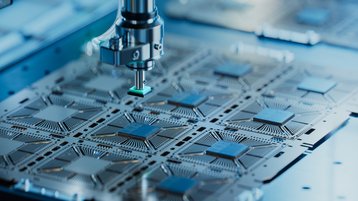
However, in July, AMD CEO Lisa Su said that chips manufactured at TSMC’s Arizona fab would be “more than five percent but less than 20 percent” higher in terms of cost than those produced by the chipmaker at its facilities in Taiwan. She went on to add that it was a “very good investment to ensure that we have American manufacturing and resiliency.”
Trump has long been critical of the CHIPS Act, arguing that the government should levy tariffs on the semiconductor industry instead of handing out grants and loans to chip companies. In August 2025, Secretary of Commerce Howard Lutnick said that the government would be looking to take equity stakes in companies set to be in receipt of grants under the Act, a comment that was followed a week later by the announcement that the US government had taken a 9.9 percent stake in Intel.
Under the terms of that deal, the state invested $8.9 billion in Intel – $5.7bn of which came from funds that would have been awarded to the company through the CHIPS Act, and $3.2bn from funds under the Secure Enclave program. Intel, which should be in pole position to benefit from this US manufacturing boom, had another muddled year, appointing Lip Bu Tan as CEO and shuffling its top team, all while making thousands of staff redundant and canceling plans for chip fabs in Europe, and taking investment from erstwhile rival Nvidia. Maybe 2026 will bring better fortunes for the ailing firm.
In July, the Department of Defense acquired a 15 percent stake in rare earth magnet company MP Materials, and in December, the Department of Commerce announced it had agreed to a similar deal with chip-making technology startup xLight, with the government set to invest $150 million in exchange for an undisclosed equity stake.
Trump also made headlines earlier this year when it was revealed that, in exchange for granting export licenses to Nvidia and AMD for sales of their respective MI308 and H20 GPUs, the companies had agreed to pay the US government 15 percent of the revenue from sales of the chips. To date, neither company has sold any of those chips to China.
Deals, deals, deals, they just can’t say no
Is there a company that OpenAI and Nvidia haven’t announced they’re partnering with this year?
January kicked off with OpenAI joining hands with Oracle, SoftBank, and Abu Dhabi’s MGX to announce Stargate, a $500 billion project to build a number of large data center campuses across the US in the next four years – Stargate has since become a global project, with data centers now announced across Europe, the Middle East, and Asia.
Following that announcement, the deals started coming, and then didn’t stop coming.

The TL;DR version goes something like this: First, Microsoft invests in OpenAI, which buys chips from Nvidia, which then invests $100 billion in OpenAI (although it turns out that deal still hasn’t been finalized), and starts selling chips to Oracle. OpenAI then snaps up cloud capacity from Oracle in a deal reportedly worth $300bn, which, in turn, invests in OpenAI.
Now there's AMD, which OpenAI buys chips from in exchange for 10 percent of the company and the promise of bringing 6GW worth of AMD processors online, including a 1GW data center in 2026.
And, speaking of chips, OpenAI also announced it had partnered with Broadcom to co-develop custom AI hardware, with 10GW of chips set to be deployed by 2029. The financial terms of that deal have not been disclosed.
Then along comes CoreWeave, which OpenAI invests billions of dollars into. There’s also an apparent deal in the works between OpenAI and Google Cloud, not to mention the $38bn cloud deal OpenAI signed with AWS for access to Nvidia Grace Blackwell GPUs.
And let’s not forget Anthropic, which purchased $30bn in Microsoft Azure credits, with Nvidia and Microsoft then announcing plans to invest $10bn and $5bn in the company, respectively.
Nvidia – which briefly became the world’s first $5 trillion company this year – has also invested $5bn in Intel and $2bn in Synopsys, and has announced plans to double its spend on cloud compute capacity over the next six years to $26bn.
Questions have to be asked about how companies are spending such vast sums on technology that, for the most part, isn't ready. Just this month, IBM's CEO, Arvind Krishna, said he couldn’t see how gigawatt data centers could turn a profit, and raised concerns about how quickly the chips inside the data centers go out of date.
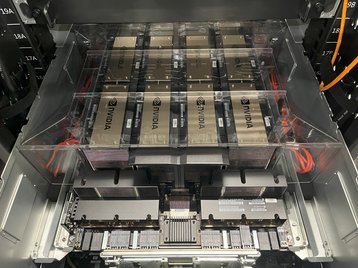
OpenAI was valued at $500bn following an employee share sale in early October that saw current and former employees offload around $6.6bn worth of stock. Despite this, the company has yet to turn a profit, making it unclear how it plans to finance many of its recently announced deals or realize the $200bn of anticipated revenue it is forecasting for 2030.
In late November, HSBC analysts said the generative AI giant would need to find $207 billion in new funding by the end of the decade to pay for its AI data center expansion plans.
By the way, is it time to sell those Nvidia shares you’re sitting on? SoftBank and Peter Thiel’s fund Thiel Macro thought it was.
Japanese conglomerate SoftBank sold all $5.8bn worth of its Nvidia shares in October so it could further invest in OpenAI, a decision that apparently reduced its CEO, Masayoshi Son, to tears. Thiel Macro, meanwhile, also offloaded its entire Nvidia stake in November, with the 537,742 shares worth about $100 million.
But don’t worry, there’s definitely no AI bubble. Nvidia CEO Jensen Huang was quite clear about that following the company’s Q3 results, for which Nvidia posted record earnings, up 62 percent year-on-year to $57 billion this quarter – although, despite the sales surge, shares in the company still fell.
“If we delivered a bad quarter, it’s evidence there’s an AI bubble – if we deliver a great quarter, we’re fueling the bubble," Huang said in a town hall following the results, before going on to add: "The only thing standing between America and recession is us."
Oh, and Nvidia is also definitely not another Enron, in case you were wondering.
Quantum of promise
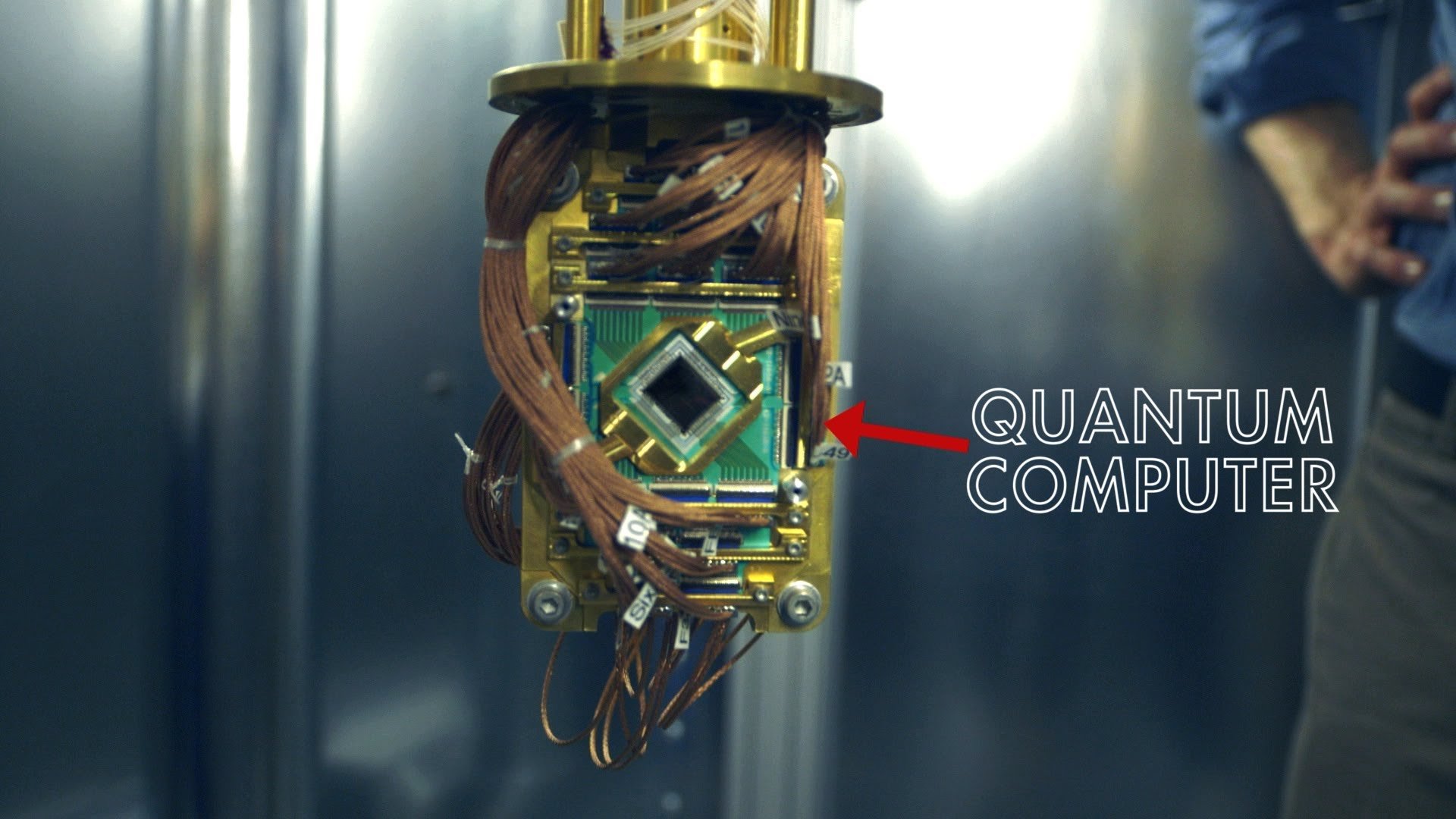
Will useful quantum computers be available before the end of the decade? Has anyone actually achieved quantum advantage yet? Which quantum modality will ultimately come out on top?
The answer to those, and many other questions, largely depends on who you ask – IBM remains sceptical towards those who have thus far claimed quantum supremacy (here’s looking at you, D-Wave) but announced earlier this year that it expects it will achieve the feat by the end of 2026, and is on target to develop a fault-tolerant quantum computer by 2029.

Governments around the world are also sold on the potential of quantum computing, and 2025 has seen a number of them pledge significant investments to further support the development of the technology.
In November, the United States government’s Defense Advanced Research Projects Agency (DARPA) announced that 11 companies had been selected to advance to Stage B of its Quantum Benchmarking Initiative (QBI), a program which aims to determine whether it's possible to build a fault-tolerant quantum computer within a decade, and if any quantum computing approach can achieve utility-scale operation by 2033.
Additionally, in a move mimicking the Trump administration’s newfound approach to courting chip firms, the US government has also reportedly engaged a number of quantum computing companies in talks with a view to taking equity stakes in the businesses in exchange for federal funding, although no such deals have so far been announced.
North of the border, the Canadian government announced more than CA$74 million (US$52 million) in funding for quantum technology projects as part of Canada’s National Quantum Strategy, including 107 initiatives spanning quantum computing, communications, encryption, materials, and sensing.
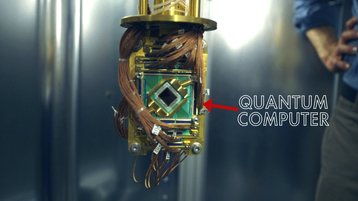
Meanwhile, across the pond, the UK government announced that it had signed partnerships with a number of foreign governments to collaborate on the development of quantum technologies, having already pledged earlier this year to invest £121 million ($160m) as part of the government’s National Quantum Technologies Programme.
Agreements were signed with Japan’s National Institute of Advanced Industrial Science and Technology to support UK-Japan collaboration in quantum computing research, and with the Australian government to support the launch of the National Metrology Institute – Quantum (NMI-Q). A joint UK-Canada funding call was also put out to garner support for quantum communication technology over land or in space.
The British government says it remains focused on delivering its five ‘Quantum Missions,’ first announced in 2023, which provide milestones for investment and research to help secure what the government called the UK’s “status as a world leader in [quantum] technology.”
Finally, the European Union’s EuroHPC joint undertaking inaugurated its first two quantum computers following the signing of six hosting agreements with sites across Europe in 2023. Dubbed PIAST-Q, the first system deployed under the scheme is housed at the Poznan Supercomputing and Networking Center (PSNC) in Poland. This was followed two months later by the inauguration of an IQM system – known as VLQ – at IT4Innovations National Supercomputing Center in Ostrava, the Czech Republic.





Comments