
Apple claims it will invest an additional $100 billion in the US over the next four years, in support of its newly launched American Manufacturing Program (AMP).
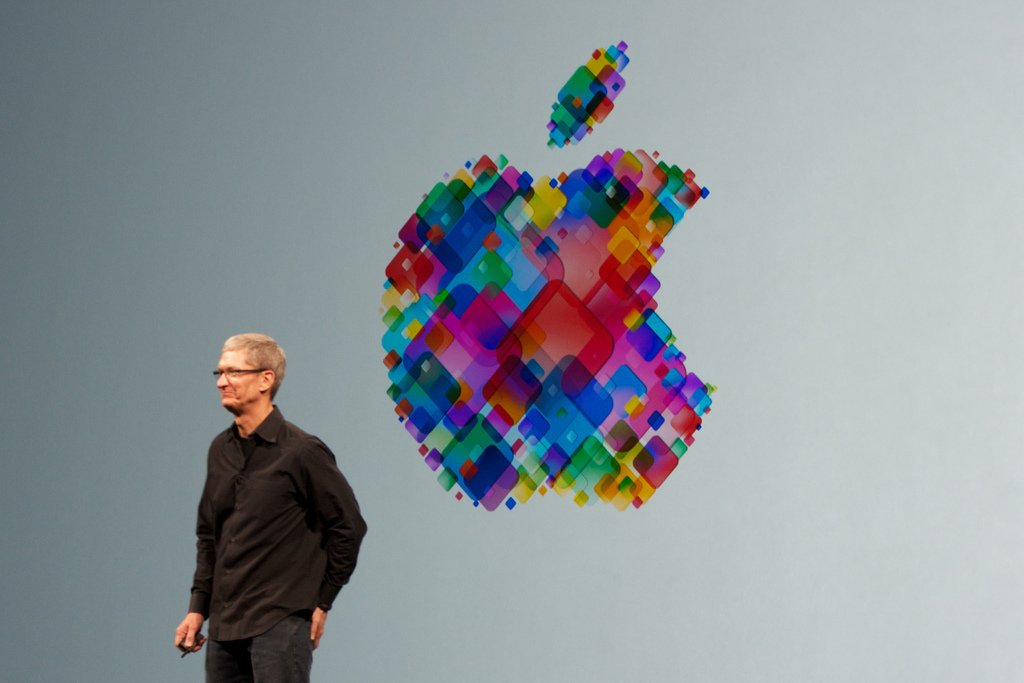
Announced by the company’s CEO Tim Cook on August 6, Apple said its additional investment would bring its total spend across the US to $600bn, while AMP will see it expand manufacturing efforts in the country with ten companies that produce component parts for Apple products.

The first AMP partner companies include Applied Materials, Amkor, Broadcom, Corning, Coherent, GlobalFoundries (GF), GlobalWafers America (GWA), Samsung, Texas Instruments (TI), and TSMC.
The iPhone maker said that under the program it will directly hire 20,000 people in the US, with the vast majority focused on R&D, silicon engineering, software development, and AI and machine learning.
The announcement follows Apple’s commitment in July to buy American-made rare earth magnets, developed by MP Materials, a rare earth producer located in Fort Worth, Texas.
“Today, we’re proud to increase our investments across the United States to $600 billion over four years and launch our new American Manufacturing Program,” said Cook. “This includes new and expanded work with 10 companies across America. They produce components that are used in Apple products sold all over the world, and we’re grateful to the President for his support.”
Apple appoints itself US chip supply chain leader
In a post outlining the details of AMP, Apple said that in 2025 alone, US-based semiconductor companies are expected to produce more than 19 billion chips for the company. Consequently, these new partnerships with chip companies will allow Apple to lead “the creation of an end-to-end silicon supply chain in the United States, with partners in every key aspect of silicon production,” the company said.
TSMC and GWA will start producing 300mm wafers at their respective fabs in Phoenix, Arizona, and Sherman, Texas, for iPhone and iPad device chips, while Applied Materials will partner directly with Apple “boost the production of semiconductor manufacturing equipment in the US.”
Apple and Texas Instruments have expanded their partnership, with Apple committing to support additional tool installations at TI’s facility in Lehi, Utah, and a new facility in Sherman, Texas; and in Austin, Texas, Apple and Samsung will launch an “innovative new technology for making chips, which has never been used before anywhere in the world.”
GlobalFoundries and Apple have also entered an agreement to bring more semiconductor manufacturing to the United States, with plans to bring new capabilities, jobs, and technology to the GlobalFoundries semiconductor facility in Malta, New York. Lastly, Apple has invested in Amkor’s new advanced chip packaging and test facility in Arizona, becoming its first and largest customer.
Outside of the silicon space, Apple announced the expansion of its partnership with Corning for the construction of a new advanced smartphone glass production line to a factory in Harrodsburg, Kentucky, with the two companies also planning to open a new Apple-Corning Innovation Center in Kentucky.
Apple has also entered a new multi-year agreement with Coherent for the production of VCSEL lasers that support the company’s Face ID technology at Coherent’s Sherman, Texas, facility, while a partnership with Broadcom and GF will see the development and manufacture of cellular semiconductor components.
During a press conference to discuss Apple’s newly announced manufacturing plans, US President Donald Trump said he plans to levy an 'approximately' 100 percent tariff "on all chips and semiconductors coming into the United States."
While timelines for the long-threatened semiconductor tariffs were not shared, Trump said that companies that are building, or planning to build, in the country will not be made to pay – the level of investment required to be exempt from the tariff was also not disclosed.
Tariffs are paid by the importer, not the exporter. Last month, AMD CEO Dr. Lisa Su said that chips made by TSMC at its Arizona fab were “more than five percent but less than 20 percent” higher in terms of cost than those produced by the company at its facilities in Taiwan.
Apple reconfirms commitment to data center expansion
While extending partnerships with long-term suppliers forms the cornerstone of Apple’s American Manufacturing Program, the company also confirmed ongoing construction plans for a number of new and expanded facilities of its own across the US.
This includes a 250,000 sq ft (23,225 sqm) factory in Houston, Texas, for the production of advanced Apple servers, slated for mass production in 2026, and a new Apple Manufacturing Academy in Detroit, which will offer “consultations and courses to small and medium-sized business on how they can implement advanced manufacturing and AI into their manufacturing programs.”
Apple said its servers – which were previously manufactured outside of the US – will play a “key role” in powering Apple Intelligence, delivering “the industry-leading security and performance of Apple silicon to the data center.”
The company also said that construction was underway in Maiden, North Carolina, where it is expanding the capacity of its data center, “with a significant investment in its state-of-the-art facility that supports North American users of Apple services.”
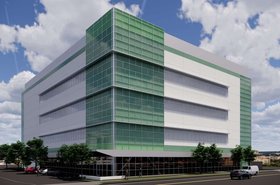
First announced in April 2025, the $175 million investment will see Apple build a 237,600 sq ft (22,074 sqm) data center on land already owned by the company in Catawba County.
The company is also expanding its data center footprint in Oregon, Arizona, and Nevada, and announced it would be investing an additional $100m, on top of a previously announced $500m funding pledge, to build a data center in Waukee, Iowa.



Comments