
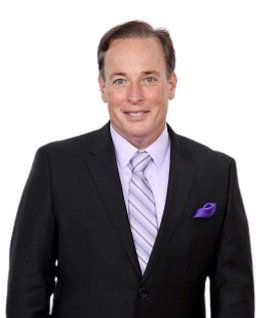
A few years ago, Csquare CEO Spencer Mullee thought he was heading for a long and happy retirement, but then his nearest and dearest sent him back to work.
In 2019, after a globe-trotting career as a data center executive, Mullee had sold his APAC-focused firm, DCI Data Centers, to Brookfield, and was ready to leave the Southern Hemisphere - and the world of digital infrastructure - behind and return to a quiet life in his native Florida.
But just when he thought he was out, they pulled him back in.
“I stayed in touch with Udhay Mathialagan, CEO of Brookfield’s global data center group, and he asked me to come back a couple of times,” he says, before adding, jokingly: “I initially said no, and that I was enjoying being retired, but then my family said, ‘no, you’re not enjoying being retired, go back to work and stop giving us projects’.
“So Uday convinced me to return, and I’m very grateful that he did, because I’m having a great time.”
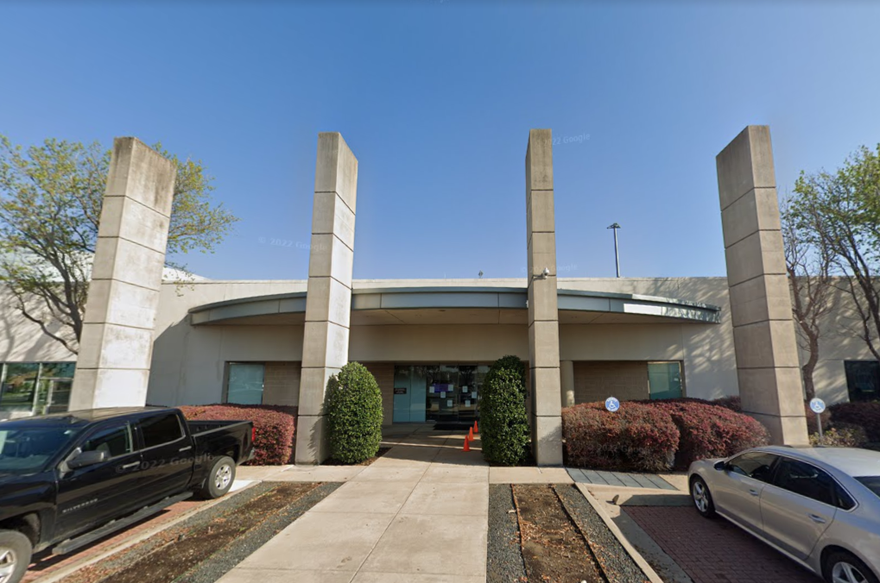
Today, Mullee has a big project of his own heading up Csquare, a Dallas-based company formerly known as Centersquare, that is part of Brookfield and provides colo services to enterprise customers. It has ambitious plans to expand across North America, having recently purchased 10 data centers in the US and Canada for a cool $1 billion.
Two become one
Csquare was formed last year when Brookfield merged the assets of one of its data center businesses, Evoque, with data centers belonging to Cyxtera, a firm acquired by Brookfield in 2023 after it filed for Chapter 11 bankruptcy. The $775 million deal saw Brookfield buy seven data centers that Cyxtera leased in the US, and exit six data centers (three in the US, and three abroad) rented by the ailing firm.
Evoque, meanwhile, was formed by Brookfield in 2019 when the investment snapped up AT&T’s data center and colocation assets. Mullee was brought on board to head up the firm in 2023, then chosen to lead the combined organization after the merger. It changed its name to Csquare in December 2025.

Issue 59 - Atoms for data
The small nuclear revolution coming for data centers
“Cyxtera was a very attractive asset that we’d looked at previously and continued to be interested in,” he says. “The bankruptcy afforded us the opportunity to cherry-pick the most profitable centers and convert what was a completely leased portfolio. Today, we own 70 percent of the data centers, whereas with Cyxtera, they owned none of it.”
Reflecting on the integration of the companies, Mullee says: “We had to have a ‘fix it’ mentality, and it’s a process I’m quite comfortable with because I’ve done it before when I was at DCI, but it’s not something you can do alone, and I have an incredible C-Suite of great data center professionals working with me. They have done a phenomenal job in taking what was supposed to be a two-year integration and getting it done in 11 months, significantly under our acquisition budget.”
Csquare is now a team of 600 people, and Mullee says: “Our hope was we’d end up with a third of the people coming from Evoque, a third from Cyxtera, and a third of the people who are fresh faces with new ideas, and it’s kind of worked out that way.
“We had very little staff turnover on the operations side, there’s been a bit of change in the administration team, but maybe less than we expected. We’re working really hard to keep people happy - I think the legacy companies weren’t always the best at communication, so we’re trying to overdo that now.”
Sticking power
While the name and scale of Csquare may have changed with the merger, Mullee says the profile of its clients has been pretty steady.
“Even through Cyxtera’s bankruptcy, their customer churn was very low,” he says. “Data centers are a very sticky business. We still do significant enterprise business in that 1-5MW range - that hasn’t changed - but now there are the AI guys, and we do some of that business too.”
Most of Csquare’s data centers are liquid cooling-ready, Mullee says, and can offer rack densities of up to 128kW, meaning they are well set to cater for AI racks, though he claims his firm will not be chasing the hyperscale dollars that are flowing into the industry. “The nature of what was built by the telecoms company is that they were over-designed, over-specced, and built to last for many years,” he says.
“That’s given us the ability to do AI deals for the long-term. Like anyone, we like investment-grade customers, and AI still presents some challenges in that respect. What we tend to focus on with AI is where a bank, healthcare organization, or some other type of large enterprise is doing an AI lab and needs 1-2MW.”
Mullee says Csquare has “half a dozen” of these installations on the go, without naming the clients involved, and he is banking on some more stickiness as the AI market evolves. “These enterprises are doing their training where they will eventually end up doing their inference, because our data centers are all in urban locations close to their end users. It will make sense to do inference there,” he says.
The CEO remains focused on more traditional workloads, though, with much of the AI hype yet to translate into investment. “We have 2,500 customers and 2,499 of them are interested in AI - I was even thinking of changing my name to AI at one point,” he says. “But I’d say while there’s great interest, there’s not a significant portion of them moving in that direction yet. The neocloud business is kind of like the Wild West right now, and I think some are waiting to see what happens. It’s still really in its infancy, so some people aren’t sure how they’ll use it yet.”
Expansion plans
In October, Csquare announced it had purchased ten data centers across North America, paying $1 billion from its own cash reserves. These included two data centers in Boston and Minneapolis that the company had been operating under long-term lease agreements, along with eight additional colocation facilities in Dallas, Tulsa, Nashville, Raleigh, Toronto, and Montreal.
Mullee says these sites are aligned with the company’s vision to grow near its existing customers. “It’s a proximity and readiness strategy,” he says. “We’re adding capacity in metros where our customers are already growing, and it’s funded with our own cash. We’re not really looking for headlines, we just want to grow in a smart and steady way.”
Having been involved in the digital infrastructure space for decades, Mullee says he did not foresee the current boom in interest, but expects it to continue for some time to come. “A lot of data center people like to talk about their crystal balls and what they saw coming, but I certainly didn’t foresee a lot of the things that have happened,” he says. “Data centers have become sexy, they’re making the headlines on CNBC every day, and I think that is here to stay. When you look at the rapid growth of data and data traffic, it’s hard to imagine what that will look like in another five years.”
And Mullee certainly intends to be on the front line to witness the next evolution, with no plans to return to retirement just yet. “I’m having the time of my life,” he says. “I love what I do, I love the people I work with, and we’re very busy - busy is always fun.”






Comments