
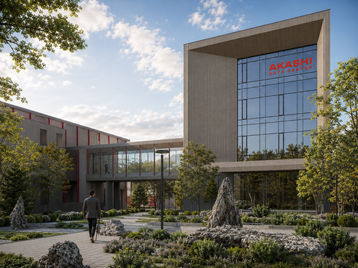
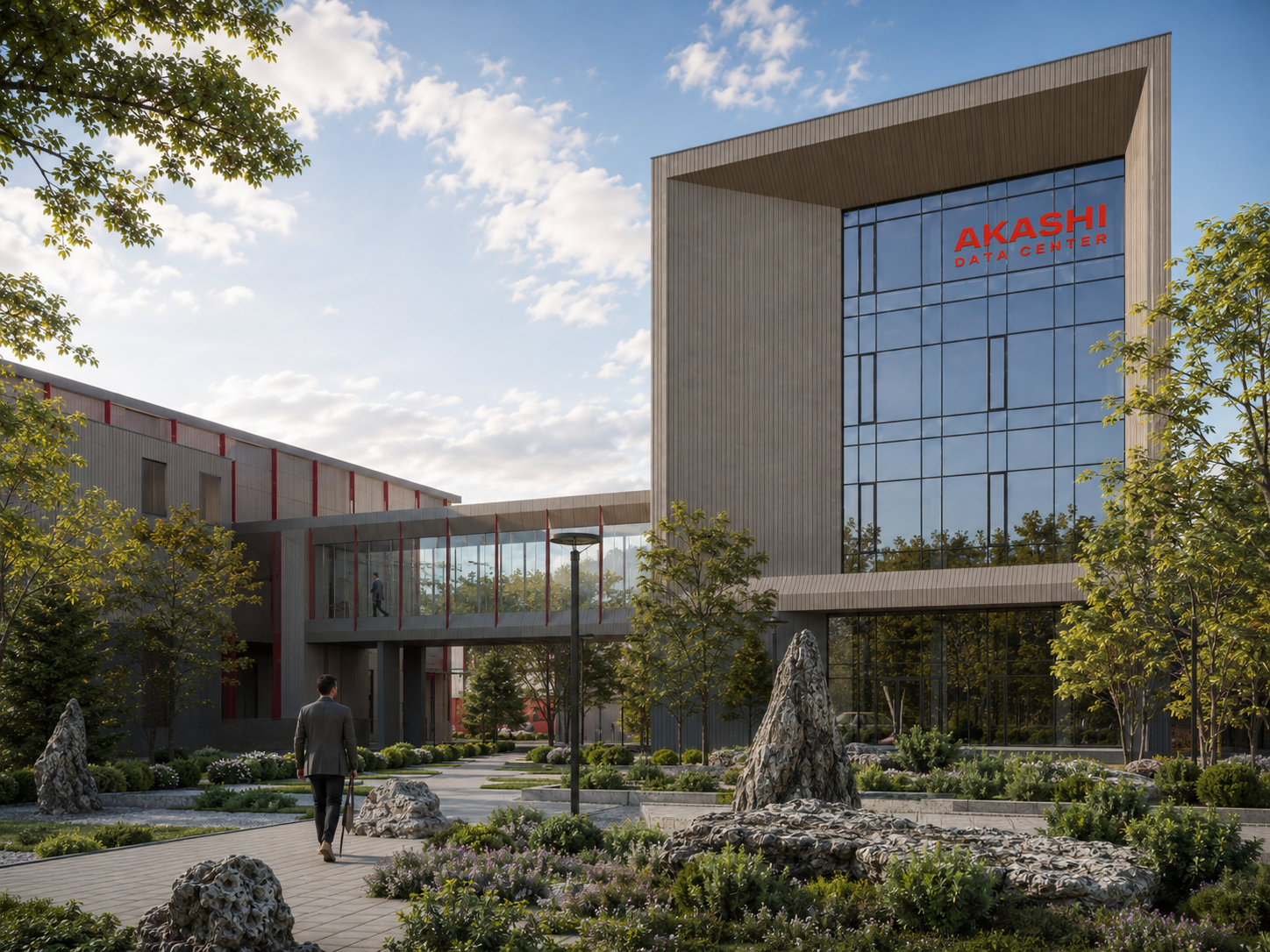
Akashi is building a data center with a planned capacity of 100MW in Astana, the capital of Kazakhstan, Central Asia’s largest economy and a country rich in energy resources. The facility under construction is set to become the first Tier IV data center in Central Asia – the highest level of reliability under Uptime Institute’s classification system.
Kazakhstan is well known to our readers for the crisis in its cryptocurrency mining industry, which DCD covered in a series of articles. Thanks to relatively cheap electricity, the country quickly became one of the world’s top three Bitcoin mining countries. In April 2021, Kazakhstan accounted for 8.2 percent of the global Bitcoin hash rate, behind only the United States (16.9 percent) and China (46 percent).
The situation changed dramatically in May. By that point, a couple of months had passed since Chinese authorities had banned cryptocurrency mining, prompting some mining farms to relocate to neighbouring Kazakhstan.
By the autumn, Kazakhstan’s national electricity grid operator, KEGOC, had been forced to restrict power supplies even to legally operating miners. The crisis was exacerbated by the fact that numerous mining farms had connected to the grid without authorisation, without regulatory approval. In Kazakhstan, these operators were classified as “grey miners.” Faced with power outages, major international players, including cryptocurrency company Bit Mining, announced their withdrawal from the country.

These events forced the authorities to fundamentally reconsider their policy. The market was cleared of illegal operators through licensing requirements and electricity quotas. The Kazakh government plans to redirect – and is already redirecting – the power capacity freed up towards the development of IT infrastructure.
Recognizing digitalization and AI as fundamental drivers of national competitiveness, Kazakhstan’s authorities have made the development of computing infrastructure, cloud services, and hardware capacity a national priority. To achieve this, the country is improving its legislative framework. As for the data center industry, amendments adopted in June 2026 simplified data centers’ access to telecommunications infrastructure and granted them the right to purchase electricity directly from power generation facilities.
“This mechanism makes it possible to establish direct, long-term relationships between electricity producers and major consumers, ensuring more predictable power supply conditions for energy-intensive facilities,” Kazakhstan’s ministry of artificial intelligence and digital development explained. According to the ministry, the legislative changes have created the necessary conditions for the development of highly reliable data centers in the country.
However, private capital had already been invested in data center construction before these regulatory improvements were introduced. The largest facility currently under construction is the Akashi Data Center, with a planned capacity of 100MW. In March 2026, Uptime Institute confirmed that Akashi’s design documentation met Tier IV requirements – the highest level of reliability, based on the principle of complete fault tolerance.
Akashi’s management is targeting international cloud providers, for whom data center reliability is of fundamental importance.
“The choice of the Tier IV standard was driven by the need to ensure fault tolerance across the entire engineering infrastructure. Unlike Tier III, which allows maintenance to be carried out without shutting down the data center, Tier IV additionally requires resilience against individual failures of equipment and distribution system components,” said Vladislav Minkevich, CEO of Akashi.
To ensure resilience against disruptions to the external power grid, the Akashi project includes a dedicated power transmission line, two independent power feeds, backup diesel generators rated at 1,450kW each, and modular uninterruptible power supply (UPS) systems providing at least ten minutes of autonomy. “The UPS systems ensure continuous power to equipment during disruptions to the external electricity supply and while backup generators are starting up,” Minkevich noted.
Completion of the first phase of the data center is scheduled for the second quarter of 2027. Once operational, it will become the first Tier IV facility not only in Kazakhstan but also in Central Asia. Today, Uptime Institute’s registry lists just 18 data centers across the five Central Asian countries – Kazakhstan, Uzbekistan, Kyrgyzstan, Tajikistan, and Turkmenistan – most of which are certified to the Tier III standard. Geographically, the region lies at the intersection of two parts of the Eurasian landmass, connecting Europe and Asia.
Kazakhstan’s leadership – governing Central Asia’s largest economy, which aspires to become the region’s key digital hub – intends to turn this advantageous geographical position into a tangible economic asset. The Akashi Tier IV data center project in the capital brings the country closer to achieving this goal.

The need to develop infrastructure with the highest level of fault tolerance is driven by the growth of AI workloads. Requirements for operational stability have increased to such an extent that conventional solutions from previous generations now pose enormous risks for investors.
For the sixth consecutive year, Uptime Institute’s survey results have recorded a decline in the number of data center outages. The latest survey included 800 data center owners and operators. The proportion of respondents who had experienced outages over the previous three years fell by three percentage points compared with 2025, continuing the downward trend observed since 2020.
Among respondents who had experienced data center disruptions, however, the proportion reporting serious or severe incidents involving significant losses remained unchanged at exactly ten percent.
Yet the more heavily businesses rely on digital infrastructure, the greater the operational, financial, and reputational damage that data center customers may suffer in the event of an outage. As Uptime Institute notes, the way outage consequences are assessed is itself changing: an incident considered “critical” in 2015 might be regarded as insignificant by today’s standards.
In these circumstances, the Tier III standard, which allows equipment shutdowns in the event of cascading failures or during maintenance, is becoming an unacceptable risk for global cloud providers. The complete fault tolerance offered by Tier IV at the Akashi facility is no longer merely a marketing advantage, but a fundamental technical requirement for protecting data in transit between Europe and Asia.
Discover the Akashi Data Center and its vision for digital infrastructure in Central Asia at https://akashi.cloud
Comments