
In a world where data never rests and networks pulse without interruption, modern infrastructure needs a silent guardian – a source of energy that doesn’t just support operations, but sustains them.
Rooted in decades of engineering expertise and built for mission critical environments, Pure Guard is more than a new battery range it is a dependable partner in a world where downtime is not an option.
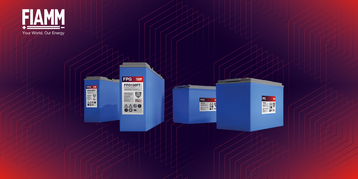
The increasing energy demands of data centers, driven by the rapid adoption of AI, are placing new pressures on power infrastructure. FIAMM Energy Technology introduces the Pure Guard battery range, leveraging Thin Plate Pure Lead (TPPL) technology to meet these evolving requirements with high performance and reliability.
Data centers are becoming power-hungry
The rapid rise of AI is dramatically reshaping the energy profile of data infrastructure. Training and running advanced AI systems – especially large language models and other generative AI workloads – demands unprecedented computing power, and with it, massive amounts of electricity.
Today’s AI-optimized data centers can draw between 100 and 300 megawatts, a level of consumption comparable to that of a small city. And the trend shows no sign of slowing. Global power usage by data centers is projected to double between 2022 and 2030, highlighting a growing urgency for scalable, efficient, and sustainable energy solutions capable of keeping pace with the AI boom.

Batteries: A critical component of UPS systems
As demand for power continues to surge, driven by increasingly energy-intensive digital and AI workloads, the physical footprint required to deliver high quality, uninterrupted power is expanding just as rapidly.
At the heart of every Uninterruptible Power Supply (UPS) system lies its battery array, the essential reservoir that stores and delivers energy in proportion to both the system’s power rating and the required backup duration. Backup time cannot be compressed below a few minutes without jeopardizing system reliability.
That minimum threshold, however, inevitably translates into a significant amount of space dedicated to batteries. To tackle this challenge, FIAMM has introduced its Pure Guard range, engineered specifically to optimize performance for short backup intervals while reducing overall volume by 20 percent or more.
Built on the company’s proven Thin Plate Pure Lead (TPPL) technology, validated through decades of field use, these batteries are designed to withstand high-current discharges and short intense power peaks. This makes them particularly well-suited for bridging grid interruptions until generators fully come online.
The Pure Guard line is also optimized for operational efficiency: easy to install in standard racks and cabinets, requiring minimal maintenance, and engineered to meet the demanding performance expectations of today’s mission-critical environments.
Ready for 800VDC data center architecture
This power‑distribution architecture delivers high‑voltage DC directly to the server racks, minimizing power‑conversion stages and reducing copper consumption. The result is up to a five percent gain in end‑to‑end efficiency while freeing valuable space in AI‑factory environments.
The FIAMM Pure Guard range is fully suited for this application, offering exceptional load performance, high configuration flexibility, and a design that supports selective downstream protection in the event of external short circuits.
Fast recharge and long cycle life
Pure Guard batteries recharge significantly faster than traditional VRLA batteries – up to 90 percent capacity within two-three hours – which is crucial for facilities experiencing frequent short power interruptions. They also offer a long cycle life, especially under repeated micro-cycles involving partial discharges followed by opportunity charging.
Extended service life and environmental tolerance
Pure lead positive grids offer significantly higher resistance to chemical corrosion compared with traditional VRLA designs, enabling a much longer float life, reaching up to 15 years in standby service when installed in controlled temperatures and maintained correctly. Their inherently stable float behavior results in lower trickle currents, which in turn reduces power dissipation and eases cooling requirements.
This reduced trickle current also curbs the decomposition of water into hydrogen and oxygen, a process that can otherwise accelerate battery dry‑out or trigger unwanted internal chemical reactions. Combined with an exceptionally low self‑discharge rate, pure lead batteries can remain on the shelf for as long as 24 months, giving operators far greater flexibility in planning and deploying infrastructure.
Pure lead technology also shows clear advantages over lithium‑ion in low‑temperature environments, maintaining the ability to accept charge currents even below 0°C (32°F), an important benefit for installations exposed to harsh or variable climates.
Safe and sustainable battery design
Pure Guard batteries are built with flame-retardant ABS plastics and can be safely installed within data center premises – either in the UPS room or in adjacent dedicated rooms – without special restrictions. Their proximity to critical loads enhances system reliability and reduces risks and costs associated with long distribution cables.
Unlike lithium-ion batteries, Pure Guard does not require additional fire suppression, containment, or segregation systems, which are often necessary to mitigate fire propagation risks. The batteries also contain a high percentage of recycled lead, and spent units retain residual value, as they can be efficiently recycled into new batteries or other products.
Intelligent monitoring capabilities
To ensure optimal performance and safety, the installation of a Battery Monitoring System (BMS) is strongly recommended. These systems monitor the health of Pure Guard batteries and raise alarms in case of anomalies – without interfering with battery operation or availability. BMS data collection and analysis are essential for predicting battery life and preventing failures.
FIAMM Energy Technology has developed dedicated algorithms for processing large volumes of BMS data, providing end users with clear, actionable reports to support maintenance and operational decisions.
To guarantee consistent performance and ensure the highest safety standards, deploying a Battery Monitoring System (BMS) has become increasingly essential. These systems continuously track the health and status of Pure Guard batteries, detecting anomalies in real time and issuing alerts without disrupting operation or reducing availability. The data collected and analyzed by a BMS is crucial for accurately predicting battery lifespan and preventing unexpected failures that could compromise critical infrastructure.
For more information, visit fiamm.com
More from FIAMM
-

Sponsored Optimizing battery systems for data centers
Smart decision-making, good planning and a well-maintained environment will help to avoid potential issues in your setup
-
Sponsored FIAMM Energy Technology launches Pure Guard battery range for high-demand applications
FIAMM Energy Technology has developed dedicated algorithms for processing large volumes of BMS data, providing end users with clear, actionable reports to support maintenance and operational decisions
-
Sponsored Improving data center environmental impact with battery selection
Data center operators must address their environmental impact by reducing raw material and energy consumption
Comments