

Today, everyone is talking about batteries. They are becoming an increasingly important component in the transition to a greener world. Electric cars, energy storage, telecommunication and of course, data centers, all need batteries in one way or another.
Despite all of this, most people don’t know very much about what goes on inside a battery and how to get the best from it. Batteries are sometimes one of the last elements to be considered.
But good forward planning of the battery itself and its environment can help to ensure reliability, and long life for the asset.
When a power center is not properly planned and designed, the risk of outages increases, making battery-related issues one of the most frequently reported causes, as highlighted in annual industry reports.

A battery backup system must operate for many years and be ready for instantaneous releases of energy. While batteries are just one component within the broader power infrastructure, they play a critical role, especially in data centers, where auxiliary gensets are commonly used.
However, gensets require a startup period before reaching full power. This is where batteries step in – providing immediate energy to bridge the gap and ensure uninterrupted operation.
Power hungry AI servers are adding new challenges to this situation that can be addressed by selecting the right solution.
Battery technology options
For many years, lead VRLA (valve regulated lead acid batteries) have essentially been the only battery choice available for data center backup. They provide reliable performance requiring limited servicing, and their availability is granted from many manufacturers based all around the globe.
Their main drawbacks are their relatively low energy density and short service life when cost-saving policies are applied.
Pure lead solutions are also available. They offer higher energy density and longer service life at a reasonable premium, while maintaining VRLA safety, availability and recyclability benefits – making them the preferred choice for most data centers.
The last decade has seen the introduction of other alternative technologies, with lithium emerging among them. It brings advantages in terms of energy density, cyclability, and incorporated monitoring systems. However, there are some drawbacks in terms of availability, safety, and end of life cost management.
Plan for battery performance at the end of their specified life
A battery is a device that converts chemical energy into electrical energy. The reaction involves the transfer of electrons from one material to another – known as a charge or discharge. Each complete discharge and subsequent recharge of the battery cell constitutes a cycle.
All batteries, due to the characteristics of the chemistry, are subject to loss of performance over time. This is called ageing. Lead batteries reach end of life when delivering 80 percent of initial capacity, while this threshold is 70 percent for lithium batteries.
This ageing factor must be considered when designing and specifying a system since a battery needs to be able to support the design load of the system over its life cycle. For example, a battery system designed for ten years of service, must be able to support the load at the end of those ten years.
Consider mains power reliability and the possibility for the battery to provide grid services
Across the world, the quality and consistency of power generated by the utility can differ significantly. Some areas may have only a few power outages a year, lasting just a few moments, while others are frequent and extensive.
The implications of this for a battery are considerable. Frequent power outages create heavy demands on the system and consequently on the battery and genset. This raises the question of life cycle.
Frequent and prolonged power outages can mean that the system has to be able to withstand many cycles, many of which may not be full discharges. This can subject a battery to heavy workload involving partial charges and the need to recharge the system rapidly.
In other countries with extensive renewable energy sources, power grids are suffering instability due to their inherent volatility. Backup batteries can support power grids by shedding load or feeding back energy for services, like fast frequency regulation which requires seconds of operation, while the installation of a specific energy storage battery system is recommended for longer cycles.
Temperature plays a major role in battery life and performance
Temperature plays an important role in the life of a battery. In general, high temperatures lower the life of a battery as they speed up the internal chemical reaction.
When planning an installation, it is important to consider where batteries will be situated and how to maintain and monitor the environment of the room. A battery room with variable temperatures will affect the life of a battery system.
Even a few degrees of higher temperatures, but over several years, will shorten the operating life of the battery. It therefore makes for good design planning to consider the room where the batteries will be situated, and choose a high temperature tolerant battery for those sites in which temperature above 25°C (77°F) can be expected for long periods.
System redundancy: A duplicated battery requirement may be different
Batteries, as stated at the beginning of this article, are components of a system. This is often overlooked. Data centers and batteries both plan for redundancy. This means that every system is replicated, and often in very different locations.
So, when planning a battery system for a new installation, it is not enough to duplicate the installation. The environmental factors such as layout, power and operating temperature may be different, and a good installation solution must take these factors into consideration.
It is important to consider that a second battery installation for a data center may have different environmental as well as operating needs. Therefore, each room needs to be considered individually.
Plan a service and monitoring procedure
Many batteries today are classified as ‘maintenance-free’. This does not mean that the batteries can be ignored over their specified life.
A routine inspection of the battery system does not take much but it should be done as part of the operational routines of any data center. Routine service can avoid future problems and it can be performed by remote battery monitoring systems.
By analysing the battery voltage, temperature, and impedance evolution collected by these systems, battery state of health and its evolution can be predicted – providing the information for correct corrective actions whenever necessary.
Batteries end-of-life management
At the end of their service life, batteries should be properly disposed of according to local legislation.
Different chemistries offer different recycling opportunities. Lead batteries are easy to recycle, offering a residual value, while lithium, on the opposite end of the spectrum, is expensive and difficult to recycle.
In view of the above, in Europe, the so-called ‘Battery Regulation’ imposes 85 percent of recycled lead to be used for any new battery introduced in the EU market by 2031. To date, FIAMM uses an average of 80 percent recycled lead.


The same targets given for lithium are six percent in 2031 and 12 percent in 2036, demonstrating the economic and technical challenges in recovering it from spent batteries.
FIAMM recommendations
Whilst battery initial cost is a major deciding factor in selecting the right solution, there are other elements that data center operators must consider.
Data center technical and purchasing teams evaluate a menu of criteria which finally sums up to a total cost of ownership.
These factors include product performance, availability, safety, and end-of-life management. For this reason, pure lead technology is currently the FIAMM best recommendation for most data centers.
A note about FIAMM Energy Technology
This brief article has been prepared by FIAMM Energy Technology. The company is a leading international battery producer with more than 80 years of experience.
The company operates with local teams, sales and service engineers across the world, and it prides itself on offering advice and design of the most appropriate solution.
Every data center, like other industrial battery requirements, is unique and has specific operating parameters and needs. FIAMM Energy Technology has a team of specialist engineers to work with customers to design the correct solution.
More information can be found at https://www.fiamm.com/en/europe/reserve/reserve/
More from FIAMM Energy Technology
-

Sponsored Improving data center environmental impact with battery selection
Data center operators must address their environmental impact by reducing raw material and energy consumption
-
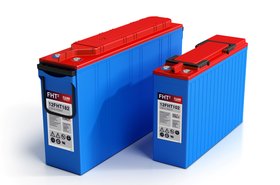
Sponsored Fiamm Energy Technology presents the FHT² battery range for high-temperature and peak-shaving operations
After a decade of field experience, research, and tests, Fiamm cranks out a new battery that exceeds different challenges in the data center industry
-
Sponsored New European Battery Regulation: Challenges and opportunities for data center players
Discover how the new EU Battery Regulation is reshaping the industry, enforcing CE marking, stricter compliance, and eco-standards
Comments