

Data centers rely on precise environmental control and highly efficient cooling systems to safeguard IT infrastructure and ensure continuous operation. With server room temperatures ideally maintained between 20° C (68° F) and 25° C (77° F) and relative humidity between 40 and 60 percent, even small deviations can lead to performance issues or equipment failure.
As computing densities rise and net-zero targets become more urgent, operators must confront a range of complex cooling challenges – from inconsistent airflow to high operational costs.
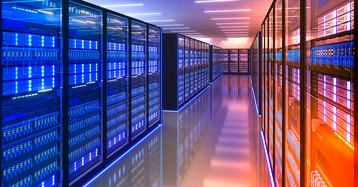
Key factors affecting data center cooling
Maintaining stable environmental conditions in a data center requires the careful management of a range of technical and operational complexities. There are a number of specific challenges that may be encountered which, if left unaddressed, could negatively impact both system efficiency and long-term sustainability goals.
- Uneven cooling: Changes in server heat output and variations in air and water flow can create areas that are over- or under-cooled. Poor airflow design – for example, when hot air is allowed to linger and recirculate rather than being removed – can exacerbate this problem.
- Air and water quality issues: Poor water quality can lead to biological growth, corrosion and leaks in water-cooled systems, while dust and other contaminants can impact the efficiency of air conditioning.
- Scalability and integration: As needs of the data center grow, so does the demand for cooling capacity. Adding more servers and storage devices will require a corresponding increase in cooling power, which may be difficult to achieve, especially when there are space constraints or when new technology needs to be retrofitted alongside legacy systems.
- Cost and sustainability pressures: With huge energy and water consumption, the carbon footprint of data center cooling systems is a major concern. As cooling accounts for up to 60 percent of a facility’s energy costs, operators must find cost-effective solutions that strike the right balance between performance and resource use.
- Resilience issues: Data centers can be vulnerable to a multitude of risks, from extreme weather to power outages and cyberattacks. It is vital that operators consider how to make systems more resilient against disruption when the unexpected happens.
Solutions for data center cooling
Efficient cooling should be at the forefront of any data center with air or liquid-based cooling systems playing a pivotal role.
Computer room air conditioners (CRACs) have historically been the most common method of managing temperatures in data centers. However, the higher power density of modern servers can push these systems beyond their capacity, leading to increased energy use and reduced efficiency. Liquid cooling or direct-to-chip cooling may be necessary to manage higher thermal loads.
Fluids offer significantly better thermal transfer properties than air, making water-based cooling systems ideal for managing high thermal loads. These systems are typically available in two configurations: open-loop systems, which can be put together from individual components for more design flexibility, or closed-loop systems, which are typically supplied as preassembled units, offering simplicity and reliability.
In areas with water supply constraints and challenges and regions with water scarcity, the use of recycled water, combined with on-site storage and treatment, can enhance sustainability and resilience. Where there are water quality concerns such as biological growth or scaling, additional filtration or disinfection can be considered to boost system health and maintain efficient performance.
The role of monitoring and measurement
Whichever type of water-based cooling system is chosen, it is important to monitor flow and temperature throughout the system, to carefully manage the use of power and water resources. Digital flow metering can help with sequence and cycle control for process cooling by optimizing the amount of make-up water used in cooling towers and controlling the speed of pumping, helping to reduce water and energy consumption.
Real-time data provided by metering and sensing technology enables managers to adopt a proactive approach to system maintenance, providing immediate notification of emerging issues such as low or excessive flow, temperature fluctuations and water quality deterioration, all of which could significantly decrease system efficiency if left unchecked.
There are a wide variety of technologies available for data center applications which provide fully customizable solutions for the intelligent management of flow, temperature and water quality within cooling system networks. These can include:
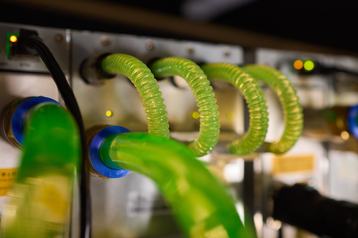


- Electromagnetic or ultrasonic flow meters to measure the volume and velocity of water flowing through a system. Clamp-on metering options are available that can be installed without cutting or tapping the pipe and without interrupting essential operations.
- Measuring essential parameters such as pH, conductivity, dissolved oxygen, turbidity and chlorine via water quality monitors to help maintain optimal water quality in an open or closed loop cooling system, preventing the build-up of contaminants or bacterial growth and avoiding corrosion and leakage.
- Integrated HVAC solutions, supported by analytics software to provide real-time, accurate and reliable diagnostic data, combining flow, temperature and water quality measurement to optimize performance and protect the lifespan of HVAC systems.
From insight to action: Making data center cooling count
Cooling is a vital consideration for data centers to protect valuable IT infrastructure in all conditions and circumstances throughout the year.
With the right cooling system and monitoring technology in place to manage and optimize its performance, operators can reduce energy costs and water consumption, allowing them to meet sustainability targets while looking forward to years of reliable and efficient operation.
Comments