

Where a battery sits within the data center changes what is required of it. As AI infrastructure concentrates more power and compute into increasingly dense environments, rack-level power architecture is becoming a more important consideration. Energy storage, whether deployed in dedicated battery rooms or directly within the rack, is increasingly being evaluated as part of the overall compute infrastructure rather than as a standalone backup-power asset.
While power and runtime remain essential considerations, battery selection increasingly involves a broader set of criteria. Characteristics such as response capability, footprint, safety, sustainability, and compatibility with evolving rack architectures have long influenced energy storage deployments. In high density AI environments, however, the interaction between these characteristics becomes increasingly important as storage is integrated more closely with the compute infrastructure it supports.
At the same time, the job itself is becoming more demanding. Thousands of GPUs operating in parallel can move together between compute and communication-intensive tasks, producing rapid, repeated changes in power demand on millisecond timescales. At scale, these synchronized fluctuations can place additional stress on upstream power infrastructure, while consistent power delivery becomes increasingly important to overall system utilization and performance.
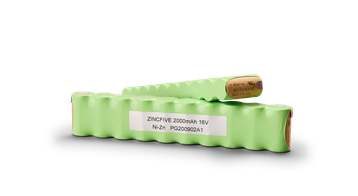
The result is a broader question for in-rack energy storage: which battery characteristics make sense when storage must operate closer to the compute while supporting an increasingly demanding power environment?
Chemistry becomes part of the architecture
Rack-level energy storage increasingly has two distinct requirements to address. The first is familiar: backup power must be immediately available when the primary source is interrupted. The second is emerging alongside increasingly dynamic AI workloads: rapid response to changing power demand.
Existing technologies tend to emphasize different parts of that spectrum. Traditional battery backup units (BBUs) are designed primarily around backup runtime. Capacitor-based systems can respond effectively to extremely short, high-frequency events, but provide limited energy duration and scalability.
There is unlikely to be a single answer for every workload or architecture. What matters is the combination of characteristics the underlying energy storage technology can provide.
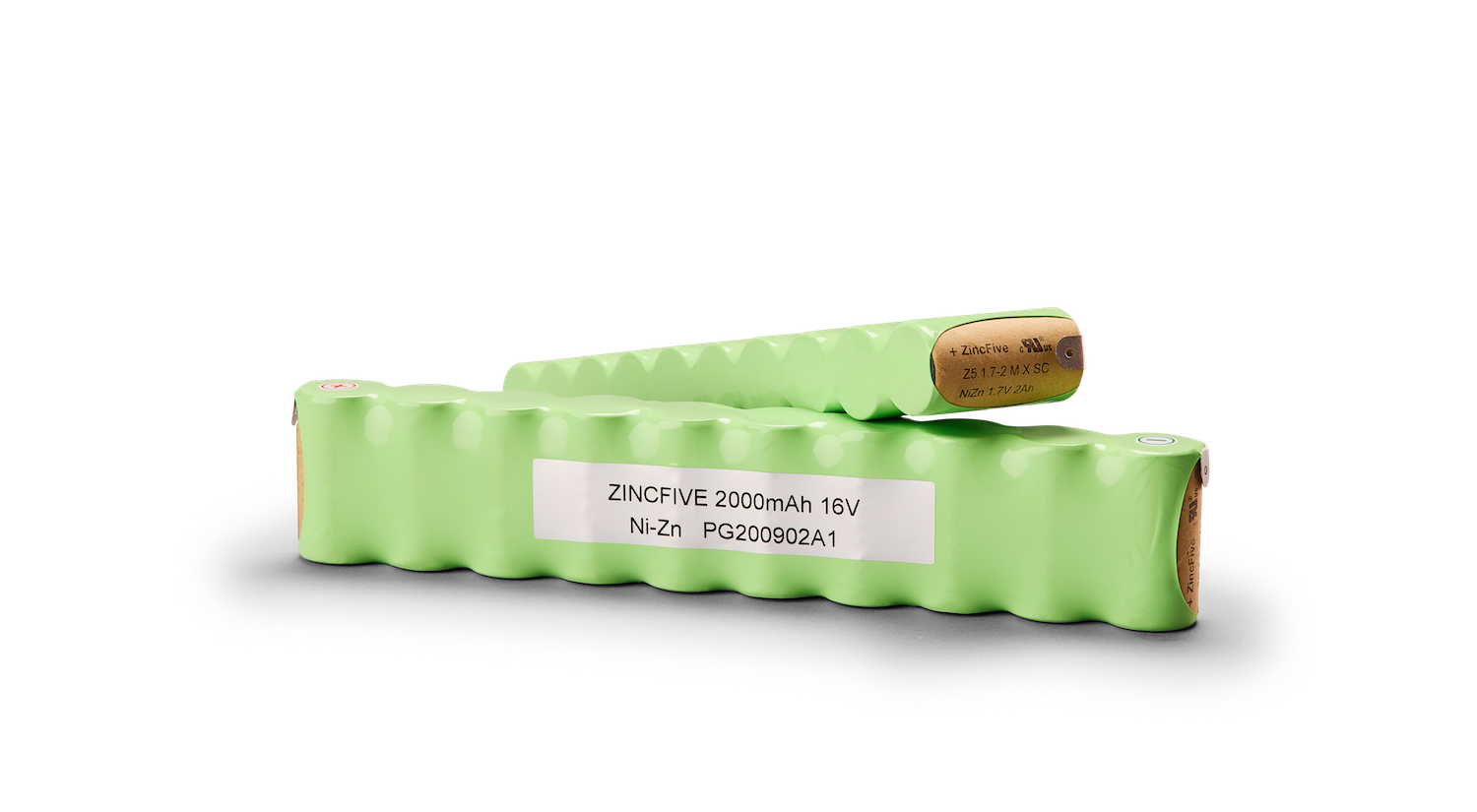
Nickel-zinc (NiZn) brings high power capability together with usable energy storage. That balance is increasingly valuable as rack power requirements rise while physical space remains constrained. Its high-rate charge and discharge performance also makes NiZn well suited to short-duration, high-power applications requiring energy storage to respond quickly and repeatedly.
Those characteristics allow the same underlying chemistry to serve as the foundation for dedicated solutions addressing different in-rack requirements, rather than requiring one product to perform every role.
Moving batteries closer to compute changes the safety calculation
The physical location of energy storage makes safety a particularly important part of the chemistry decision.
Placing batteries alongside increasingly dense and valuable compute infrastructure creates a different operating environment from locating them elsewhere in the data center. System designers must consider not only what a battery can deliver, but also its thermal behavior and how safely it can be integrated into the surrounding architecture.
Nickel-zinc uses a nonflammable, aqueous electrolyte and has no risk of thermal runaway at the cell level. ZincFive NiZn batteries have demonstrated no thermal runaway in UL 9540A cell-level testing, while the company’s existing data center battery systems comply with multiple industry-recognized safety standards.
These characteristics become increasingly relevant as codes, standards and site requirements influence how and where battery technologies can be deployed. NFPA 855 and IFC Section 1207 for Electrical Energy Storage Systems, for example, place emphasis on considerations including thermal runaway behavior, fire propagation testing and system-level safety.
For power-dense AI environments, favorable safety characteristics can therefore influence more than risk management. They can provide engineers with greater flexibility as they determine where energy storage can be placed and how it can be incorporated into emerging power architectures.
Sustainability scales with the infrastructure
AI infrastructure is also expanding the volume of supporting technology deployed across data centers, making the material lifecycle of that infrastructure increasingly relevant.
Nickel-zinc uses abundant, highly recyclable materials and delivers 25-50 percent lower lifecycle greenhouse gas emissions than lead-acid or lithium-ion alternatives. This gives data center operators another consideration when evaluating battery chemistry at scale: whether the technology can meet increasingly demanding power requirements while supporting broader sustainability objectives.
Performance, safety, and sustainability should therefore not be viewed as separate conversations. As energy storage becomes more deeply integrated into AI infrastructure, each can influence the suitability of a chemistry for a particular architecture.
Applying nickel-zinc to two different requirements
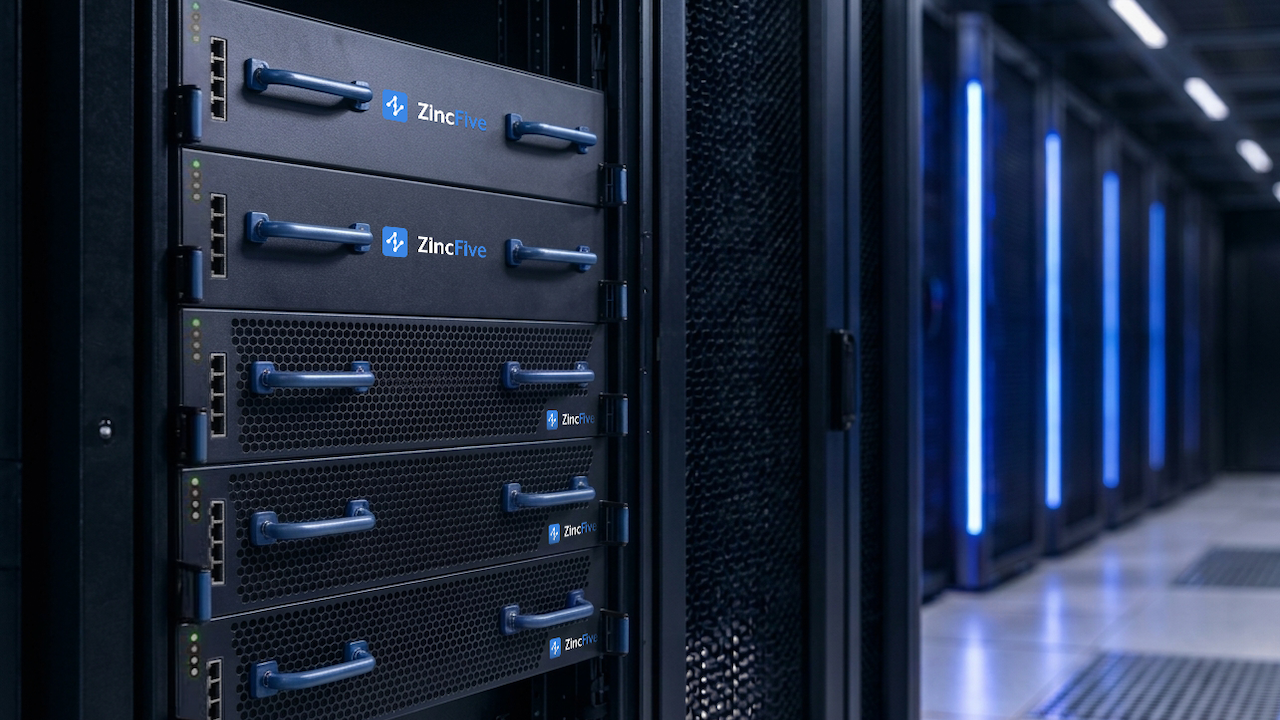
ZincFive has spent years applying high-rate nickel-zinc technology to immediate-power applications in mission-critical data centers. We are now extending that experience from the UPS layer into the rack through our NiZn In-Rack Power Solutions.
The strategy centers on two dedicated solutions because backup and dynamic power response are distinct requirements.
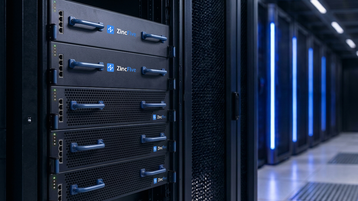
The ZincFive Battery Backup Units (BBU) are being developed for established rack-level backup applications, applying NiZn’s high power capability, superior safety and high-rate performance where power must be available immediately following an interruption to the primary source.
The ZincFive AI Dynamic Power Modules (DPM) are being developed for rapidly changing AI power demands, including transient mitigation, pulse power support, and other dynamic power applications.
Keeping these applications distinct gives OEMs, hyperscalers, and data center operators flexibility to match energy storage capabilities to the workload and architecture rather than assume every environment requires the same solution. Depending on the infrastructure, that could mean traditional backup, dynamic power support, or a combination of dedicated solutions deployed in different areas.
Beyond backup: Nickel-zinc enters the AI rack
Designing for an architecture that is still evolving
The AI data center itself is far from standardized. Established 12V and 48V rack-level systems remain part of the landscape, while sidecar and higher-voltage architectures are creating additional options for how power and energy storage are deployed. ZincFive is developing its in-rack solutions to align with this diversity and is evaluating modular and scalable designs that can accommodate different rack geometries, cooling technologies, and system requirements.
Centralized UPS architectures will also continue to play an important role. Some operators may place more energy storage capability closer to compute, while certain AI environments will require dedicated transient mitigation. These approaches can coexist as infrastructure evolves.
That is why chemistry matters at the architectural level. Selecting energy storage for AI infrastructure increasingly means evaluating how power capability, usable energy, response, safety, sustainability, and deployment flexibility work together rather than optimizing for a single specification.
With more than two gigawatts of ZincFive power solutions delivered or contracted globally, we are applying experience gained in mission-critical data center deployments to this new layer of the power architecture while working with OEMs, hyperscalers, and industry partners as requirements continue to evolve.
AI is not producing a single blueprint for in-rack energy storage. It is expanding the range of demands that storage may be asked to support and increasing the importance of how storage integrates with the broader power architecture. In that environment, selecting an energy storage technology becomes less about satisfying a single requirement and more about balancing the needs of an increasingly complex and dynamic power ecosystem.
More from ZincFive
-

New battery capability for dual-use UPS and AI factory dynamic power management
How nickel-zinc batteries can provide both UPS backup and rapid dynamic power support for AI data centers facing increasingly volatile power demands
-

Sponsored Four common misconceptions about nickel-zinc battery technology
The choices organizations make today will influence not only performance and reliability, but also how the next generation of data centers is designed and operated.
-
Sponsored ZincFive announces nickel-zinc retrofit kit to modernize existing UPS energy storage infrastructure
A turnkey, safe, scalable drop-in upgrade for existing UPS systems, delivering a long-life sustainable alternative to lead-acid
Comments