

The data center industry is undergoing a transformative wave of innovation, driven by the growing demand for compute-intensive workloads.
Tasks such as high-performance computing (HPC) and artificial intelligence (AI) - spanning training, batch inference, and online inference - are pushing the development of advanced IT equipment tailored for these needs. This trend is transforming the data center landscape, with a rise in facilities dedicated to AI or AI-factories.
This has created a growing demand for IT systems with higher thermal design power (TDP), increased rack power densities, and more stringent cooling requirements. A key challenge is navigating evolving workload demands with highly efficient and sustainable solutions while reducing operational risk.
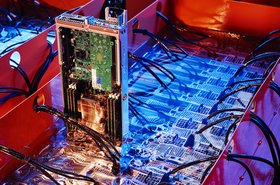
Liquid cooling: The Edge of reason
Liquid cooling has become the great enabler for high-density compute at the Edge
Technology overview
The convergence of AI and data center cooling creates a compelling dilemma, as computational power continues to increase, the need for advanced heat transfer solutions becomes crucial, challenging existing air cooling methods. At present, dedicated AI data centers handle power densities of approximately 120kW per rack. However, these limits are anticipated to rise substantially, potentially reaching 300kW, 600kW, or even 1MW per rack. To support these escalating demands, liquid cooling is solidifying its role as an essential technology in the next-generation of data centers.
Liquid cooling technologies can be broadly categorized into Direct-to-chip (DtC), Immersion, and Hybrid approaches:
- Direct-to-chip (DtC): A fluid circulates directly to the chip through a cold plate, effectively targeting the hottest components such as CPUs and GPUs for efficient heat transfer. Air cooling is also needed to complement the cooling of the remaining electronic components.
- Immersion: The IT equipment is submerged in a dielectric fluid, allowing direct heat transfer from all the components to the liquid.
- Hybrid: The precise cooling of DtC is combined with the comprehensive approach of immersion, to achieve superior thermal management. It’s worth mentioning that hybrid approaches may also refer to a combination of air and liquid solutions, but we focus in this article on liquid cooling solutions.
These liquid cooling technologies are further differentiated based on the use of single-phase or two-phase fluids for heat transfer:
- Single-phase: Fluids stay in their liquid state throughout the entire cooling process, absorbing heat and transferring it to a heat exchanger without any phase change. The main types of single-phase fluids for DtC are water (treated) and water with propylene glycol, and for immersion are mineral, synthetics, or bio-oil fluids.
- Two-phase: Fluids transition from liquid to gas during the cooling process, leveraging this phase change to significantly improve heat transfer efficiency. Two-phase fluids include engineered fluids and refrigerants.
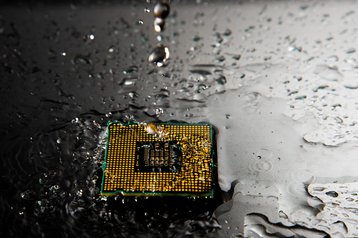
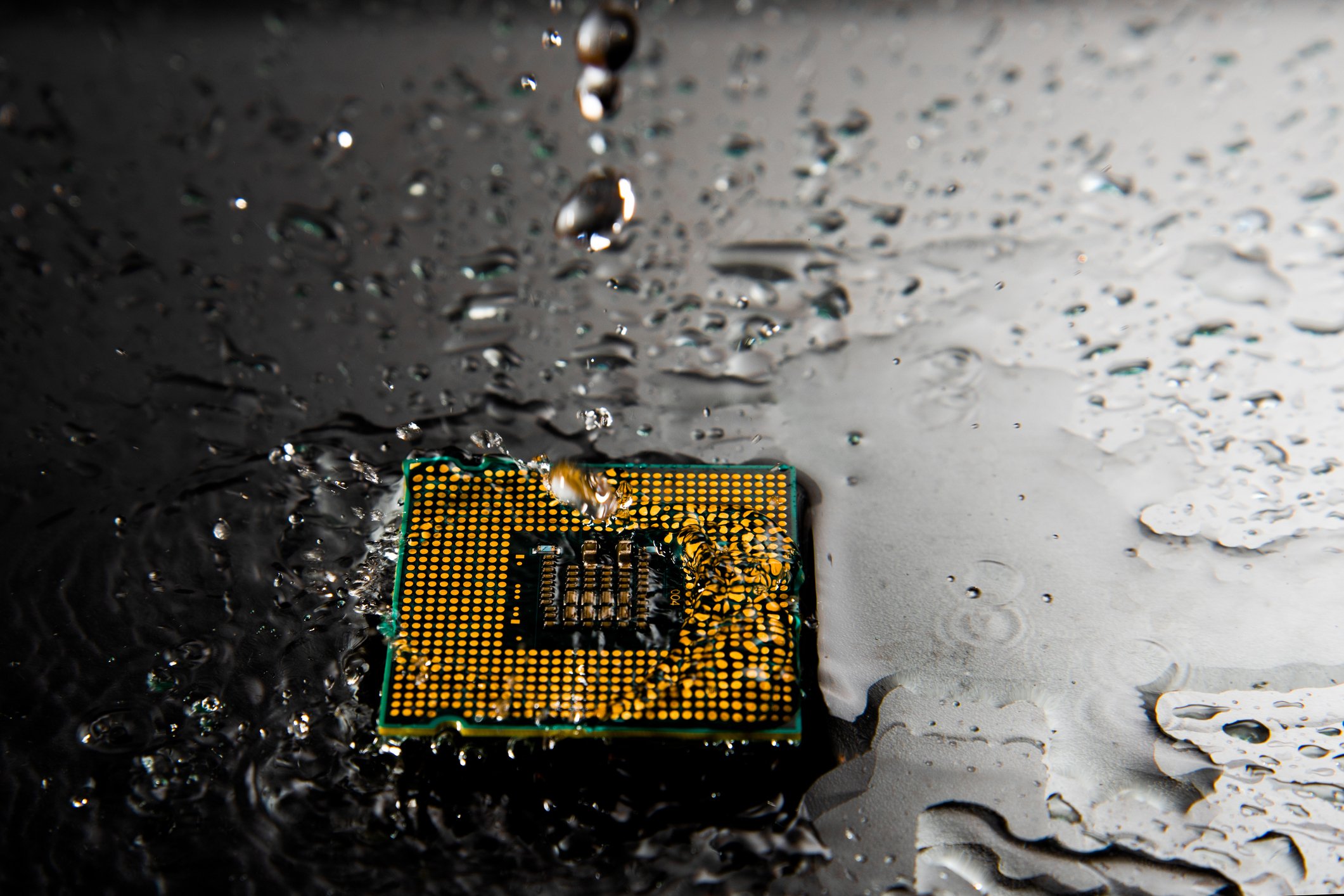
It’s worth mentioning the main drivers associated with liquid cooling technologies. Increasing computational demands, such as compute-intensive workloads, servers with coprocessors, and higher power and thermal densities, have accelerated the adoption of liquid cooling solutions.
Technological innovation has also played a key role, promoting higher energy efficiency, lower water usage, reduced noise emissions, more effective use of physical space, and better total cost of ownership (TCO) over its lifetime. Sustainability remains a key aspect, reducing greenhouse gas (GHG) emissions, lowering energy and water consumption, and enabling waste heat reuse.
Additionally, regulatory efforts aim for more efficient and sustainable cooling solutions, while government initiatives such as the U.S. Department of Energy’s ARPA-E Coolerchips program continue to support advancements.
However, various challenges remain. Air-cooling systems continue to dominate the data center industry as a proven solution. Technological innovation introduces concerns such as higher CapEx, shortages of skilled labor, supply chain uncertainties, IT equipment manipulation complexities, floor loading and hanging capacity constraints, and reliability and sustainability unknowns.
The lack of standards and best practices, underscores the need for standardization, operational procedures, novel metrics and eco-friendly fluids. Furthermore, regulations restricting refrigerants with high global warming potential (GWP) and dielectric fluids containing per- and polyfluoroalkyl substances (PFAS) create barriers for adoption.
Guidance
With extensive experience in data center projects, we expect the adoption of liquid cooling in data centers to accelerate over the next few years, specifically for IT equipment where air cooling solutions prove ineffective. Below, we outline perspectives on various aspects, including general considerations, key technological advancements, and emerging innovations.
The general considerations for the future for liquid cooling can be summarized as follows:
- Driving innovation through standards: The development of industry standards and best practices will catalyze innovation. As equipment and technology evolve, standards will become essential for the development of cutting-edge solutions, enabling growth in the data center industry.
- No one size fits all: A variety of liquid cooling technologies will coexist, customized to factors such as location, application, and project requirements. Collaboration will be essential in identifying effective liquid cooling strategies.
- Reliability, modularity and flexibility: These qualities will be key to the widespread adoption and implementation of liquid cooling systems
The key technological advancements in liquid cooling in data centers include:
- DtC: Single-phase. The growing demand for cold plate solutions capable of managing higher TDPs underscores the importance of technological advancements in DtC and specifically in cold plate technology, including the two-phase approach. Currently, DtC and rear door heat exchangers (RDHx) dominate the liquid cooling landscape in data centers.
- Higher capacity cooling distribution units (CDU): New CDU designs are projected to evolve further to meet reliability and flexibility for the growing thermal requirements at the rack-level and MW-scale.
- Immersion: Single-phase immersion cooling is likely to remain the preferred solution for cryptocurrency applications, while two-phase immersion cooling will continue to serve specific niche requirements.
- Novel dielectric fluids: Manufacturers are addressing PFAS-related and GWP challenges by developing more eco-friendly alternatives. Geographic regulations on two-phase fluids and refrigerants are anticipated to impact their adoption.
The emerging innovations and promising approaches in liquid cooling:
- Hybrid liquid cooling: Combining precision DtC and immersion liquid cooling presents an effective strategy for managing higher thermal loads while advancing sustainability. This combined approach may also boost heat reuse and greatly reduce, or even eliminate, water usage.
- Microfluidic integration: Embedding microfluidic channels directly into chip designs brings cooling fluids closer to processors, revolutionizing heat transfer efficiency.
- Diamond: The high thermal conductivity of synthetic diamond can improve thermal performance and reliability at the chip level, such as in a heat sink or substrate.
- Nanofluids: Nanofluids infused with silicon-based nanoparticles are gaining momentum as they significantly enhance the heat transfer.
Furthermore, identifying the leading vendors is of paramount importance. The following lists, arranged in alphabetical order, are intended to serve as a representative selection rather than an exhaustive compilation.
- DtC: Accelsius, Advanced Cooling Technologies, Boyd, Chilldyne, CoolIT Systems, Danfoss, Dell, Delta, GF Piping Systems, Hewlett-Packard, Huawei, IBM, Inspur, Jetcool, Lenovo, Mikros Technologies (by Jabil), Motivair (by Schneider Electric), Supermicro, Wieland, Zutacore
- Immersion: Airedale (by Modine), Asperitas, Baltimore Aircoil Company, DCX Liquid Cooling Systems, Gigabyte, Green Revolution Cooling, Hypertec, Iceotope, LiquidCool Solutions, LiquidStack, Mara, Midas Immersion Cooling, Submer, Supermicro, Quanta, Wiwynn
- CDU: Accelsius, Airedale (Modine), Boyd, Chilldyne, CoolIT Systems, Delta, Envicool, Excool, FlatkGroup, Jetcool, LiquidStack, Motivair (by Schneider Electric), Munters, Nortek, nVent, Rittal, Supermicro, Stulz, Trane, Vertiv
- Fluids: 3M, Cargill, Castrol, Chemours, Chevron, ExxonMobil, Lubrizol, Shell, Solvay, Valvoline
Final thoughts
Innovation is key to scaling liquid cooling technology, reaffirming the notion that necessity often sparks invention. By leveraging technological advancements, fostering partnerships, and navigating challenges, the data center industry is well-positioned to meet increasing demands effectively.


Comments