

Artificial intelligence (AI) is reshaping the world — and data centers provide its lifeblood.
The data centers of today are more than server farms. They’re the infrastructure behind massive breakthroughs in medicine, productivity, and even national security. But compute demand is outpacing supply, and upgrades can take years. The problem is clear: as it stands, the grid can’t keep up with the exponential pace of innovation and power requirements.
Let’s put the scale of this shift into perspective. A few years ago, a rack might draw a few kilowatts — about the same as a set of household appliances. Today, AI clusters regularly consume tens of kilowatts per rack, and high-density deployments push into the hundreds.
Megawatt-class deployments are on the horizon. With global data center demand set to triple by 2030, efficiency isn’t optional. It’s the difference between whether billions in capex produce usable compute or become a stranded investment.
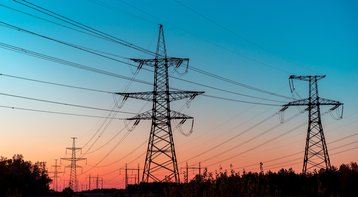
Where the power goes: Establishing the baseline
To chart a path to higher efficiency, we first need a clear picture of where energy is consumed in the data center. Data center operators must consider every aspect of the power and cooling infrastructure from grid to chip and keep an eye on incidental costs that contribute to inefficiency (the “other” category below). High-density AI workloads increase both cooling and compute demands.
- Compute = ~40 percent
AI training clusters are dense and power-hungry. Each GPU node can draw several kilowatts under full load. Server power management, processor efficiency, and workload optimization play significant roles in managing energy effectively.
- Cooling = ~40 percent
The mechanical cooling (HVAC) systems, chillers, and fans required to remove heat from high-density racks draw a significant amount of electricity. Dealing with varying energy needs, such as the power required for AI training versus inferencing, can cause operators to overcompensate. Cooling represents the biggest opportunity for efficiency improvements.
- Other = ~20 percent
Internal power conditioning systems, network and storage systems, and lighting account for the remaining power usage in the data center.
The industry’s common yardstick is power usage effectiveness (PUE), which is the ratio of total facility energy to IT equipment energy. A PUE of 1.5 means a 50 percent overhead beyond the IT load. Hyperscale facilities now report PUE between 1.04 and 2.0, but AI-driven workloads threaten to push those numbers up if cooling and conversion aren’t continually improved.
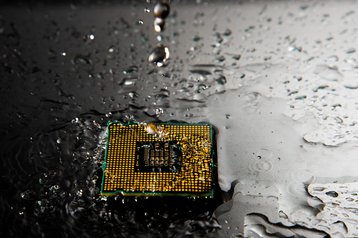
Inefficiency compounds at scale
When it comes to bottom-line fiscal results, a single percentage point of lost efficiency may sound negligible. At hyperscale, however, it isn’t. If energy costs $0.12 per kilowatt hour, for example, every one percent increase in efficiency on a 100MW datacenter saves $1 million per year in operating expenses. Across global fleets, the impact multiplies.
Beyond operational costs, inefficiency has long-term implications for capital investment. If data center operators overbuild capacity to compensate for power losses, the cost of electrical infrastructure, cooling systems, and other upfront development requirements goes up, whether fully utilized or not. In contrast, high-efficiency designs deliver more compute per square foot, speeding deployment and improving ROI.
Efficiency drives opex savings and higher IT utilization
Efficiency isn’t just about saving energy. It’s about unlocking operational agility and competitive advantage. Investing in power efficiency is an important profit lever — a foundational strategy for building more cost-effective data centers.
Smarter power and cooling strategies enable operators to deliver more compute per watt, boosting margins. While new power generation and transmission projects can take years and are largely out of operators’ hands, efficiency upgrades can be implemented now:
- Advanced cooling systems – High-density AI clusters consume anywhere from 20kW to 100kW per rack, and megawatt racks are on the horizon. Traditional air cooling cannot compensate for the heat produced. Direct-to-chip liquid cooling removes heat far more efficiently. Intelligent controls adjust cooling to workload demand dynamically.
- Optimal power conversion – Advanced power architectures such as higher-voltage DC distribution and solid-state transformers reduce conversation steps and losses. High-efficiency uninterruptible power supply (UPS) systems and right-sized power distribution units (PDUs) also prevent “stranded” energy from being inaccessible for compute.
- Commissioning – Execution matters. Testing and verification of IT infrastructure and electrical, mechanical, and control systems before go-live can prevent costly missteps such as poorly tuned control systems or incorrect setpoints that lock in years of unnecessary energy use. Rigorous commissioning protocols are critical to achieving target PUE.
- AI-assisted operations – AI itself can help. Machine learning algorithms can predict thermal loads, adjust airflow, and optimize resource usage across hardware in real time, balancing performance, efficiency, and energy consumption to extract incremental gains that scale.
Industry collaboration is essential
Long lead times for access to power and aging or insufficient grid infrastructures make relying on grid expansion a risky strategy. Without major efficiency improvements, data center growth could continue to be throttled by limited power. The stakes are high, not just for operators, but for corporate competitiveness and economic growth in the AI era.
No company can close the power efficiency gap alone. The challenges span compute, infrastructure, power electronics, cooling technologies, and grid integration.
Sharing best practices and setting open standards accelerate innovation and drive adoption of efficiency-enabling technologies across the entire ecosystem. That is why industry consortia such as the Open Compute Project (OCP) are vital.
Within its framework, hyperscalers are working together to redefine data center infrastructure for AI’s extreme workloads. From high-voltage DC power distribution to disaggregated “sidecar” power racks to the integration of advanced liquid cooling technologies, they’re enabling a strategic shift in the way data centers operate. These innovations can produce millions of dollars in energy savings at scale.
The path forward is clear
In an era with pressing grid constraints, efficiency gains are not optional. They are the key to unleashing the next wave of AI innovation and profitability. Success requires capacity, yes, but also precision and a disciplined approach to incremental improvement. Operators focused on long-term performance and margins must:
- Design for efficiency from the start – Every watt counts, and inefficiencies snowball quickly.
- Invest in advanced power and cooling – Deploy advanced liquid cooling technologies, high-efficiency power conversion systems, and AI-driven controls to optimize energy usage.
- Commission with rigor – Ensure infrastructure designs align with real-world operations before unnecessary costs and inefficiencies are fixed in place.
- Collaborate across the industry – Support open standards and joint innovation through OCP and similar efforts. A rising tide raises all boats.
For data centers, power efficiency is the foundation of sustainable growth. When achieving the full value of AI infrastructure is on the line, closing the efficiency gap is about more than just good engineering; it's smart business.




Comments