
Zephyr Fusion, the Y-combinator-backed brainchild of two Madison University fusion physicists, has outlined its proposal to enable megawatt-scale energy production in orbit through compact fusion power stations in space.
Doctors Galen Burke and Edward Hinson, who met at UW-Madison in 2010, have spent years conducting fusion experiments together. They believe Zephyr Fusion can produce a small, space-hardened reactor capable of producing energy from nuclear fusion to power demanding applications like high-performance computing and complex robotics required for a futuristic orbital industrial ecosystem.
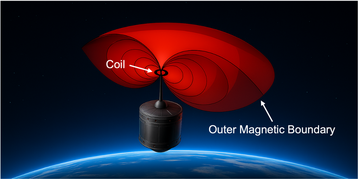
“Fusion can get easier in orbit. The vacuum of space can provide the freely available confinement volume fusion plasmas need, and can be leveraged using a magnetic dipole configuration,” the doctors explain in a Y-Combinator blog post, “[which can] create large plasma volumes in space without massive reactor infrastructure.”
The two highlight the pitiful kilowatt-scale power generation of solar panels, which they explain is mass and cost-prohibitive to scale, and unsuitable for powering complicated hypothetical applications like large-scale industrial activity, data centers, orbital defense platforms, and large, long-duration human habitats.
How it's done, apparently
While Burke and Hinson admit their proposal sounds ambitious, it is grounded in well-established physics that have now been unlocked by lowered space launch costs.
On Earth, reactors are expensive because the reactor must be scaled to the size of the plasma used, requiring multi-billion development costs. In space, this relationship might not be necessary, meaning an inside-out reactor, where the plasma forms a self-organized region enclosing a coil exposed to the external vacuum, minimizes the hardware footprint.
“In other words, a meter-scale dipole coil in orbit, that can be built today, can produce a magnetized volume exceeding that of [the largest nuclear facility under development on Earth], at a tiny fraction of the mass and cost … [which] may be accessible with hardware that fits on a SpaceX Falcon 9 launch vehicle.”
This leap is possible because space launch costs have dropped by ten times over the decade, thanks to Elon Musk’s SpaceX.
The doctors identify power constraints as the final barrier to “a real space economy,” and predict an off-planet industrial revolution will be unleashed by space-based fusion, much like coal enabled the scaling of heavy industry long ago on a little planet called Earth.
In the real world, space stations and satellites rarely want for power, although the potential power requirements of orbital data centers or the orbital lasers under consideration as part of future phases of the golden dome initiative certainly would.






Comments