
The City of Ulsan in South Korea has announced plans to construct a “carbon-zero underwater data center" in partnership with the Korea Institute of Ocean Science and Technology (KIOST).
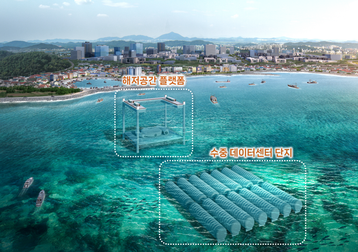
According to local reports, the city was selected as the final site for the "Carbon-Zero Underwater Data Center Standard Model Development Project" by the Ministry of Oceans and Fisheries. The ministry will provide the city and its development partner with 40 billion won ($29 million) in central government funding over the next five years to construct the data center.
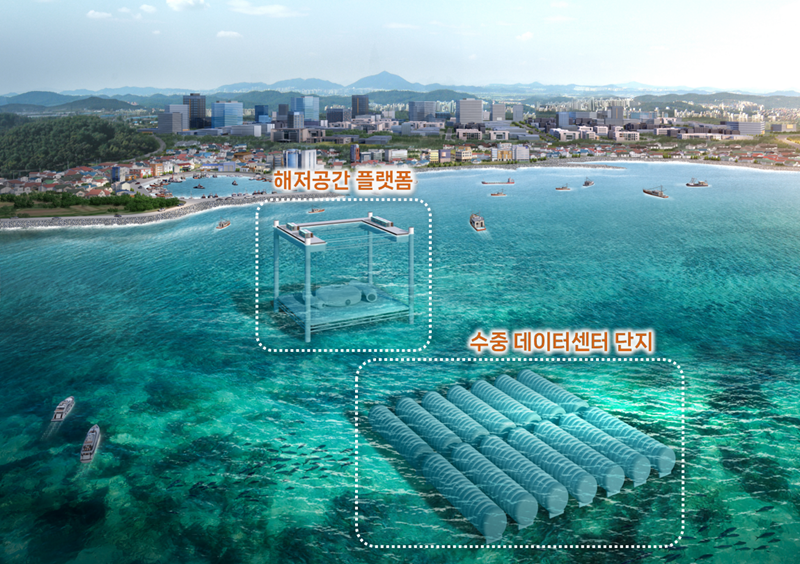
The project will see the construction of a data center off the coast of Ulsan, which will utilize seawater as its primary coolant. According to reports, the project will combine pressure vessel design technology with ultra-high-efficiency hybrid cooling technology.
The data center architecture and power equipment will be developed in modular, standardized configurations, which the partners said will ensure better cost effectiveness and scalability for future projects.
To support the project, the city signed agreements with 12 industry, academic and research organizations including KIOST, the Ulsan National Institute of Science and Technology (UNIST), POSCO, GS Engineering & Construction and SK Telecom.
Development of the project will start this year with site analysis and basic design. Performance testing and an initial demonstration are expected to be completed by 2030, and from 2031, the large-scale commercial data center complex will begin construction.
"Through this joint public-private-academic-research project combining ocean science technology and information and communications technology, we will overcome the limitations of onshore data centers," an Ulsan city official said. "We will expand our maritime digital territory with the underwater data center as a base and elevate Ulsan into a sustainable AI capital."
Reports on the project first emerged in November 2024. At the time, the partners said that they intend to build an underwater complex with 100,000 servers on the seabed.
Underwater data centers have seen a resurgence over recent months, with several proposals emerging. In March, DeepGreen Western Passage announced plans for a data center powered by tidal energy off the coast of Maine.
In China, HiCloud operates what is thought to be the first commercial underwater facility in Hainan Province, with the data center expanded in 2025.
However, many similar projects have run into headwinds. For example, NetworkOcean, which is looking to test underwater data centers in San Francisco Bay, ran into permitting issues, and now appears to be experimenting with floating facilities.
The most high-profile underwater data center, Microsoft’s Project Natick, which saw a subsea data center deployed off the coast of Scotland in 2018, was shuttered in 2024.






Comments