
Canadian operator Telesat is adding dedicated military spectrum capabilities to its upcoming Lightspeed fleet.
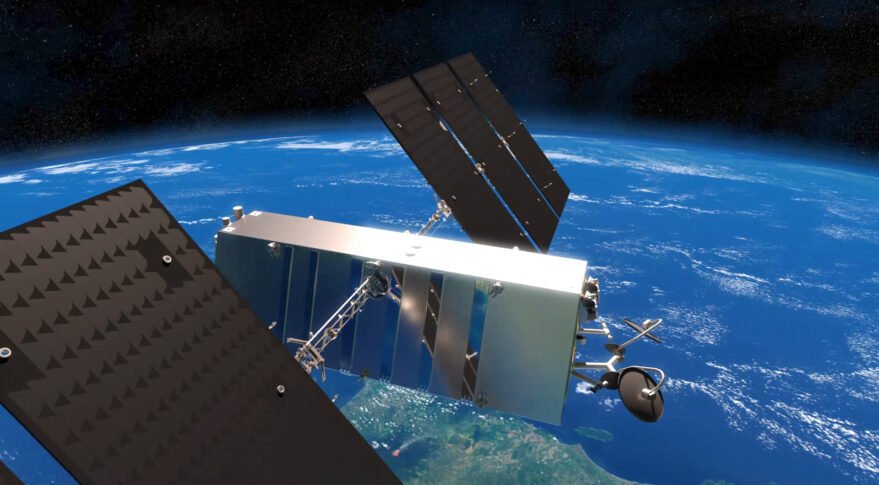
The company has announced it is adding 500 MHz of military Ka-Band spectrum, sometimes called Mil-Ka, to the first 156 satellites in its Lightspeed constellation, a quarter of the low-Earth orbit (LEO) fleet, so it can keep up with the growing demand for defense hardware.

“We’re seeing very significant global demand for a Mil‑Ka LEO satellite capability as governments respond to recent geopolitical developments and recognize the clear operational advantages offered by advanced LEO constellations,” stated Dan Goldberg, Telesat’s president and CEO. “By integrating it with the already highly advanced Telesat Lightspeed network, the Telesat Mil-Ka capability is expected to have meaningfully superior performance characteristics relative to the Mil-Ka platforms that allied governments have historically relied upon. This is an important development and one that underscores Telesat’s decades-long commitment to support the mission-critical requirements of allied defense users.”
The military Ka-Band is adjacent to the commercial Ka-Band spectrum that has always been targeted by the Telesat Lightspeed constellation, making the expansion easier to factor into existing operations, representing a cost of approximately $25 million, less than 0.5 percent of the total program budget. The 500 MHz of Mil-Ka will replace the same amount of commercial spectrum on the users' link, with the gateway link being unaffected by the change in spectrum completely.
Despite the ease of the operation, Ottawa-based Telesat is setting back its commercial launch to the Spring of 2028, initially expected late 2027, with Goldberg telling analysts that the first two Lightspeed production satellites will be launched in December 2026, kicking off a “high cadence launch schedule” through 2027.
This delay was attributed to the development needs of the SatixFy Application-Specific Integrated Circuits (ASICs) on the satellite payloads, but Telesat insisted SatixFy’s digital payload division had been recently bolstered by its acquisition by MDA Space.
The company’s full-year earnings report held no silver linings, reporting that revenues were down 27 percent year-on-year at C$418m (US$304.21m), suppressed by a speeding decline in geostationary income. The company quoted a contracted backlog comprised $1.31bn, despite adjusted EBITDA of $155m, down 45 percent year-on-year.
Following military money?
In February 2026, Telesat Government Solutions received an award contract under the US Missile Defense Agency’s $151 billion SHIELD indefinite-delivery/indefinite-quantity (IDIQ) program, encompassing a broad range of “innovative capabilities to the warfighter with increased speed and agility,” according to Telesat.
Telesat specifies its understanding of demand for interoperability across national networks to coordinate allies, including connecting users in the Arctic.
“The resilient architecture, deterministic performance, and advanced security of Telesat Lightspeed will provide the network assurance and flexibility that the Department of War needs for strategic advantage in a congested and contested battlespace,” Chuck Cynamon, president of Telesat government solutions, said last month.






Comments