
Hitachi has partnered with the regional transmission operator (RTO) Southwest Power Pool to develop an Nvidia-powered artificial intelligence solution that reduces the duration of interconnection impact studies.
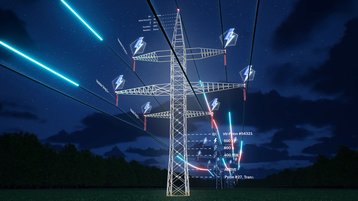
The partners claim that the integrated AI-based solution will be able to reduce the length of time it takes for the studies from 18 to 27 months to less than 12 months. The solution will be applied to several study areas, including process automation, predictive analysis, and communication systems integration.
According to the companies, long wait times for interconnection are often due to exhaustive, time-consuming analysis and simulation studies required to ensure that new energy source introductions don’t compromise existing grid reliability, stability, or performance.
To tackle the challenge, the partnership will leverage a range of Hitachi's specialized capabilities.
These include design expertise from Method, software development support from GlobalLogic, energy asset modeling tools from Hitachi Energy’s energy portfolio management suite, AI-driven grid algorithms developed by Hitachi R&D, and the Hitachi iQ platform from Hitachi Vantara - an integrated compute and storage solution powered by Nvidia's accelerated computing, networking, and AI technologies.
SPP will support the integration of technical solutions and services, ensuring that project outcomes align with industry-wide requirements and regulations.
Commenting on the partnership, SPP president and CEO Lanny Nickell said: “Our nation’s demand for electricity has risen sharply in recent years following a long period of slow growth. Our industry has struggled to keep up with this sudden and significant shift.
“There are a lot of would-be power producers out there waiting to connect to the grid, but yesterday’s systems and technology haven’t been sufficient to enable us to bring incremental capacity online fast enough. It’s time to fix that, and SPP is proud to work with Hitachi and Nvidia, two AI industry leaders who have the means to help realize a vision of a better energy future for our nation.”
The project will be deployed in a phased approach, with the phase one milestones expected to be completed by winter 2025/26. Phase one will include initial systems acceleration, data management processes optimization, and the introduction of AI-augmented simulation
“This initiative is about reimagining the electricity production and distribution process through the lens of modern AI technology,” said Frank Antonysamy, chief growth officer, Hitachi Digital. “Real-time data access is needed to create truly realistic scenarios caused by new generator introductions. The AI solution we’re all developing will provide that data, among other advantages. SPP can then make significantly quicker, better-informed decisions that will increase overall ROI while better serving the nation’s population with accessible power.
The SPP is one of seven US RTOs. It manages the electric grid and wholesale power market for the central US, serving all of Kansas and Oklahoma, and sections of Montana, Arkansas, Iowa, North Dakota, Texas, Nebraska, South Dakota, Missouri, Wyoming, Minnesota, Louisiana, and New Mexico.





Comments