
Sateliot has connected its first-ever 5G IoT transmission between a standard cellular IoT device designed for mobile infrastructure and its low Earth Orbit satellite constellation, demonstrating how LEO can support existing commercial cellular devices without hardware modifications.
“We are facing a technological, commercial, and strategic milestone, comparable to Starlink’s first connection with a mobile phone, and one that proves Europe can also lead the democratization of connectivity from Space,” said Jaume Sanpera, Sateliot’s CEO and co-founder, in a statement.
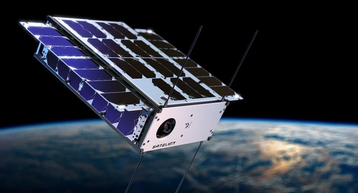
The demonstration sent an end-to-end message using Trondheim-based Nordic’s nRF9151 low-power cellular IoT module to Barcelona-based Sateliot’s LEO constellation, replicating the roaming experience that mobile networks offer terrestrially, illustrating how telecom operators worldwide can provide global coverage to extend their reach, regardless of the limitations of their Earthly infrastructure.
The project was performed in compliance with the 5G NB-IoT Release 17 standard with the assistance of Danish satcom software group Gatehouse Satcom.
The companies believe the milestone is a leap forward for European satellite markets, opening the door to standardized, affordable commercial, LEO-connected IoT sensors that enable businesses, governments, and communities worldwide.
“The lack of global and harmonized coverage has held back the IoT and M2M markets for years,” Oyvind Birkenes, executive vice president of the Long Range BU at Nordic Semiconductor, said in the same statement. “With this breakthrough, it will be possible to create low-power devices with satellite connectivity and accelerate deployments across many key use cases.”
The satellite industry is poised to capitalize on a big push into direct-to-device (D2D), as traditional industries continue uptake, putting their faith in emergent demand for satellite connected cars, satellite-enabled consumer electronics, an expansive industrial IoT network spanning the breadth of the economy, and a booming drone market.
With many of these products in development, struggling with regulatory friction, or other uncertainties, satellite-enabled devices have been rare in consumer markets, though the reverse-engineering of enabling LEO connectivity without hardware modification could answer this chicken-and-egg dilemma.
Sateliot has signed recurring contracts worth €250 million ($290m), with over 450 customers across more than 50 countries, with the expectation to reach €1 billion ($1.16bn) in revenue by 2030.






Comments