
Samsung Electronics has postponed the construction of its 1.4nm pilot line, which was scheduled for this year, and will instead concentrate its efforts on improving the yield and production capacity of its 2nm process nodes, set for mass production at the end of 2025.
According to a report from BusinessKorea, construction of the pilot line was expected to begin at the company’s South Korean Pyeongtaek Plant 2 in Q2 2025, but has now been pushed back until late 2025 or early 2026.
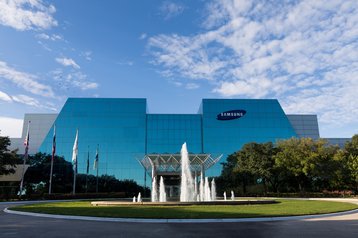
However, unnamed industry sources cited in the report have said the timeline for the 1.4nm pilot line could slip even further, with initial mass production unlikely to start until 2028. In addition to deciding to concentrate on advancing its more immediate technologies, Samsung has also reportedly halved its annual facility investment from 10 trillion won ($7.3 billion) to around 5 trillion won ($3.7bn).
The news comes as the company appears to be engaged in efforts to shore up its customer base in North America, despite Samsung having previously delayed construction at its fab in Taylor, Texas, to upgrade the foundry process at the facility from 4nm to 2nm and allow the company to better compete with TSMC.
That facility is now expected to be operational in the first half of 2027.
A separate report from KED Global this week noted that the company has posted a number of job listings for California-based senior sales positions, with the new recruits presumably set to work under Margaret Han, a former TSMC and Intel executive who was appointed to lead Samsung’s North American chip foundry operations in March of this year.
Although the chipmaker has posted record-breaking earnings results in recent quarters, Samsung has struggled to be competitive in the US semiconductor market, with the company’s Device Solutions (DS) unit unable to keep pace with SK Hynix or TSMC, its biggest competitors in the memory chip and contract chip manufacturing markets, respectively.
In October 2024, co-CEO of Samsung Electronics' semiconductor business, Jun Young-hyun, penned a note to the company’s customers, investors, and employees in which he said Samsung has a history of “challenge, innovation, and overcoming” that will allow it to turn “the serious situation we are currently facing into an opportunity for a leap forward.”





Comments