
Quantum computing firms D-Wave, IonQ, and Rigetti have announced their Q2 2025 earnings. Once again, all three companies reported net losses for the quarter, but remained bullish about their prospects, with IonQ increasing its full-year forecast off the back of this quarter's financial results.
D-Wave
For the second quarter of 2025, D-Wave posted revenue of $3.1 million, a year-over-year (YoY) increase of 42 percent, but a significant decrease from the $15m the company recorded in the first quarter of the year. Bookings of $1.3m were up 92 percent from Q2 2024, but down on the $1.6m from Q1.
Operating expenses for the quarter totaled $28.5m, an increase of $8.3m, or 41 percent YoY, while net losses came in at $167.3m, an increase of $149.5m from the same quarter in 2024. D-Wave said the increased losses were primarily due to $142 million in non-cash, non-operating charges related to the remeasurement of the Company’s warrant liability, in addition to realized losses stemming from warrant exercises.
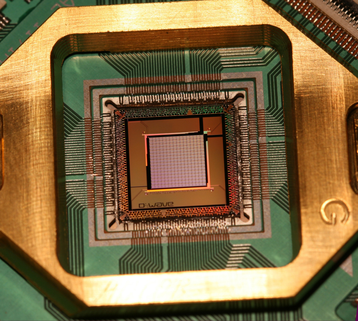
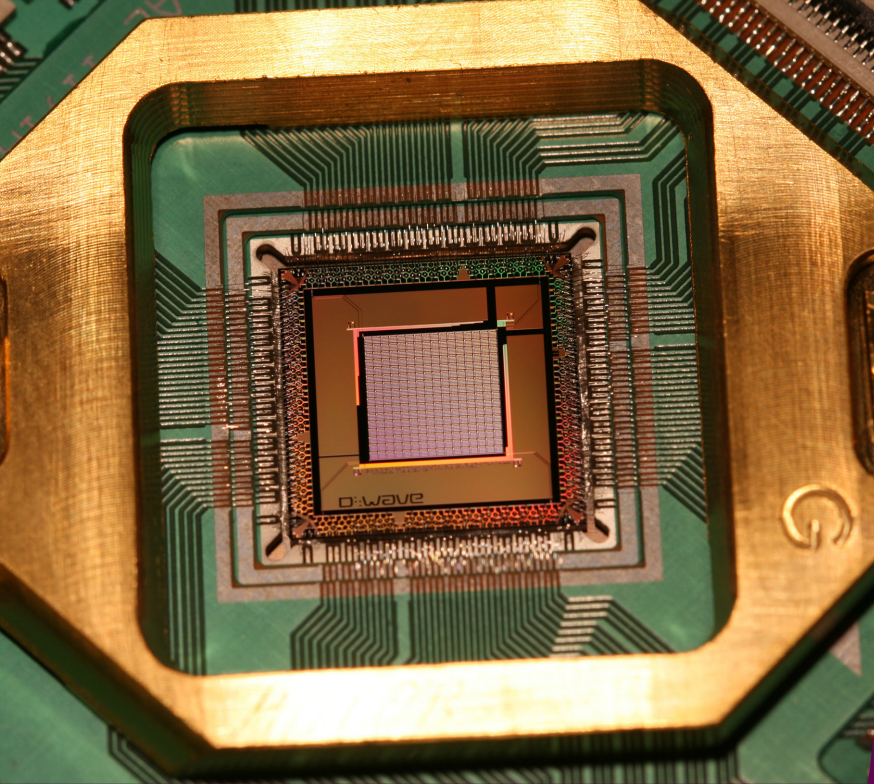
In a statement posted alongside the results, D-Wave highlighted a number of notable achievements during the three-month period ending June 30, including the company’s sixth-generation quantum computer coming to market and the signing of a Memorandum of Understanding with Yonsei University in South Korea for the purchase of an Advantage2 system.
“Our second quarter results show consistently strong performance across a multitude of technical and business metrics,” said Dr. Alan Baratz, CEO of D-Wave. “We’re confident in our ability to continue delivering long-term value for our customers, partners, and shareholders.”
IonQ
IonQ posted recognized revenue of $20.7 million for the second quarter of 2025, 15 percent above the top end of the range previously provided by the company. Net loss for the quarter was $177.5m, while Adjusted EBITDA loss was $36.5 million for the second quarter.
As a result, the company increased its full-year revenue forecast to between $82m and $100m, with between $25m and $29m predicted for the third quarter.
During the three-month period, IonQ closed its acquisitions of Lightsynq and Capella, and announced its proposed $1.08 billion purchase of UK-based quantum computing company Oxford Ionics. The company also signed Memorandums of Understanding with KISTI, South Korea, and AIST, Japan, while Amazon disclosed it had taken a $36.7m stake in the firm.
Commenting on the recent acquisitions, chairman and CEO Niccolo de Masi said: “Via our closed acquisition of Lightsynq, along with our proposed acquisition of Oxford Ionics, we have created the most advanced and powerful quantum computing and networking roadmap in the world. The combination of IonQ hardware and software expertise and Oxford's implementation of ion-trap-on-a-chip provides the team, IP, technology, and momentum to achieve 800 logical qubits in 2027 and 80,000 logical qubits in 2030."
Rigetti
Rigetti posted revenues of $1.8 million for the three-month period ending June 30, an increase from the $1.5m the company recorded in the first quarter of 2025.
Operating expenses for the second quarter totaled $20.4m, while operating losses for Q2 2025 were $19.9m. Net loss for the quarter was $39.7m, a figure which includes $22.8m of non-cash losses for the fair value change in the derivative warrant and earn-out liabilities.
As of June 30, the company said it had cash equivalents and available-for-sale investments totaling $571.6m.
“We continue to achieve our ambitious roadmap goals, most recently by demonstrating the industry’s largest multi-chip quantum computer with impressive performance,” said Dr. Subodh Kulkarni, Rigetti CEO. “Our industry-leading proprietary chiplet approach to scaling and strong financial position make us confident in hitting our end-of-year technology goals.”
The second quarter also saw the company announce the general availability of its Cepheus-1-36Q quantum system, obtaining a 2x reduction in two-qubit gate error rate from its previous Ankaa-3 system, and achieving a median two-qubit gate fidelity of 99.5 percent. Comprised of four chips, Rigetti says the system contains the largest number of chiplets in a quantum computer, and is the first multi-chip quantum computer to achieve this level of performance.



Comments