
Data centers have been launched in Angola and The Gambia.
Gambia launches facility
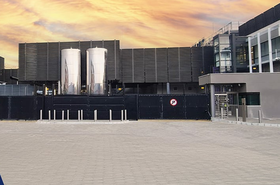
The State House of The Gambia revealed that a data center had been inaugurated in a Facebook post on April 29.

Called QGroup House, the post claims it is the first data center in Gambia. Data Center Map currently lists no data centers in the country.
The data center is located on Kairaba Avenue, and it will be used to "manage and secure national data, connect homes, businesses, and communities, and lay the foundation for a more inclusive and dynamic digital economy."
Gambia's President, Adama Barrow, said of the project: "For many years, development was associated with external support through aid flows, foreign capital, and imported solutions. While partnerships remain valuable, today, we are affirming something far more transformative - that Gambians can lead their own development journey.
"QGroup embodies this principle. It has established itself as an institution founded, financed, and built by Gambians, driven by a clear vision, and powered by world-class technology, including digital innovation and artificial intelligence."
QGroup's CEO, Muhammed Jah, added: "There are rare moments in the life of a nation when what is built becomes more than a structure. QGroup House is one of those moments. This building stands bold and confident. It does not merely occupy space; it declares intent. It declares that The Gambia is not only open for business, but ready to shape its own destiny.”
Alongside the data center, QGroup has also launched QCell Fibre - a national fiber service.
Details about the data center's size and capacity have not been shared. DCD has contacted QGroup for comment.
QGroup describes itself as a Gambian business conglomerate with "diverse interests." It includes QCell, Quantum Net, AGIB Bank, and Espace Motors.
Angola launches government data center
The Angolan government, meanwhile, has launched a national data center.
An inauguration ceremony was held on April 28 to launch the Government Data Center and Cloud.
According to a statement provided to VerAngola, Angola's Minister of Telecommunications, Information Technologies, and Social Communication, Mario Oliveira, said that the data center "goes beyond a simple technological infrastructure, constituting an affirmation of Angola's digital sovereignty and a commitment to building a robust, resilient, and inclusive digital system."
He further noted that it is part of a wider effort for the country to develop its telecoms and IT sector, including with the launch of the Angosat-2 satellite, expansion of the national fiber optic network, and commissioning of the 2Africa subsea cable.
"With the inauguration of the Government's Data Center and Cloud, Angola reinforces its strategic positioning in the field of digital technologies, consolidating the foundations for a more modern, inclusive, and competitive economy, aligned with the challenges of the future."
Details about the size, capacity, and exact location of the data center were not provided.
Angola, unlike Gambia, has a small existing data center market, with facilities concentrated around Luanda. Operators include Paratus Africa, Raxio, MSTelcom, and Unitel.
National Data Centers serve as centralized locations for public sector and government workloads. At the start of this year, ground was broken on a massive data center project for the Saudi Arabian government in Riyadh. Set to span 30 million sq ft (2.78m sqm), the data center will be located in Riyadh.
In recent months, countries across West Africa have also notably begun investing in such initiatives, including Benin, Bamako, Mali, and two "mini data centers" in Burkina Faso. Chad has also revealed plans to invest ($204.7m) in developing a national data center and in expanding its fiber optic networks.





Comments