
Canadian renewable energy developer PowerBank Corporation has signed a non-binding Letter of Intent (LOI) with US modular data center company Nodiac Corp to explore the deployment of modular data center infrastructure at renewable energy sites across North America.
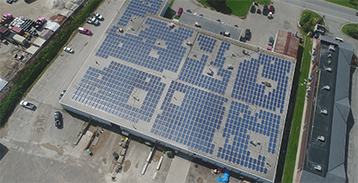
Under the terms of the agreement, PowerBank will provide Nodiac with access to its portfolio of solar and battery storage assets for evaluation, with the aim of co-locating data centers at sites that already have grid connections, land, and permits. The companies claim that this could enable faster deployment compared to traditional data center builds while creating additional revenue streams from existing energy assets.
Each deployment will be assessed on a site-by-site basis, with definitive agreements subject to technical and commercial feasibility studies.
"The accelerating demand for AI compute infrastructure represents a defining opportunity for renewable energy developers — and an urgent challenge for the planet," said Dr. Richard Lu, CEO of PowerBank Corporation. "Our planned transaction with Nodiac reflects our conviction that the digital economy must be built on a clean energy foundation. With the potential to co-locate data center infrastructure directly at our renewable energy sites, we are not only providing an opportunity for accelerating speed to power for the AI industry – we are intending to ensure that the infrastructure powering tomorrow's economy is sustainable, distributed, and resilient."
Robert Sher, CEO of Nodiac, added: "PowerBank has built an impressive portfolio of renewable energy assets across North America, and we see tremendous potential to unlock new value from that infrastructure. By co-locating modular data centers at their solar and BESS sites, we can deliver speed-to-power for the AI industry while generating meaningful new revenue streams for PowerBank's existing assets. This is the distributed model that the market is moving toward."
Denver-headquartered Nodiac is a developer of containerized data centers ranging from 1MW to 15MW, designed to be deployed alongside existing energy infrastructure. The company claims that the approach seeks to reduce time-to-power by avoiding delays associated with grid interconnection and transmission upgrades. According to the company website, it has an 800MW pipeline with more than 500 sites identified for deployment.
PowerBank claims to have a development pipeline exceeding 1GW of capacity, with more than 100MW of operational solar and battery capacity.







Comments