
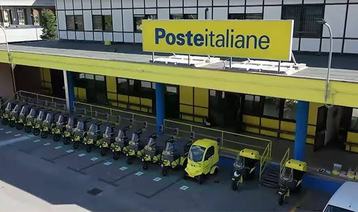
Italy’s state-controlled postal service, Poste Italiane, is developing a 70MW data center in Lombardy, northern Italy.
During an earnings call last week, the company’s chief executive, Matteo Del Fante, said that the facility could be used to train new AI models. No information was released on the likely location for the data center in Lombardy.
DCD has approached Poste Italiane for comment.
“The land has already been identified, the energy supplier has also been identified,” said del Fante. “We have the support of all the major Italian financial institutions and, for that matter, even corporates that could join forces and create a large hub where we could run both training models and inference models on a large scale.”
Founded in 1862 and headquartered in Rome, Poste Italiane’s expansion into data center development follows its takeover bid earlier this month for Telecom Italia (TIM), which valued the firm at €13 billion ($14.8bn).
Possible collaborators on Poste Italiane’s proposed 70MW facility include TIM, financial institution Intesa SanPaolo, and developers Coima, as per reporting by adnkronos. Poste Italiane is also assisting TIM in developing a 20MW data center in the vicinity of the northern Italian cities of Turin and Milan. Concerning this project, Del Fante said on the earnings call, “we will contribute on the capex side.”
Lombardy is a burgeoning data center market within Italy, hosting 65 facilities according to DataCenters.com.
Several new developments, however, have attracted opposition from locals, most notably a proposal to build a 240MW facility outside the town of Magenta.
It was partly in response to these types of concerns from residents that Lombardy became the first region in Italy to enact a legal framework for data center development. Regional Law No.11/2026 promotes the construction of such facilities on brownfield sites, while also encouraging developers to prioritise the sustainability of data centers throughout the application process.
Learn more about the data center market in Italy and Southern Europe, and meet with other executives and experts from the region at the DCN Milan event next year






Comments