
Australian telco Optus is leading a consortium to build, launch, and operate a sovereign low-Earth orbit (LEO) satellite for insertion in early 2028.
The consortium comprises iLAuNCH Trailblazer, which will supervise the development of the satellite’s payload; Inovor Technologies, which will build the satellite; HEO, which will supply a 20cm Adler Imager payload; and the Defence Science and Technology Group, an arm of the Australian DoD. The project is one of many globally to enhance technological sovereignty in space.
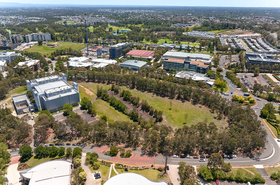
Optus intends to operate the spacecraft from its Belrose Space Operations Centre in Sydney.
“While global partnerships continue to play an important role in space, it’s vital that Australia cultivates a strong sovereign satellite and space industry,” Nick Leake, head of satellite and space systems at Optus, told DCD.
“By empowering our universities and small businesses to innovate and develop cutting-edge technologies, we not only strengthen national capability but also create opportunities to commercialize these advancements globally. Sovereign systems ensure we maintain control, resilience, and long-term competitiveness in a rapidly evolving space environment.”
HEO’s Adler Imager, produced in partnership with the University of Southern Queensland, will support non-Earth imaging, a capability useful for understanding the condition of satellites, but also for verifying the activities of alleged spy satellites, which are thought to be becoming more active.
“Advancements in non-Earth space imaging are opening new frontiers in how we understand and monitor activity beyond the planet Earth,” added Leake. “As imaging technologies improve, they enable richer data collection and deeper insights into the dynamics of space. While ground-based tracking systems remain essential for monitoring the tens of thousands of objects currently in GEO, MEO, and LEO orbits, space-based imaging offers a powerful complement. Together, they enhance situational awareness and help ensure the safe and efficient operation of spacecraft.”
The University of South Australia will develop the second piece of hosted equipment with the support of SmartSat CRC, a compact optical communications payload for interfacing with both intersatellite connections as well as ground connections.
“This project is a great example of industry, academia, and government coming together to develop groundbreaking space technologies to catapult the Australian space sector forward,” Dr. Matthew Tetlow, CEO of Inovor Technologies, said in a statement. “This collaboration will strengthen our national space sovereignty by accelerating advanced satellite manufacturing, creating highly skilled jobs, and proving that Australia has the capability to lead in the global space industry."





Comments