
UK broadband provider Openreach has paired with Affinity Water and Lightsonic to detect water leaks using its fiber broadband network.
The BT subsidiary noted that the trial has been successful so far, enabling the telco to prevent the loss of two megaliters of water in just three months, which is the daily use of around 10,000 people.
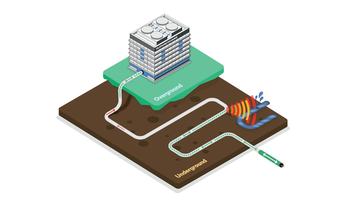
As part of the pilot, Openreach has worked with Affinity Water and Lightsonic to use Distributed Acoustic Sensing (DAS) – which converts Openreach’s fiber optic cables into thousands of sensors that can ‘hear’ and pinpoint leaks from surrounding water pipes.
The purpose of the pilot is to support water companies, such as Affinity, in tackling issues with leakage, a problem that sees England and Wales lose around three billion liters of treated water every day.
The fiber-optic leak detection platform has been developed by Lightsonic. Openreach explains that the trial has been piloted in five locations, utilizing its fiber to monitor 650km (404 miles) of Affinity Water’s network.
According to Openreach, in its first locations, the fiber sensing technology was able to locate more than 100 leaks and able to save two million liters of water a day.
"The results of our pilot show that our new full fiber infrastructure can deliver value far beyond broadband – and could prove to be a real game changer in solving real-world challenges like water conservation," said Trevor Linney, director of network technology for Openreach.
Linney added that the technology could be rolled out for other use cases, such as detecting gas leaks and monitoring the health of big structures like bridges and tunnels.
Explaining how DAS works, Openreach notes that the technology is able to detect changes in the light signal used in fiber optic cables caused by vibrations from a leak or disturbance in surrounding networks. The technology uses machine learning to locate the exact point of the vibration, and it trains the system to separate background noise.
It is able to be used 24/7 for continuous monitoring, while leveraging the existing fiber that's already in the ground, meaning there's no need to dig.
If a leak is detected, Openreach said that the system is able to highlight the area to investigate, often within a few meters, so repair teams are directed to the right spot. The company added that the technology will help reduce disruption for water companies and is easy to scale out across the UK.
“Transforming the telecom fiber-optic network into a continuous sensing layer unlocks entirely new ways to monitor utilities. Detecting 2 megaliters per day shows what’s possible when fiber sensing solutions and existing infrastructure are combined at scale," said Tommy Langnes, CEO of Lightsonic.
“This collaboration demonstrates how fiber sensing can deliver measurable environmental impact today, while creating solutions for wider utility monitoring in the future.”




Comments